
First responders and unions back SB 62‑06 pilot to incentivize nonstandard childcare
Get AI-powered insights, summaries, and transcripts
Subscribe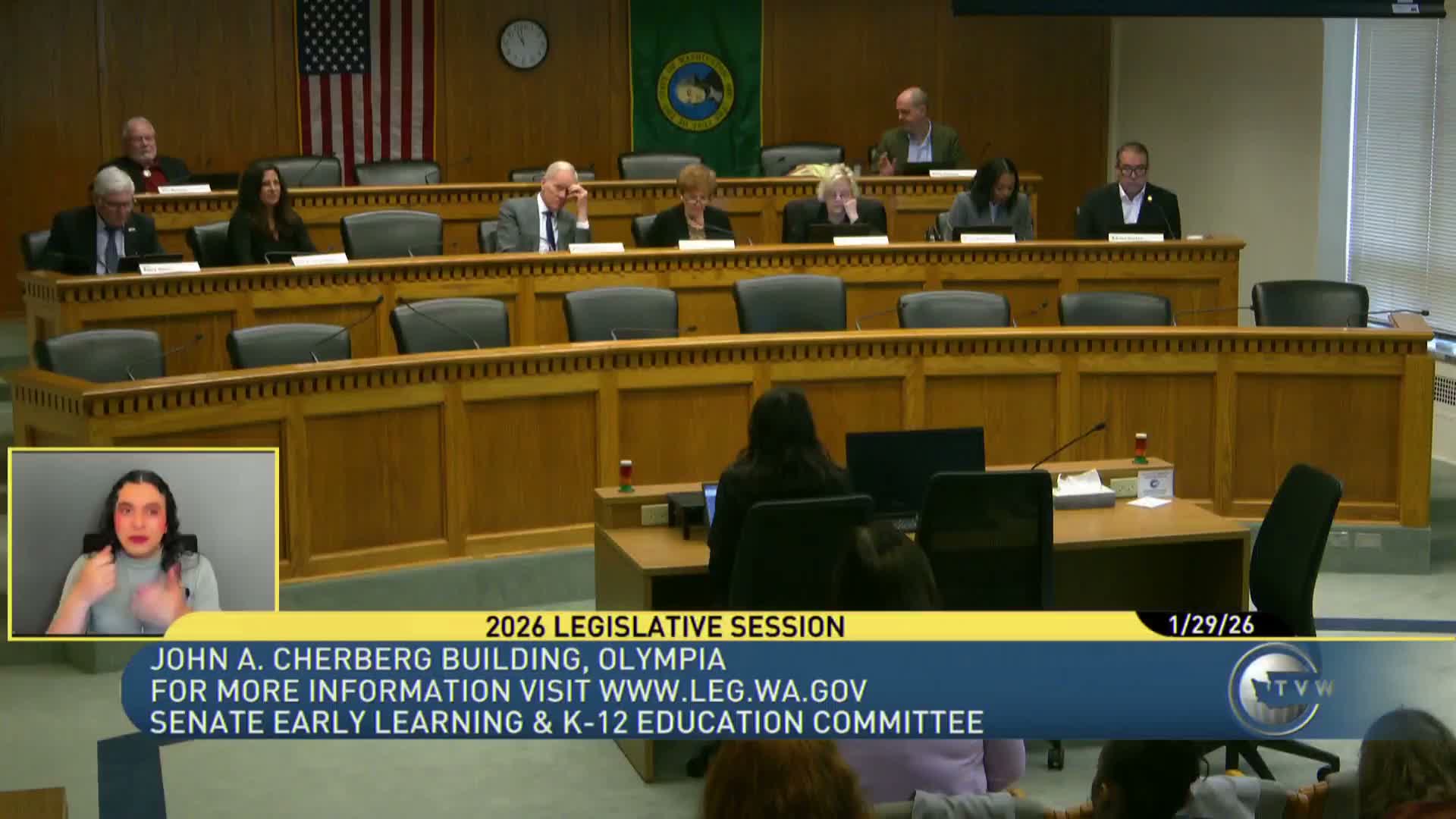
Summary
SB 62‑06 would direct the Department of Commerce to run a pilot (subject to appropriation) providing grants to licensed childcare providers who serve first responders during nonstandard hours, on short notice, and when children are ill; law‑enforcement witnesses and unions said the program could improve recruitment and retention.
The committee heard testimony in support of Senate Bill 62‑06, a pilot program to incentivize licensed childcare providers to serve children of first responders during nonstandard hours, on short notice, and for sick children.
Staff explained Commerce would select at least four local jurisdictions in different regions to administer grants prioritizing providers who offer care during nonstandard hours, short notice and illness; selected jurisdictions must provide a plan to equally match state grants with non‑state resources. Commerce would report outcomes by November 2029; a fiscal note was requested but not yet available.
First responders and allied groups gave consistent testimony in favor. Theresa Shrimpshire (Washington State Fraternal Order of Police) described childcare as a major retention challenge for officers and said the bill addresses scheduling realities for shift work. Rachel Tovaz (Vancouver Police Department) and Nicole Vigil (resilience officer, Vancouver PD) described how unpredictable schedules and overnight shifts made childcare a barrier to retaining officers.
Labor and law‑enforcement organizations, including the National Law Enforcement Foundation, the Association of Sheriffs and Police Chiefs, and Teamsters Joint Council 28, urged support, citing reduced turnover and improved operational readiness seen in other models. James McMahon (Association of Sheriffs and Police Chiefs) and Jim McKay (National Law Enforcement Foundation) recommended the committee ensure the pilot prioritizes childcare solutions built for first responder schedules.
Questions from the committee focused on how this program differs from existing Working Connections nonstandard‑hours bonuses administered by DCYF (those are $150 per eligible provider under current working connections rules) and whether Commerce is the correct agency to administer the pilot. Staff noted the pilot in the bill would be Commerce‑administered and subject to appropriation.
Public testimony closed and the committee proceeded to other agenda items.