
Students, educators and researchers urge limits on phones; bill aims to gather evidence and set digital‑citizenship guidance
Get AI-powered insights, summaries, and transcripts
Subscribe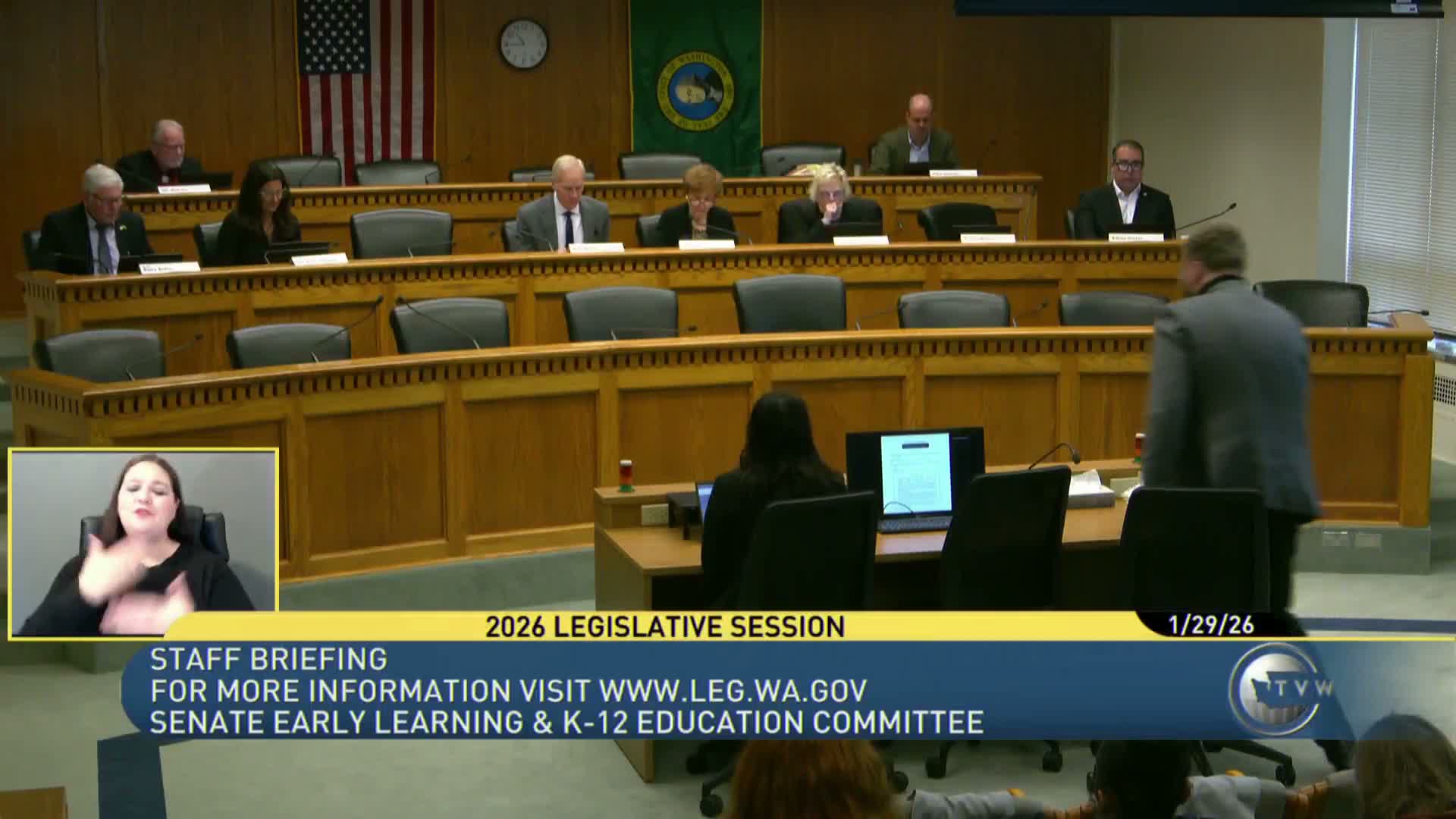
Summary
Senate Bill 53‑46 would add mobile devices to the state definition of digital citizenship, require OSPI research and two reports (initial and final), and provide best‑practice guidance; witnesses ranged from students and principals who favor bell‑to‑bell bans to parents and students expressing safety and emergency‑contact concerns.
The committee considered Senate Bill 53‑46, a proposed substitute that incorporates student mobile device use into Washington’s digital‑citizenship framework and directs OSPI to publish research, guidance and two reports (initial summary in December; final evidence‑based recommendations by December 2028).
Sponsor Senator Lias framed the bill as a data‑driven step toward a vision of device‑free schools. "If we had the power to unilaterally get every phone out of every classroom... I would say, let's do it," the sponsor said, while noting exceptions for medical needs and instructional uses. The substitute would not itself mandate a single statewide ban but would direct OSPI to collect and share evidence and best practices.
Researchers and practitioners cited evidence of classroom distraction. Dr. Dimitri Christakis (University of Washington) said two studies his team conducted show students spend about 25% of the school day on phones and that 20 states have enacted bans; he said Florida data showed improved test scores one year after a ban in that state. Several school leaders reported gains after local bans: "We went phone free and it has been absolutely transformative for my community," Robert Eagle Staff Middle School principal Zachary Stowell said.
Students and parents described social and emotional outcomes, privacy concerns (instances of students using phones to record classmates without consent), and equity considerations; PTSA and advocacy speakers urged a statewide 'bell‑to‑bell' approach to ensure schools with fewer resources can adopt effective policies. Opponents and some testifiers raised safety and emergency‑contact concerns and argued that local boards should retain primary authority.
The proposed substitute requires OSPI to post recommended practices and to deliver initial and final reports summarizing district policies limiting mobile device use and barriers to implementation. Committee members asked about enforcement, equity, and emergency uses; witnesses repeatedly said local implementation is uneven and that a statewide framework could help districts with fewer resources.
No committee vote on SB 53‑46 occurred during the hearing; the committee moved on to other items and scheduled further review.