Get Full Government Meeting Transcripts, Videos, & Alerts Forever!
Get email alerts on the Online Safety Minors topic
No spam. Unsubscribe anytime.
Parents and clinicians push for age verification bill; industry warns of privacy and constitutional risks
Summary
SB 6,111 would require age verification and parental consent for known minors on certain social media platforms and authorize the Attorney General to enforce violations. Supporters cited mental-health harms and international precedents; technology groups and privacy advocates warned of data-collection and First Amendment risks.
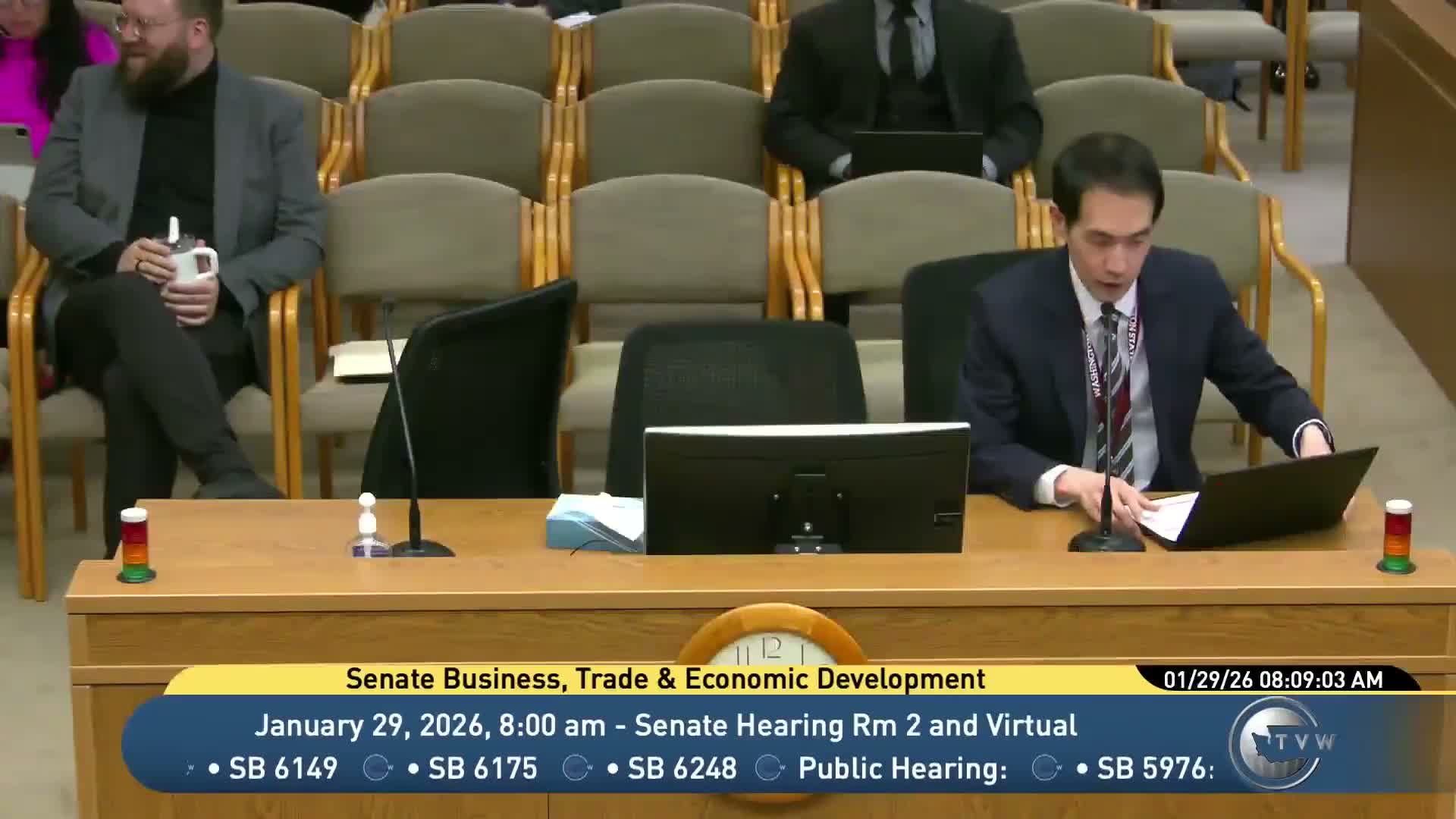
The Senate Business, Trade and Economic Development Committee heard extensive testimony on SB 6,111, a bill that would require certain digital service providers to verify users' ages and obtain parental consent before allowing a known minor to create an account, restrict use of known-minor data and authorize the Attorney General to investigate and enforce violations.
Committee staff opened the discussion with a background on similar laws in other states and outlined litigation surrounding the Mississippi model, noting pending appeals and an emergency application the staff said the U.S. Supreme Court had declined to reinstate. Prime sponsor Senator Solomon framed the bill as a response to parental concerns about social media's effects on teen mental health and described the proposal as a "light touch" intended to block account creation for minors without parental approval.
Supporters included the Washington State PTA, Mothers Against Media Addiction and clinicians who said evidence links social media exposure to increases in adolescent depression, self-harm and eating disorders. Colette Vogel, a working parent from Seattle, described personal experience with a 12-year-old and urged delaying access until at least age 17. Clinicians testified about patterns they observe in care that they attribute to social-media exposure.
Industry groups and privacy advocates opposed the bill as drafted. TechNet and the Washington Technology Industry Association raised constitutional concerns and warned the bill would force platforms to collect and store sensitive identity data without clear safeguards. Jonathan Pincus and other privacy experts argued age verification and identity collection increase the risk of doxxing, identity theft and immigrant profiling and urged the committee not to advance an unrefined bill.
Witnesses suggested a range of next steps: some urged the committee to pass the bill to prompt platform action, others urged interim work to develop implementable verification standards and privacy safeguards. The committee did not take a vote; staff and stakeholders signaled continued talks over privacy protections, definitions of acceptable verification methods and potential safe-harbors for platforms acting in good faith.