
Businesses urge fix to Washingtonemail law; consumer lawyers warn it would weaken enforcement
Get AI-powered insights, summaries, and transcripts
Subscribe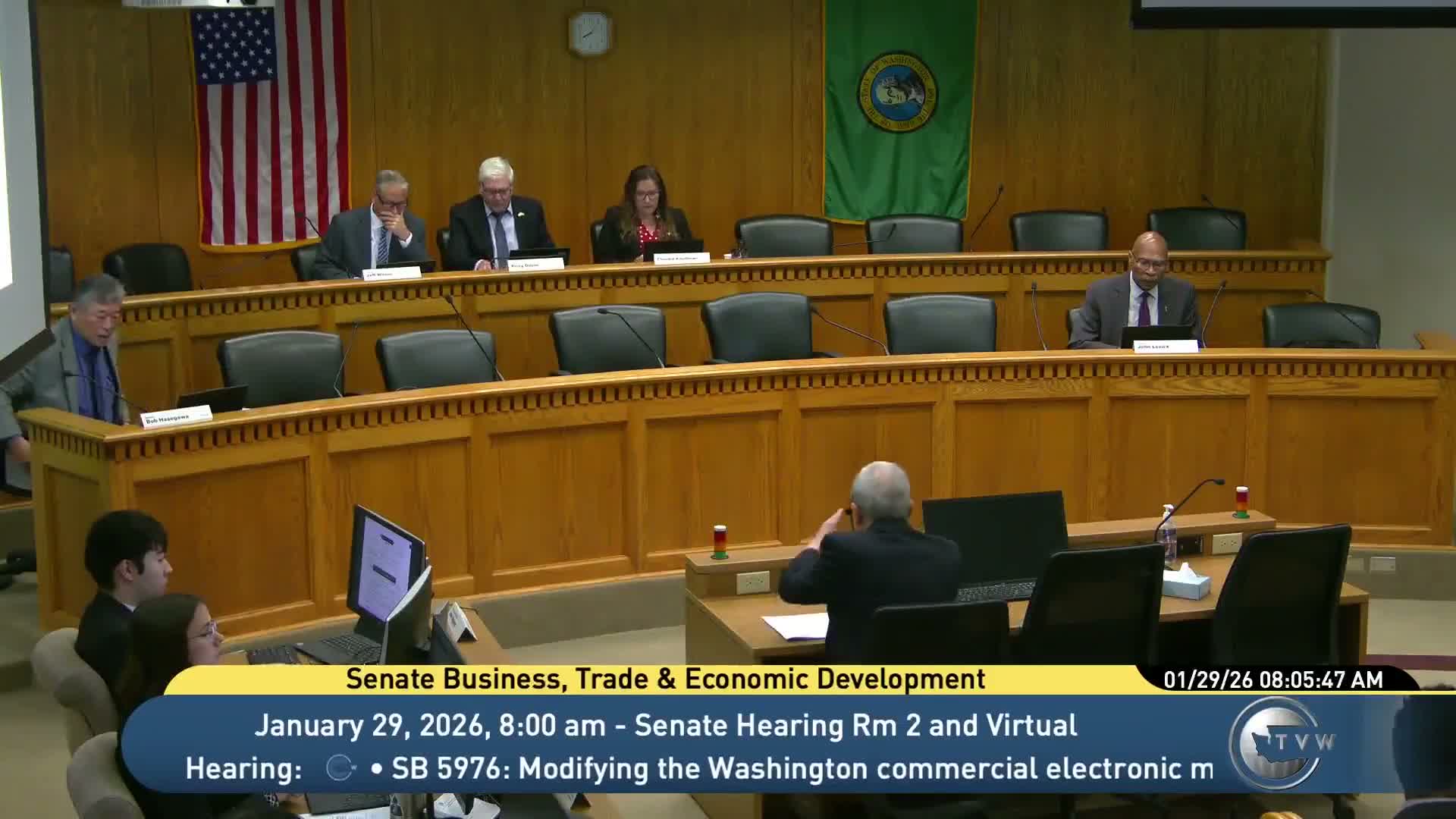
Summary
SB 5,976 would narrow the Washington Commercial Electronic Mail Act by raising reliance and damages thresholds. Retail and hospitality groups urged the committee to act to blunt litigation they call opportunistic; consumer attorneys argued the change would strip a practical enforcement path against deceptive subject lines.
The Senate Business, Trade and Economic Development Committee took testimony on SB 5,976, which would alter the Washington Commercial Electronic Mail Act (CEMA) by tightening the standard for liability and limiting damages in many cases. Committee staff initially briefed the bill and described how it would require a "reliable basis" rather than "reason to know" for senders to be in violation and would require proof that recipients reviewed and detrimentally relied on certain commercial emails before damages under the Consumer Protection Act could be claimed.
Retail associations, small business owners and the hospitality sector testified in support, saying a recent court decision has spawned waves of litigation that punish routine, legitimate marketing. Crystal Leatherman of the Washington Retail Association told the committee she sent members a chart showing "over 80 lawsuits" brought in Washington over routine marketing subject lines and said the litigation threatens small businesses.
Opponents included trial lawyers, consumer advocates and legal-aid representatives who urged rejection of the bill as written. Blythe Chandler, who said she argued Brown v. Old Navy before the Washington Supreme Court, told the committee SB 5,976 "in its current form" should be rejected because it would significantly curtail consumers' ability to hold companies accountable for deceptive email subject lines. Attorneys argued the bill's draft could remove the practical right to sue for many CEMA violations by severing the statute's link to the Consumer Protection Act.
Several witnesses described a possible compromise: a substitute that adds a materiality requirement so that only statements that are materially misleading and likely to affect consumer decisions are actionable. Consumer representatives said academic research and client experiences show targeted misleading subject lines can manipulate purchasing behavior and should remain enforceable.
Supporters warned the current jurisprudence has allowed large-scale class actions that reach small businesses and said a targeted technical fix could restore balance. The committee heard proposed substitute language could be sourced from a House companion and that stakeholders remain in conversation about compromise language.
Committee members asked several witnesses about the prevalence of deceptive subject lines and whether empirical evidence supports either side's claims; many witnesses said their evidence was experiential, although academics and some groups referenced research on targeted marketing tactics. No vote was taken by the committee during the hearing.