Lawmakers hear wide support for creating a Children & Youth Behavioral Health leadership council to implement Washington Thriving plan
Loading...
Summary
SB 6,224 would establish a governor-led Children and Youth Behavioral Health Leadership Council to coordinate implementation of the Washington Thriving strategic plan (prenatal through age 25); clinicians, parents and advocacy groups urged passage and stressed prevention, coordination and inclusion of youth with lived experience.
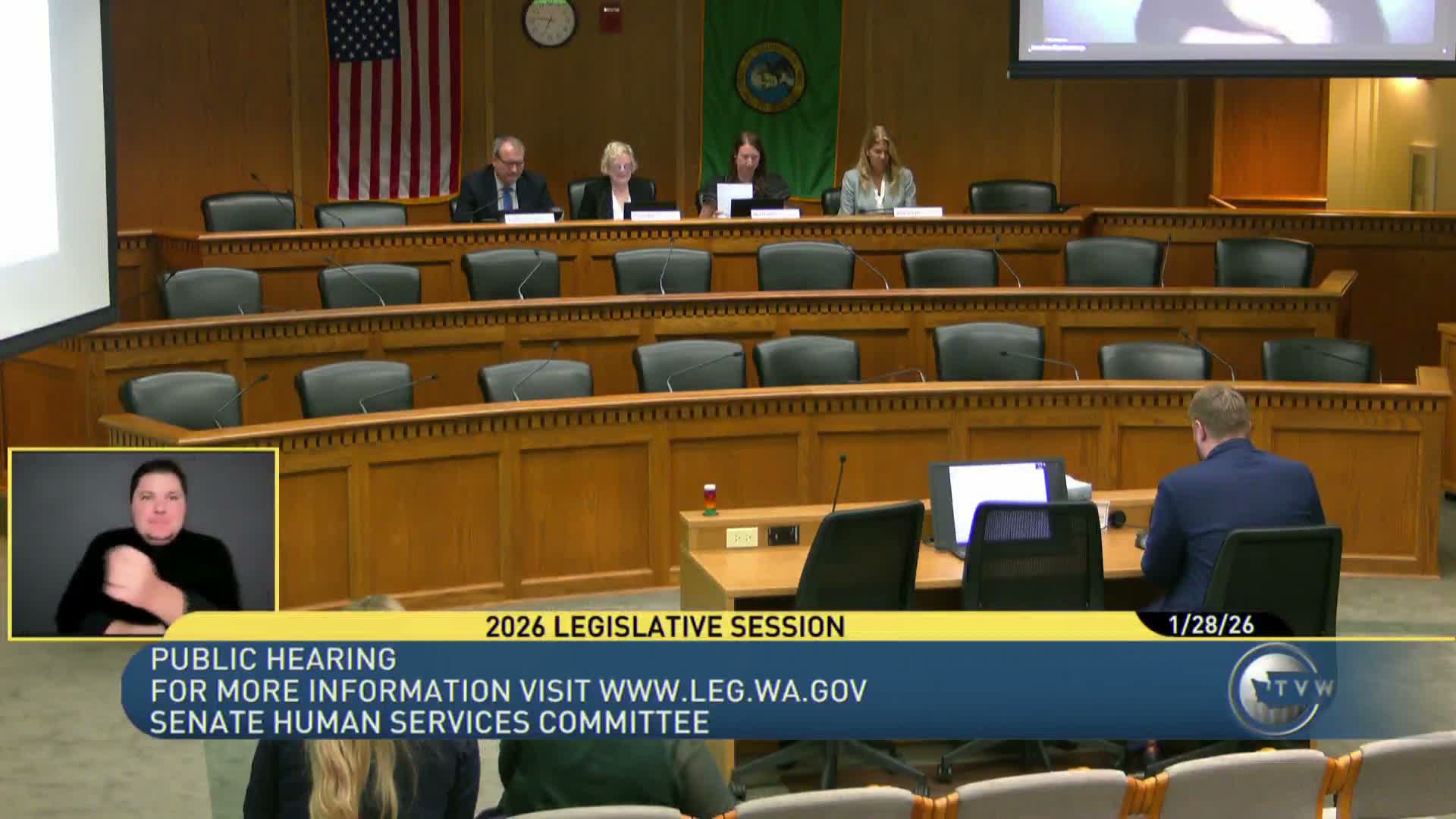
Senate Bill 6,224, which would create a Children and Youth Behavioral Health Leadership Council and formalize implementation of the Washington Thriving strategic plan, drew broad support from clinicians, parents, advocates and state officials at a Jan. 28 hearing of the Senate Human Services Committee.
Committee staff summarized the bill: it creates a leadership council to advise the governor and the Legislature, requires public reporting on council actions and recommendations, establishes an executive coordination officer in the governor’s office to monitor implementation and align private funding, extends the existing Children and Youth Behavioral Health Work Group for two years (to expire in 2031), and directs state, tribal and local partners to align with the Washington Thriving strategic plan.
Senator Claire Wilson, the bill sponsor, said the council aims to break down siloed systems and coordinate services across prevention, treatment and transitions for people from prenatal stages through age 25. “The work of the behavioral health work group has really turned into what is now called Washington Thriving,” she said.
Multiple witnesses described gaps that the leadership council would address: Angela Crews Bolt (lived-experience foster-care advocate) recounted traumatic care experiences and urged prevention; Dr. Alicia Thompson (psychologist, Seattle Children’s Hospital) cited more than 3,100 emergency visits for youth mental-health crises in the past year and urged upstream intervention; Dr. Michael Van Dyke (pediatric critical care) described youth suicide attempts that result in ICU admissions and framed SB 6,224 as prevention.
Taku Minehita, the governor’s special advisor for youth behavioral health, testified the governor supports the bill and noted more than 300 stakeholders contributed to Washington Thriving. Health Care Authority and advocacy groups (Children’s Alliance, Inseparable, Perigee Fund and others) spoke in favor, highlighting coordination, equity and a no-wrong-door approach to services.
Some witnesses asked for additions or clarified priorities: advocates urged inclusion of unaccompanied homeless youth on the council and greater emphasis on rural workforce capacity; one witness asked for more focus on identifying non-psychiatric causes of behavior issues. The sponsor and staff invited technical input and noted the bill would create the governance to align agencies and resources.
The hearing closed with broad support and no committee vote recorded that night.