
Committee narrows some provisions and rejects several amendments to recycling bill before reporting it out
Get AI-powered insights, summaries, and transcripts
Sign Up Free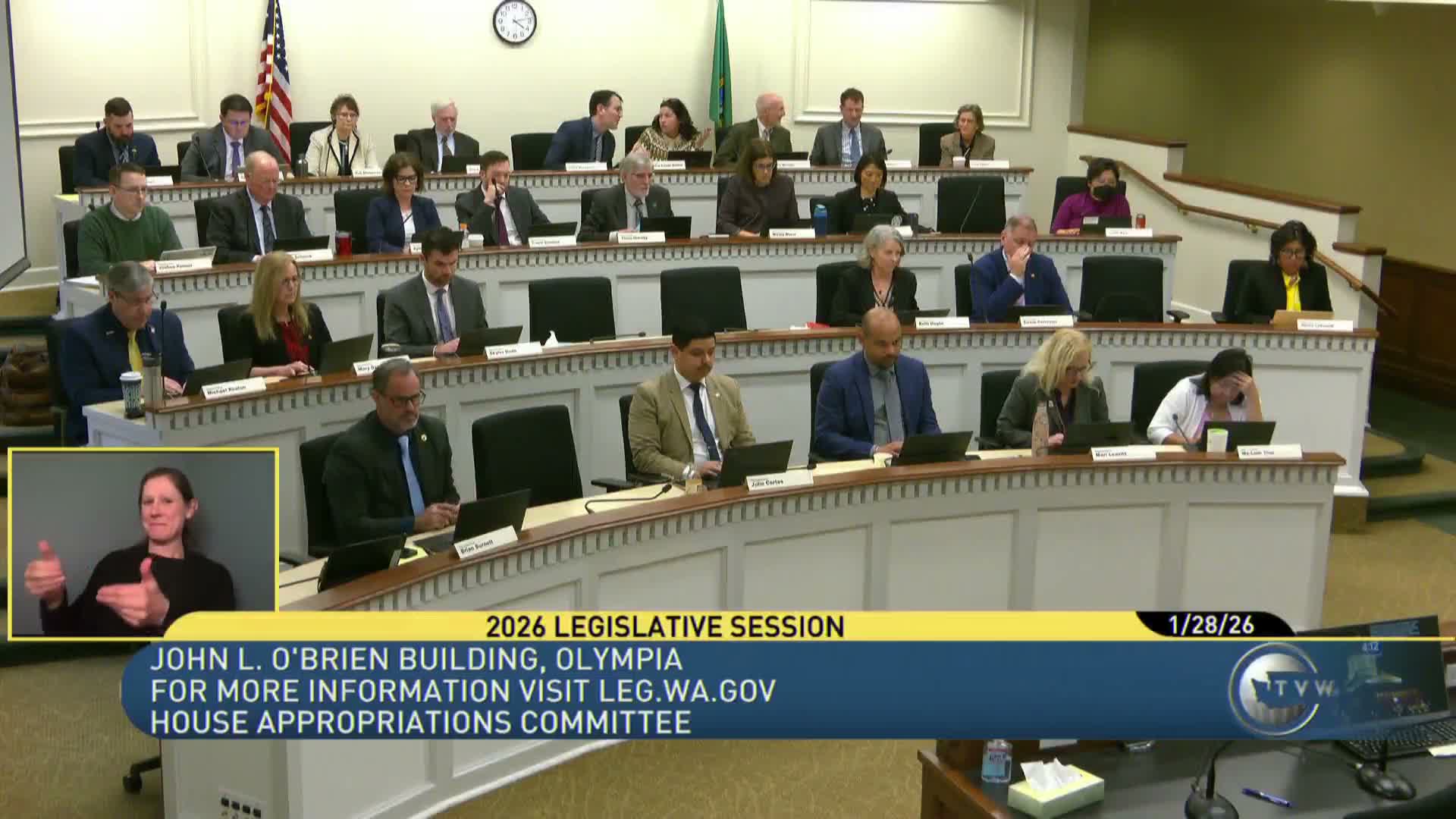
Summary
Third substitute HB 16 07, a broad recycling and beverage container refund package, was debated at length on amendments involving redemption site locations, remittance of unredeemed deposits to the state, accountability for grants, and SNAP protections; most substantive amendments failed on voice votes and the bill was reported out 17–13–1.
The House Appropriations Committee considered multiple amendments to third substitute House Bill 16 07, a recycling and waste‑reduction package that implements a producer responsibility organization (PRO) model for beverage container refunds and creates a framework for unredeemed deposits.
Staff briefed members on five amendments in the Engrossed Bill Binder: a technical cleanup (H 219.1), provisions clarifying express redemption site locations (LIPSON 478), a requirement to remit unredeemed deposits monthly to the Department of Revenue and the creation of a dedicated state account for specified purposes (LIPSON 481 by Rep. Dye), additional grant accountability and performance requirements (LIPSON 479), and H 3240.1 which would publish an average net cost to SNAP households and require DSHS to provide a supplemental SNAP benefit tied to that calculation.
Representative Couture pushed an amendment to prioritize locating express redemption sites near areas with high concentrations of people who rely on refundable beverage containers (to improve equity and access); Representative Stonier expressed concern about identifying permanent sites near mobile unsheltered populations and asked for further work. The Couture amendment failed on a voice vote.
Representative Dye moved LIPSON 481 to direct unredeemed deposits into a state account to aid the working families tax credit and litter control. Dye cited national unredeemed deposit totals (testimony referenced roughly $906,000,000 nationwide) and argued the revenue could fund working families and anti‑litter efforts. Opponents warned redemption rates could rise over time (weakening the revenue stream) and cautioned against using an uncertain and potentially regressive source for critical programs; that amendment was not adopted on a voice vote.
An accountability amendment requiring measurable performance objectives and state auditor compliance for grant recipients was debated and not adopted. Representative Couture’s H 3240.1 amendment—targeting SNAP and FAP recipients by asking OFM to publish average net costs and requiring DSHS to provide supplemental benefits—was described by supporters as protecting low‑income households from regressive effects; opponents called it administratively burdensome and costly. It also failed on a voice vote.
After considering amendments, Vice Chair Macri moved to incorporate any adopted amendments and report the third substitute with a 'do pass' recommendation. The roll call produced 17 ayes, 13 nays and 1 excused; by that vote, third substitute House Bill 16 07 was reported out of committee with a due‑pass recommendation.
What changed: only technical cleanup amendments and limited language fixes were adopted; several policy amendments aimed at equity, remitting unredeemed deposits to state accounts, grant accountability and SNAP protections were rejected in committee. The bill as reported retains the PRO structure with state oversight and the mechanisms previously briefed by staff.
Next steps: HB 16 07 will move forward from Appropriations with a due‑pass recommendation; advocates and critics flagged issues (equity, reliability of unredeemed deposit revenue, auditing of grant recipients) they expect to pursue in later stages.