Bill would let colleges regulate and permit campus encampments with notice and safeguards
Summary
House Bill 25 89 would let institutions of higher education require notice and apply content‑neutral time, place and manner rules for campus encampments, permitting only registered student organizations or recognized bargaining units to request authorization; sponsor and witnesses debated definitions and First Amendment implications.
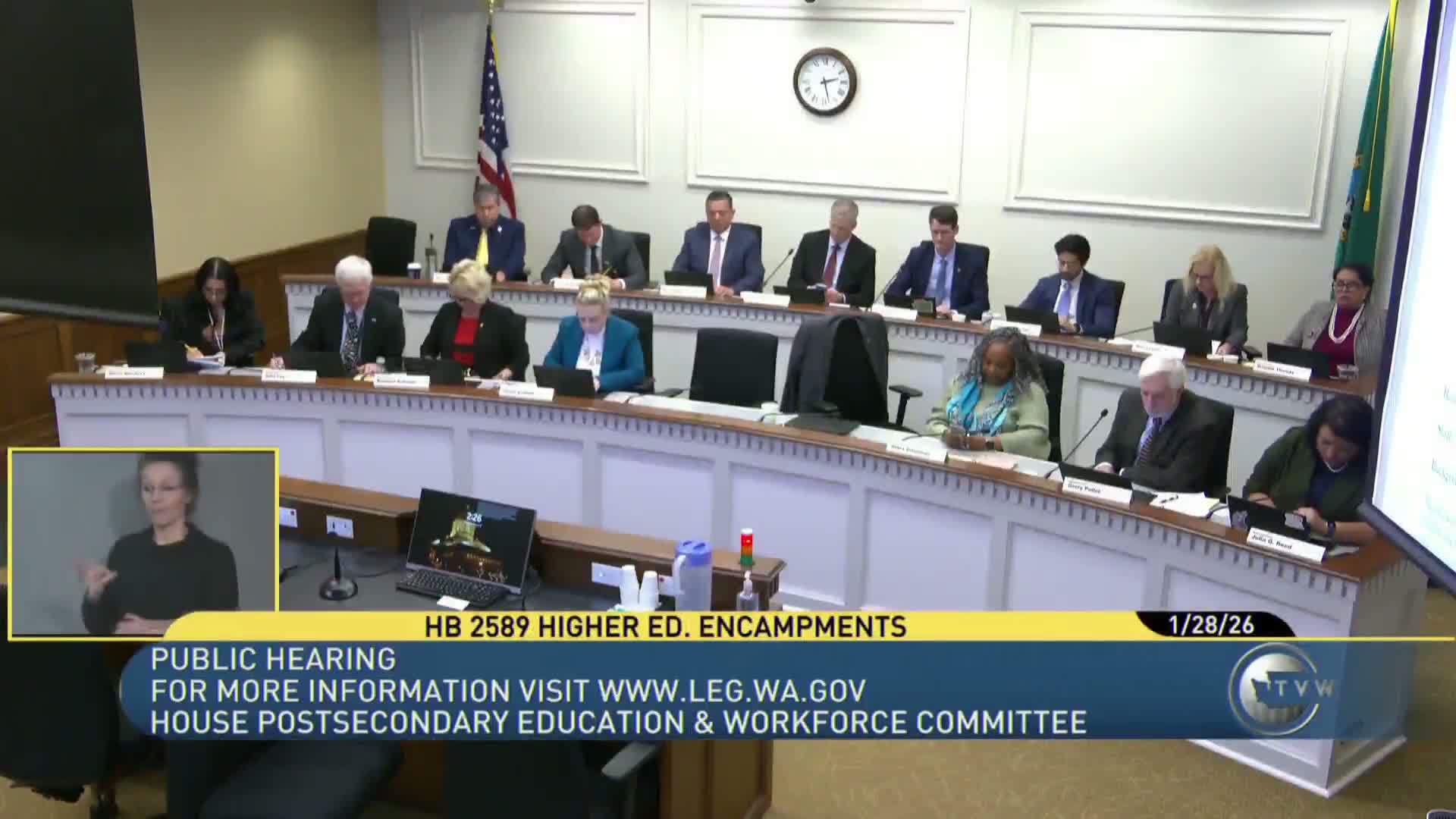
On Jan. 28 the committee considered House Bill 25 89, which would prohibit unauthorized encampments on college campuses except under an institutional authorization process limited to registered student organizations and recognized bargaining units.
Sponsor Rep. Marie Levitt said the bill "does not ban encampments" but would codify existing time, place and manner restrictions to preserve campus safety and access. She said an amendment would reduce notice from 21 days to five days to provide more opportunity for authorized encampments.
Staff counsel Elizabeth Wren told members the bill would require 21‑day notice for encampments (subject to sponsor amendment) and permit institutions to deny authorization on neutral grounds to prevent disruption of education and access. The bill authorizes law enforcement or campus security to remove unauthorized encampments and allows institutions to seek damages for violations.
Testimony illustrated sharply different experiences. Witness Hugh Macaulay described living through encampments at Evergreen State College and said enclosed tents, harassment and safety concerns made campus inaccessible for some students; "It wasn't a safe environment," he said. Jackson Pincus of the American Jewish Committee tied encampments that began after Oct. 7, 2023, to safety and community impacts at multiple Washington campuses and urged support.
Independent Colleges of Washington urged definitional changes to exclude some independent nonprofit campuses or to clarify scope, arguing operational burdens and faculty/staff governance concerns. Committee members asked who determines a "significant governmental interest" and who assesses content neutrality. The sponsor said institutions would make those determinations and the bill is modeled on existing institutional policies and WAC language.
The committee closed the public hearing after taking testimony and questions; no vote was recorded.