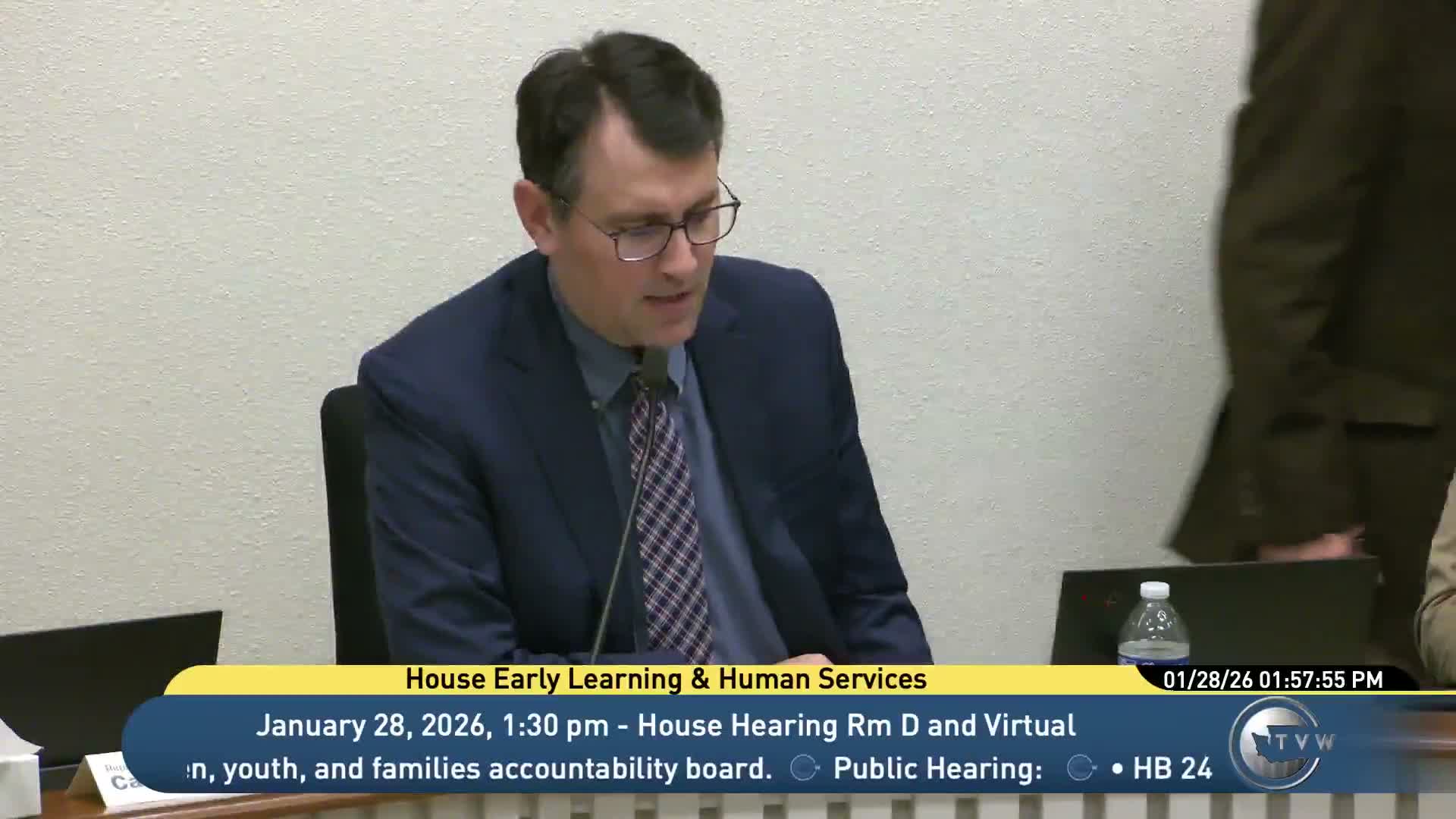
Committee hears proposal for two‑year housing pilot for youth in extended foster care
Loading...
Summary
House Bill 24 55 would create a two‑year pilot starting 01/01/2027 to provide rental assistance and housing fees to 50 youth in extended foster care for up to 24 months; DCYF must report to the legislature by 06/30/2029 and complete transition planning for enrolled youth. Multiple current and former foster youth and advocacy groups testified in strong support.
Representative Jamila Taylor introduced House Bill 24 55 as a targeted two‑year pilot to provide rental assistance and housing supports to youth enrolled in extended foster care.
Under the bill, DCYF would operate a two‑year pilot beginning Jan. 1, 2027, to provide rental assistance and associated housing fees to 50 eligible youth for up to 24 months, not to extend beyond a participant’s 20th birthday. Eligibility would be limited to youth in extended foster care who are homeless or at imminent risk of homelessness. The bill requires DCYF to conduct transition planning at least three months before a participant’s 20th birthday, assist with federal housing voucher applications, and report outcomes to the legislature by June 30, 2029. Staff noted that federal Foster Youth to Independence (FYI) vouchers provide up to 36 months of assistance to some former foster youth, but those vouchers are not available to youth currently participating in extended foster care.
Sponsor remarks stressed the pilot’s role as a modest, fiscally mindful step to stabilize young people while the legislature considers larger investments. Representative Taylor said stable housing is ‘‘one of the most important stability options’’ and urged support despite budget constraints.
Multiple current and former foster youth and nonprofit advocates gave emotional testimony urging passage. Zania Coleman (TeamChild’s Youth Advocacy Coalition) described being homeless while in extended foster care and asked lawmakers to pass the bill. Jonas Rios, a former foster youth, told the committee he moved through multiple placements and called the pilot a smart investment. Kadina Chatterton recounted repeated instability and violence while homeless and urged the legislature to act. Testimony from the Mockingbird Society, Communities and Schools of Washington, and others emphasized the limited reach of current programs and the need for coordinated supports.
Members pressed sponsors and staff on logistics and timing. Representative Benner asked whether there would be enough time between passage, procurement (RFPs) and pilot operations; staff confirmed the pilot would run 01/01/2027–01/01/2029 and that the report would be due 06/30/2029, and members discussed the possibility of an interim review or extending timelines. No formal vote took place in the hearing; the committee closed the hearing after public testimony.
The testimony brought personal accounts of homelessness and program gaps, and members indicated they expected to discuss timeline and implementation details as the bill moves through the process.