
Committee hears bill to raise school district public bid thresholds
Get AI-powered insights, summaries, and transcripts
Subscribe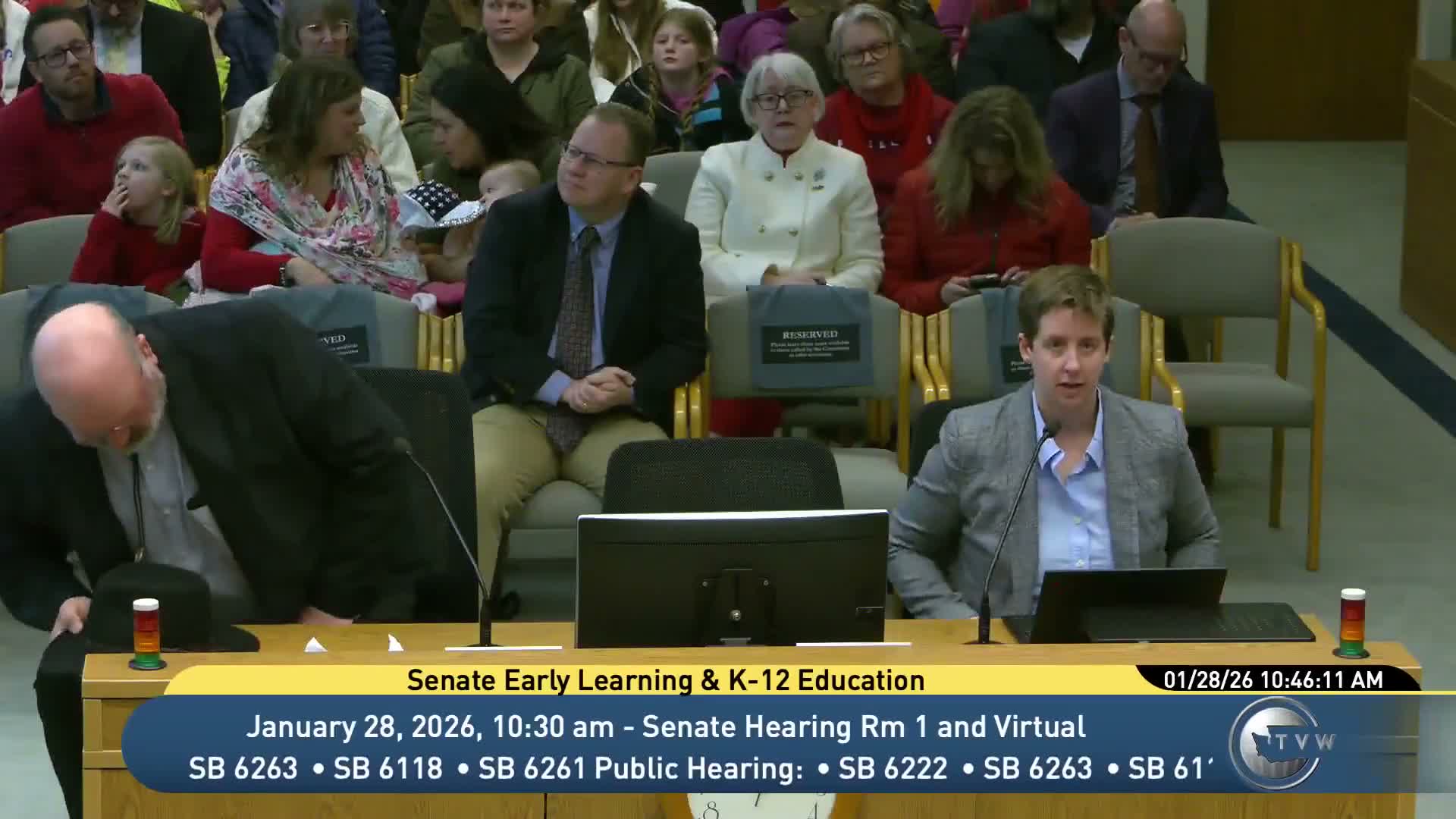
Summary
Legislators and witnesses supported SB 6,263, which raises competitive bidding thresholds for school districts (no public bidding under $75,000, quotes for $75,000–$150,000, and open bids above $150,000) to reduce costs and administrative burdens tied to deferred maintenance and inflation.
The committee heard Senate Bill 6,263, which would raise public procurement thresholds for school districts and align district bid limits more closely with those used by cities and ports.
Staff described the changes as: purchases below $75,000 would not be subject to public bidding (up from $40,000); purchases between $75,000 and $150,000 would require quotes from at least three vendors (raised from $40,000–$75,000); and purchases above $150,000 would follow an open public bidding process (raised from $75,000). One provision increases the in‑district repair threshold from $75,000 to $100,000 for work that a district department may perform directly.
Senator Ron Mazal, the bill sponsor, said districts have not updated these thresholds for about 20 years and that raising them reduces the legal and administrative costs of routine projects. "When bid limits fall behind real world costs, districts are often forced to delay or defer necessary maintenance projects," Rick Chiesa, representing public school employees, testified in support. Amber Porter, a school finance officer, described the staff time and attorney expenses associated with preparing formal bids and noted some rural districts receive no responsive bids after lengthy procurements.
Grace Yuan, legal counsel for the Puget Sound School Coalition, urged the committee to move the bill to increase efficiency though she noted the last update had been in 2013.
A fiscal note was available and showed no fiscal impact. Supporters said the change aims to reduce delays and deferred maintenance and to allow districts to deploy in‑house resources where appropriate.
The committee did not take a final vote during the hearing.