Get Full Government Meeting Transcripts, Videos, & Alerts Forever!
Get email alerts on the Consumer Protection topic
No spam. Unsubscribe anytime.
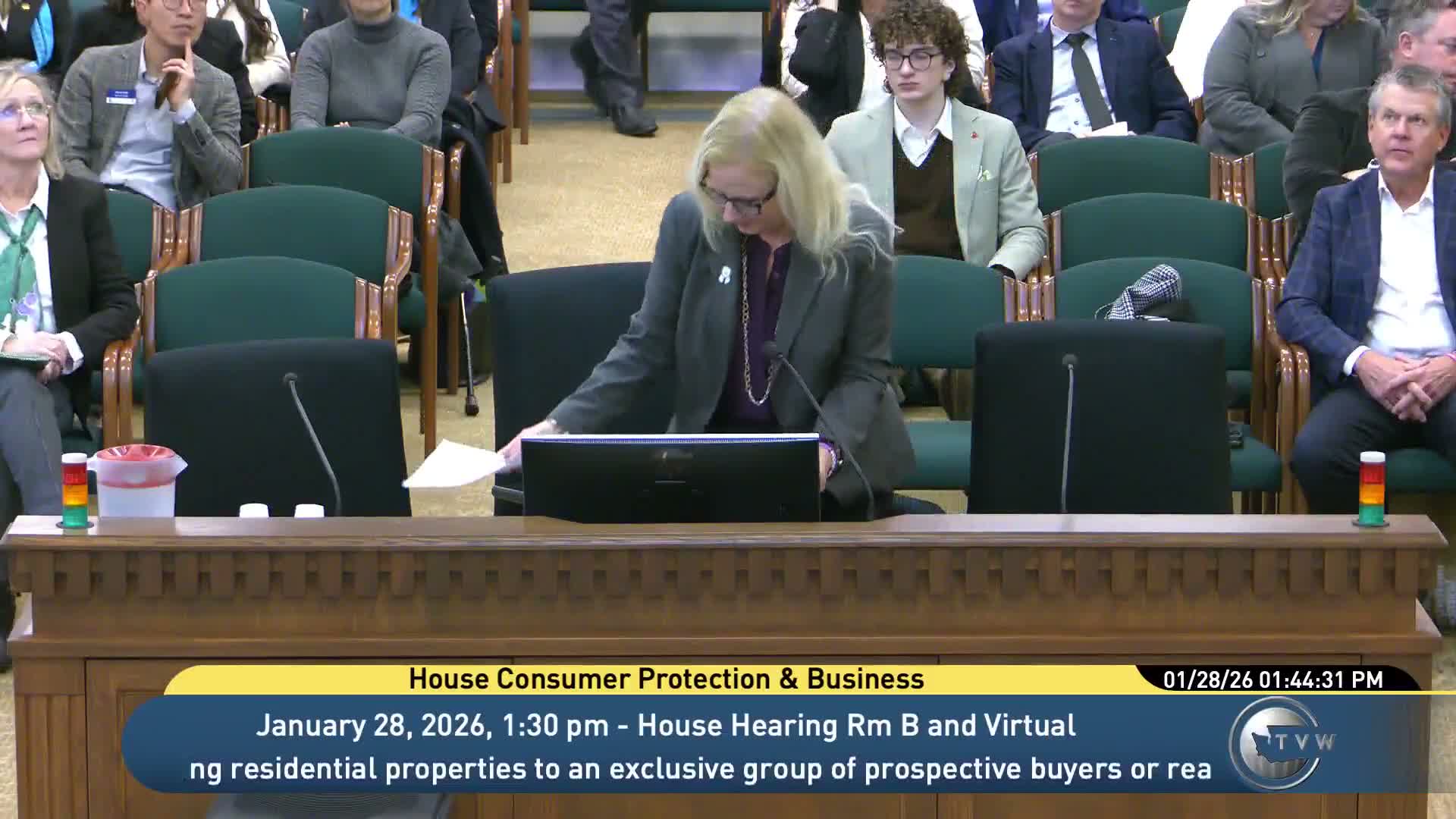
Committee hears bill to modernize self‑storage law; operators and advocates disagree on notice safeguards
Summary
House Bill 2,240 would allow electronic rental agreements, deem acceptance after 30 days of continued use, and set notice and disposal timelines for abandoned property; storage operators support clarity while advocates worry about impacts on people with unstable housing and call for multi‑channel notice.
House Bill 2,240, as briefed to the House Consumer Protection and Business Committee, would update the Washington Self‑Service Storage Facility Act to permit electronic delivery and execution of rental agreements, confirm acceptance if a person continues to use a unit for more than 30 days after a delivered but unsigned agreement, and standardize notice periods and disposal timelines after termination or non‑renewal.
Sponsor Representative Ari Levitt (28th District) described the bill as a modernization that balances consumer protection with operational clarity. "This provides an opportunity to streamline and modernize our self storage unit procedures and statute," Levitt told the committee, noting many military families rely on flexible storage arrangements.
Storage‑industry witnesses said the bill fills gaps operators now face when terminating agreements for safety or other nonpayment reasons. Lance Baker (president, Washington State Self Storage Association) and Patrick Gilram (Washington Self Storage Association) said the bill creates consistent procedures for notices, access restrictions while property remains, and a minimum period before disposal — typically at least 15 days' removal notice plus additional days before disposal.
Advocates raised concerns about people who lack reliable phone, mail, or email access. Taylor Farley (Queer Power Alliance) warned that relying on electronic notice without meaningful multi‑channel safeguards could expose people in housing transition to loss of essential belongings, and urged additional notice methods and protections for vulnerable customers.
Committee members pressed witnesses about how notice would be provided and whether multiple methods (email plus verified mail) could be required; industry witnesses said they would be open to requiring both verified mail and email when the contract calls for email.
The committee did not vote on HB 2,240 during this session. Testimony cited other states that have adopted similar modernization provisions, and committee members asked staff to track language ensuring adequate receipt protections for consumers.