Get Full Government Meeting Transcripts, Videos, & Alerts Forever!
Committee hears bill to let districts sell or grant surplus laptops to students
Summary
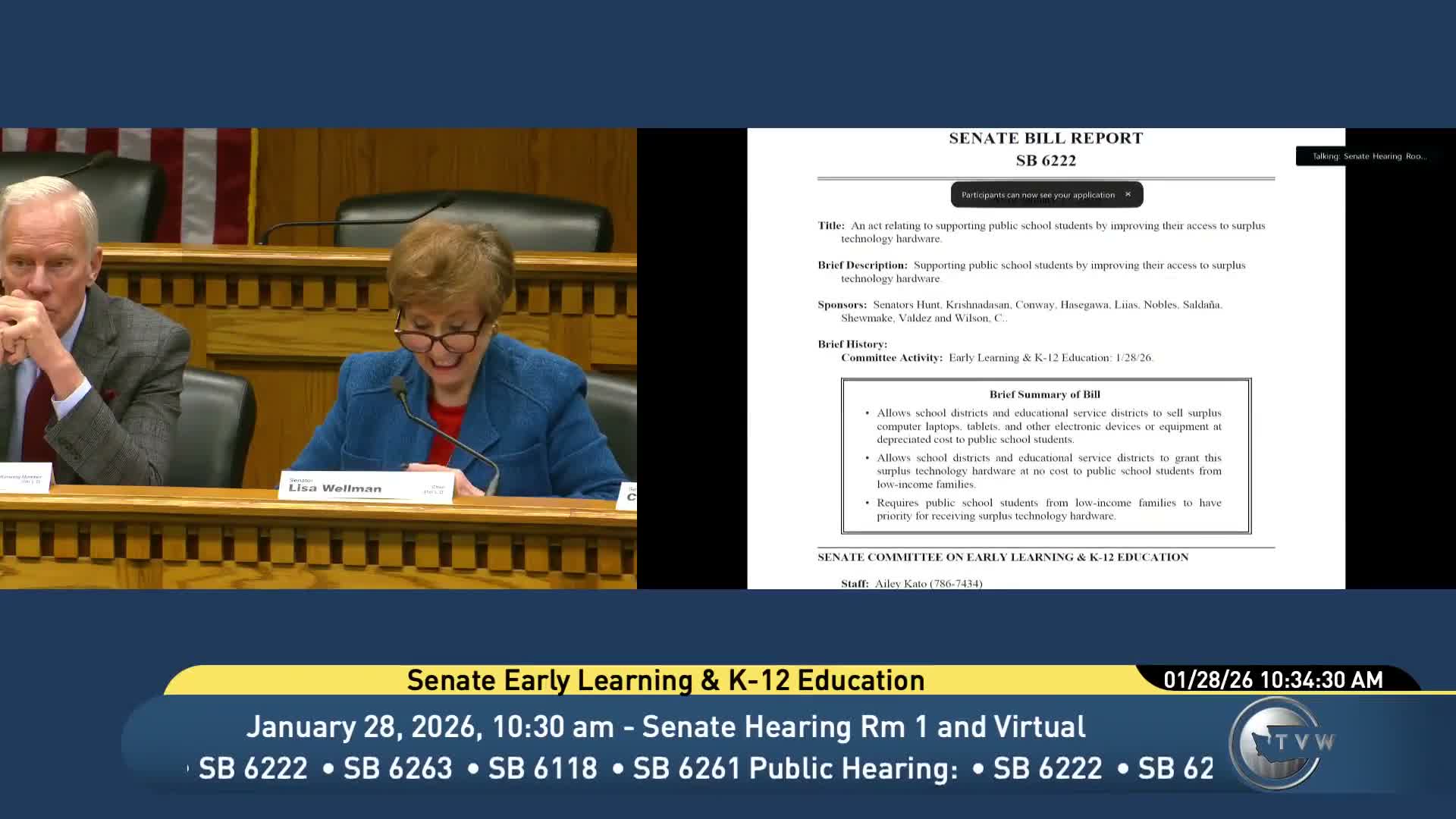
The Early Learning & K‑12 Education Committee heard SB 6,222, which would let school districts sell depreciated surplus technology to students and grant devices at no cost to students from low‑income families (priority given to those eligible for free or reduced‑price meals or incomes ≤185% of the federal poverty level).
The Early Learning & K‑12 Education Committee on Tuesday considered a substitute to Senate Bill 6,222 that would let school districts and educational service districts sell surplus technology — laptops, tablets and similar devices — at depreciated cost and grant them at no cost to students from low‑income families.
Committee staff member Eileen Cotto said the substitute preserves existing surplus processes while adding explicit authority to prioritize public school students and to grant devices without charge to students who qualify for free and reduced‑price meals…
Already have an account? Log in
Subscribe to keep reading
Unlock the rest of this article — and every article on Citizen Portal.
- Unlimited articles
- AI-powered breakdowns of topics, speakers, decisions, and budgets
- Instant alerts when your location has a new meeting
- Follow topics and more locations
- 1,000 AI Insights / month, plus AI Chat