
Committee reviews bill adopting NAIC model for travel insurance; OIC and AG flag issues
Get AI-powered insights, summaries, and transcripts
Subscribe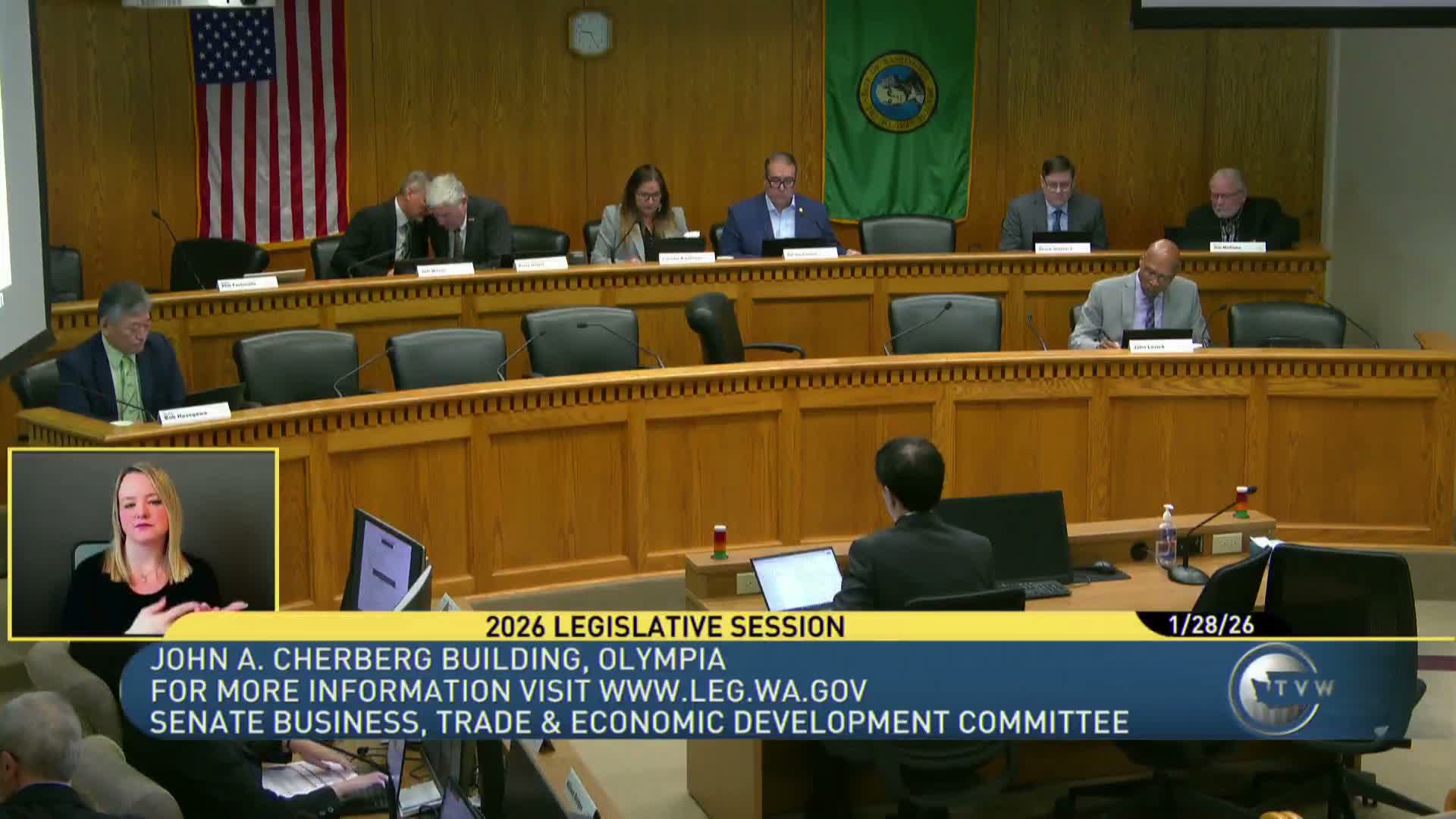
Summary
SB 6248 aims to adopt the NAIC model framework for travel insurance into Washington law. Industry groups backed the bill; the Office of Insurance Commissioner and Attorney General’s Office raised concerns about unlicensed adjuster language and possible conflict-of-law provisions that could affect state consumer-protection and anti-discrimination laws.
Staff briefed the committee on SB 6248, which substantially adopts the National Association of Insurance Commissioners (NAIC) model approach to travel insurance. The bill defines travel insurance and related producer/administrator roles, clarifies marketing and disclosure requirements, establishes licensing/registration regimes for travel administrators and producers, and specifies how travel-insurance rates and forms must be filed with the Office of the Insurance Commissioner (OIC).
Industry witnesses including Jean Leonard and Karen Alvarado of the U.S. Travel Insurance Association expressed support, saying uniform model rules increase competition and protect consumers. They said 41 states have adopted the model and Washington should follow suit with technical adjustments discussed with OIC.
The Office of the Insurance Commissioner and the Attorney General’s Office raised two concerns on the record. OIC officials said they remain concerned that the model language could allow unlicensed adjusters to handle travel-claim adjustments and asked for clear accountability tying claim adjustment responsibility to licensed entities. The Attorney General’s office cautioned that some model-language conflict-of-law provisions may inadvertently limit application of Washington’s consumer protection and anti-discrimination laws; the AGO requested that state protections remain able to apply where appropriate.
Staff noted an OIC fiscal estimate showing operating costs of roughly $413,000 from regulatory accounts and $43,000 in reduced general-fund revenue in the current biennium; staff indicated further stakeholder work and amendments may address open concerns.