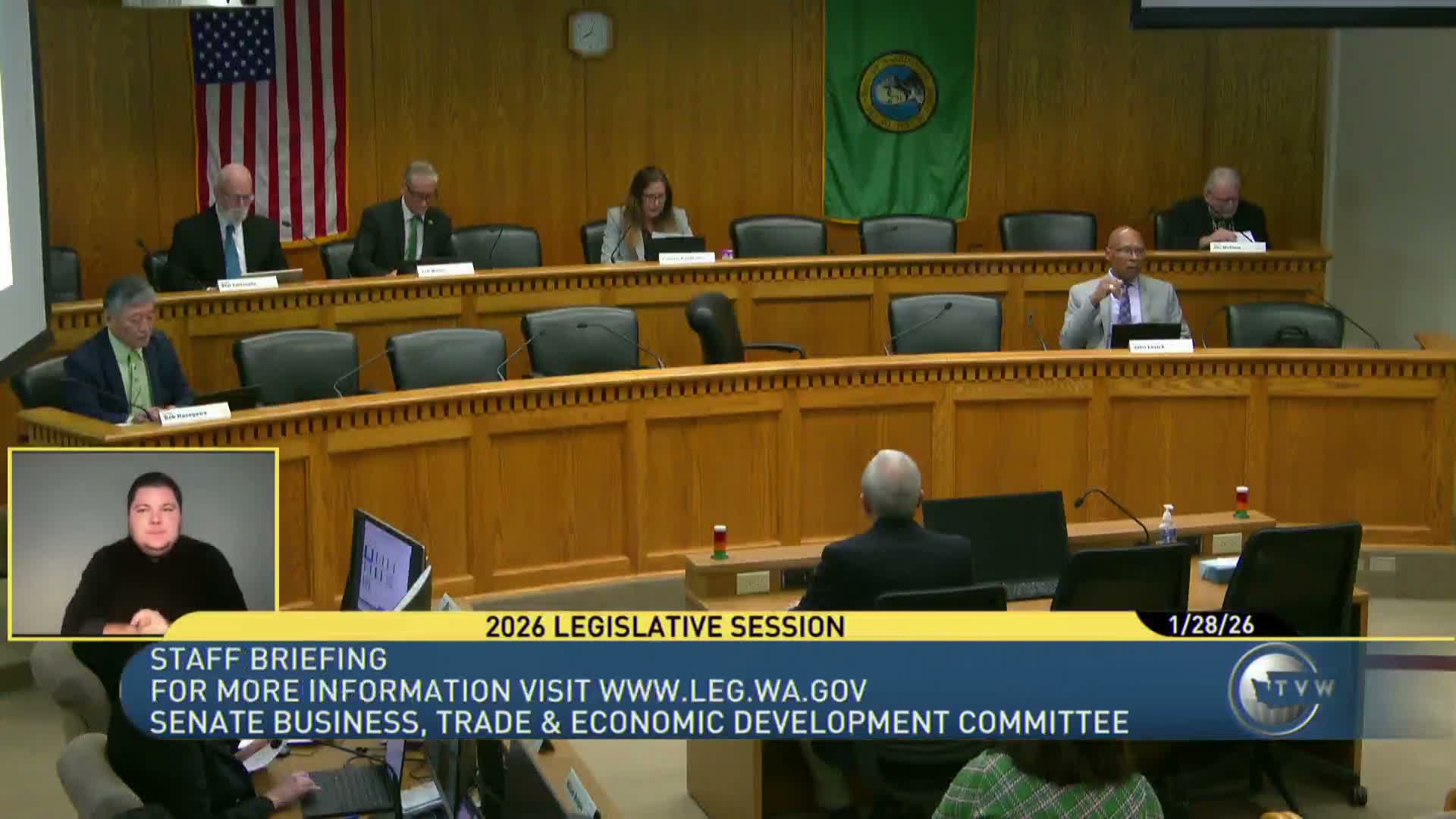
Senate committee hears WAVE Act to curb predatory ticket reselling; advocates and platforms clash
Loading...
Summary
The Washington Senate Business Committee heard SB 6175, the Washington Access and Venue Equity (WAVE) Act, which would license resellers, require a $25,000 surety bond, guarantee refunds and cap resale total price at 110% of the original. Arts groups backed the measure; resale platforms and ticket intermediaries asked for technical fixes and warned of unintended consequences.
Senator Liz Lovelitz introduced SB 6175, the Washington Access and Venue Equity (WAVE) Act, telling the Senate Business, Trade and Economic Development Committee that predatory resale practices and automated bulk purchases have harmed artists, small venues and fans. The bill would create a Department of Licensing licensing framework for commercial ticket resellers, require a $25,000 minimum surety bond, ban speculative ticketing and require guaranteed refunds. It sets an all-in resale cap so the total price offered by a reseller — including fees and taxes — may not exceed 110% of the ticket’s original total price, and it takes effect July 1, 2027.
The sponsor said a substitute is being drafted to clarify definitions and operational mechanics, particularly how price caps and transferability work in practice. ‘‘These predatory practices are consumer protection problems,’’ Lovelitz said, recounting an instance in which a patron paid large sums for what turned out to be unverifiable tickets.
Proponents included executives from nonprofit and historic venues and artist groups. Jill Barnes, executive director of the Washington Center for the Performing Arts, told the committee that resellers siphon subsidized and donor-supported tickets from community venues and urged the committee to ‘‘support Senate Bill 6175 and our live event economy.’’ Ron Jubitz of the Music Artist Coalition described resellers inflating prices ‘‘300, 500, even 1,000 percent’’ and said artists and fans lose when tickets become speculative commerce.
Opponents and industry witnesses urged caution and several technical changes. Sean Ayash of StubHub said legitimate secondary marketplaces moved resale from street corners into guaranteed platforms and that an inflexible cap risks pushing transactions to unregulated channels. Josh Stevens of Live Nation requested clarifications about whether taxes are intended to be included in the 10% fee cap language, asked that the bill prohibit speculative activity by platforms as well as brokers, and suggested extending the cancellation-notice window from eight to 24 hours.
Committee members pressed witnesses on whether a ticket is property or a revocable license and on transferability rules. Industry witnesses noted that section 3 requires pre-purchase disclosure of terms and conditions that might limit transfers; proponents emphasized transparency so buyers know the ‘‘all‑in’’ price and transfer rules before purchase.
Vice Chair Cortez closed public testimony after wide participation from venue managers, artist advocates and statewide cultural organizations who urged protection for small and rural venues. The committee did not take a vote on SB 6175 during the hearing; staff and the sponsor said further drafting and stakeholder engagement are underway.