Get Full Government Meeting Transcripts, Videos, & Alerts Forever!
Get email alerts on the Hb2664 topic
No spam. Unsubscribe anytime.
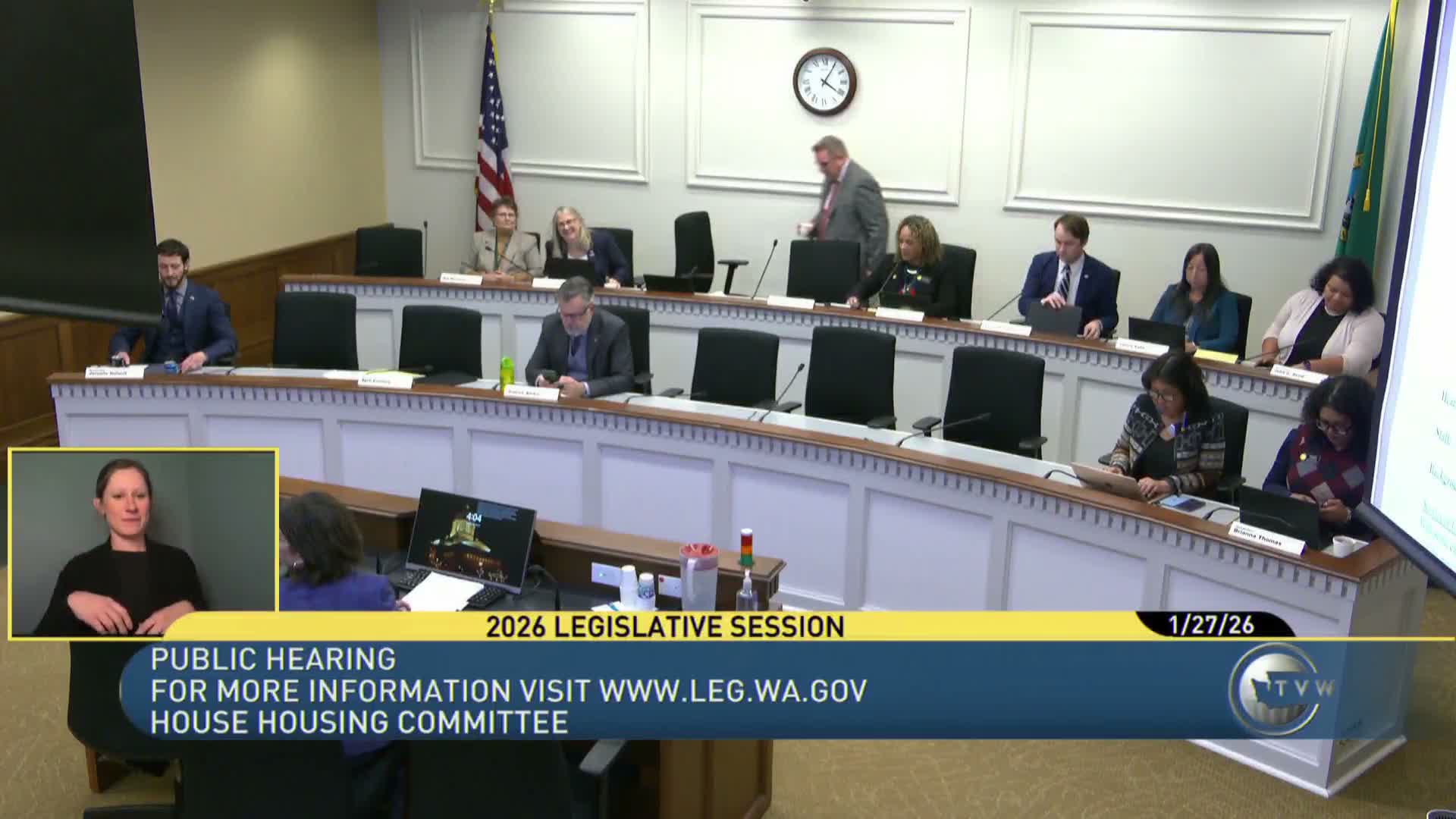
House housing committee hears bipartisan push to remove certified-mail requirement for tenant notices
Summary
Supporters told the House housing committee that a certified-mail requirement added last session has led to high return rates, higher costs and reduced notice receipt; proponents urged replacing certified mail with regular mail and posting/mailing for unlawful detainer notices under HB 2664.
The House housing committee heard broad support for House Bill 2664, a measure to remove a recent certified-mail requirement for unlawful detainer and related tenant notices and instead deem service complete when a copy is mailed with postage prepaid or posted and mailed when the tenant is not present.
Representative April Connors, prime sponsor (8th Legislative District), said the change is intended to correct unintended consequences from last session’s amendments and to make sure renters actually receive notices. “They’re not required to take that little green slip and go down to the post office and present ID and waste their time,” Connors said, arguing the bill restores workable notice practices without undermining due process.
Committee staff explained the bill’s mechanics: prior changes (added by House Bill 1003) had required certified mail in multiple places; HB 2664 would remove the certified-mail requirement and clarify that service is complete when mailed from within the state with postage prepaid, or, where the person entitled to notice is not on the premises, by leaving a copy with a person of suitable age or discretion at the premises and sending a copy to the tenant’s residence.
A broad group of housing providers and managers testified in favor. Crystal Perkey of the Washington Multifamily Housing Association told the committee the certified-mail rule created “significant administrative burdens” and said many certified pieces are returned to providers without reaching tenants. Property manager Corey Brewer, who represents more than 2,000 rental households in the Greater Seattle area, provided a stack of returned certified-mail notices and said his office sees dozens returned in a single week. “The overwhelming majority of [tenants] dislike personal process service, and they dislike certified mail,” Brewer said.
Joe Plots, senior regional manager with Bellwether Housing, said his nonprofit manages more than 3,000 units and that roughly 90% of certified notices were undelivered in his portfolio, producing banker boxes of returned notices in support of the bill. Emily Kinnear of Landmark Real Estate Management said internal data show about 42% of certified notices were returned unclaimed and raised safety and privacy concerns about leaving visible notices on doors.
Speakers representing trade groups — including the Rental Housing Association of Washington and the Association of Washington Business — described HB 2664 as a practical correction that will lower costs for providers and reduce the number of notices never reaching tenants. Peter Hansen, representing Key Winter Tacoma Property Management, told the committee he lost 45 owners who sold rental properties in 2025 because of added costs and said seven more owners sold in January, a trend he said reduces rental supply and could push rents higher.
No opposition testimony was recorded during the hearing; committee members asked one clarifying question about whether lease renewals would be included in the bill, to which the sponsor said lease renewals were not currently included but she would discuss the point with co-sponsors. The public hearing concluded with no formal vote recorded in the transcript.
The committee did not take final action on the bill during this hearing; the next procedural step was not specified in the record.