Startup founders and tech groups oppose SB 6,229; budget center backs closing QSBS exemption
Loading...
Summary
SB 6,229 would subject qualified small business stock (QSBS) gains to Washington's capital gains tax; startup founders and industry groups warned the change would harm entrepreneurship while the Washington State Budget and Policy Center and other advocates said the exemption chiefly benefits the wealthiest and closing it would raise revenue for public programs.
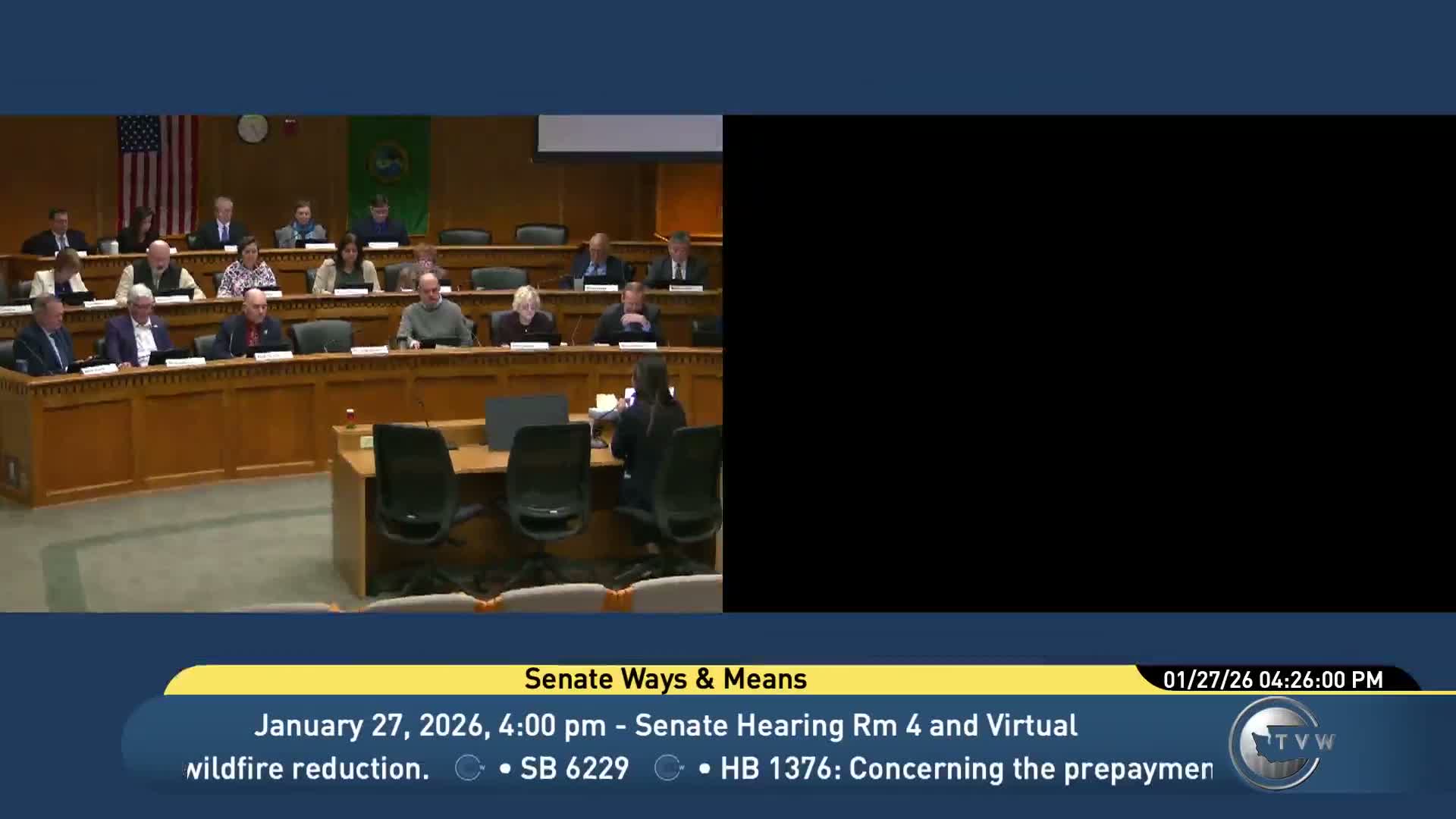
The Senate Ways and Means Committee on Jan. 29 heard sharply divided testimony on Senate Bill 6,229, which would make excluded long-term capital gains from qualified small business stock (QSBS) subject to Washington’s capital gains tax for gains earned on or after Jan. 1, 2026.
Committee staff said the bill would affect roughly 260 taxpayers and estimated a revenue increase of about $1.2 million in fiscal year 2027 and $3.4 million over the four‑year outlook; the Department of Revenue would incur implementation costs. Several tech founders, venture capitalists and industry advocates argued the fiscal note masks broader economic damage. Aviel Ginsberg, a general partner at Founders Co‑op, called the bill an “extinction-level event” for local venture activity and warned founders and investors could relocate.
Opponents, including the Washington Technology Industry Association and multiple founders who testified, said QSBS is a key long‑term incentive that helps entrepreneurs attract capital and reward early employees. Several witnesses urged the committee to reject SB 6,229, arguing the state should preserve the federal §1202 incentive in practice.
Supporters of the bill — including Mia Shigemura of the Washington State Budget and Policy Center — said the QSBS exemption primarily benefits the wealthiest 1% of households and that closing it would make the tax code less regressive and free revenue for early‑learning and childcare programs. Shigemura cited a higher estimate from the Institute on Taxation and Economic Policy that closing the exemption could raise substantially more revenue than the fiscal note indicates.
Committee members questioned the divergence between the official fiscal note and outside research; staff said the committee will use the fiscal note for budgeting purposes. The committee concluded public testimony on SB 6,229 without taking a final vote.