Get Full Government Meeting Transcripts, Videos, & Alerts Forever!
Get email alerts on the Student Homelessness topic
No spam. Unsubscribe anytime.
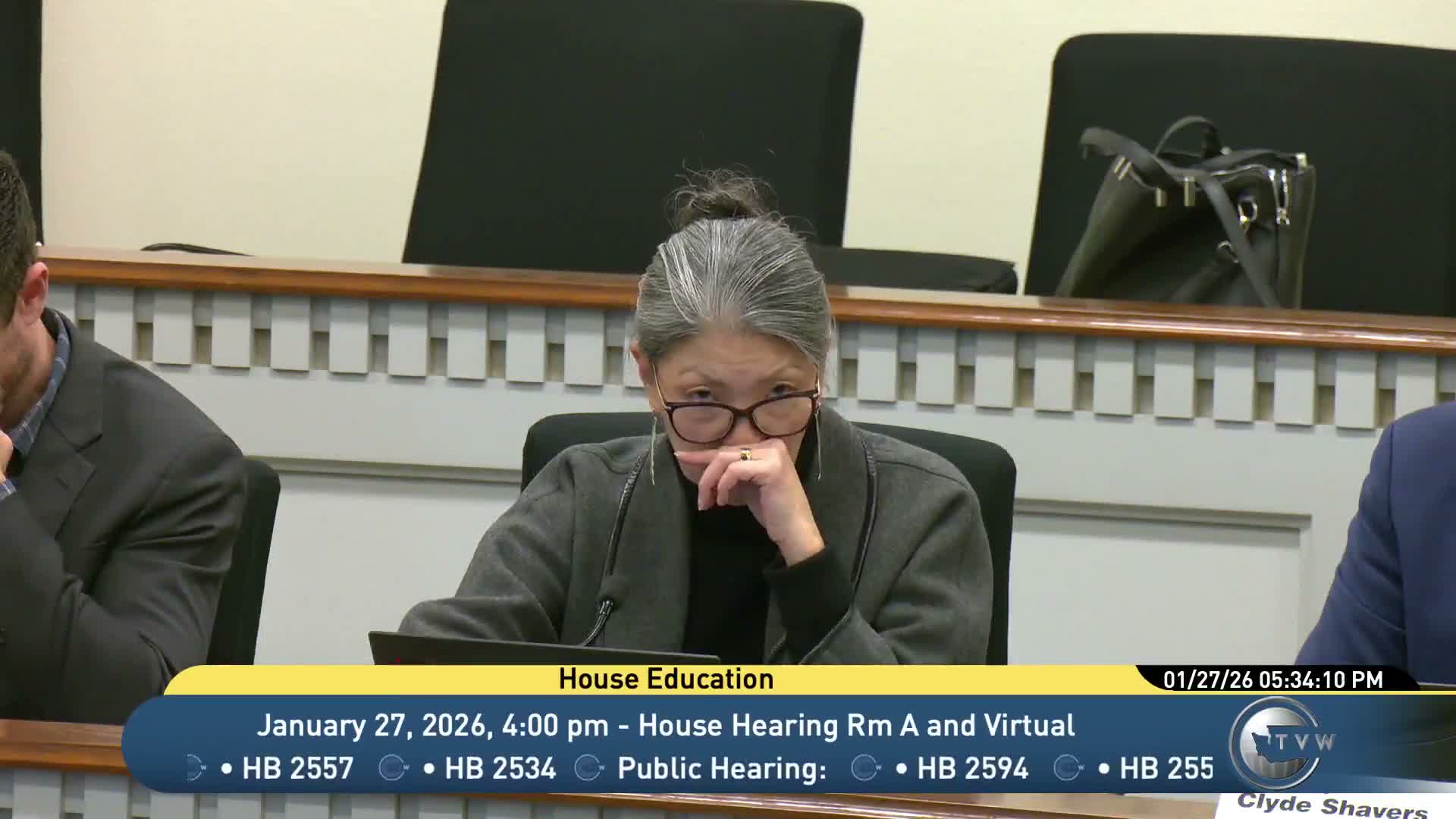
Committee hears broad support for bill to codify McKinney–Vento protections in state law
Summary
House Bill 2594 would adopt state-level requirements mirroring the federal McKinney–Vento Homeless Assistance Act, require OSPI to produce a four-year report, create a state coordinator role and authorize grants to districts; witnesses from advocacy groups, districts and youth testified in strong support.
The House Education Committee heard testimony supporting House Bill 2594, which would codify in state law many protections and obligations that are part of the federal McKinney–Vento Homeless Assistance Act.
Nonpartisan staff summarized the bill’s provisions: adopting the McKinney–Vento definition of homeless children and youth, directing OSPI to establish a state plan and periodically collect specified data on students experiencing homelessness, requiring school districts to designate liaisons and follow stability obligations (including decisions about school of origin), and authorizing OSPI to award grants to districts subject to appropriation. The bill would also require OSPI to prepare a report to the governor and legislature by Oct. 1, 2030, and every four years thereafter on the status of education for homeless students.
Representative Christine Reeves (prime sponsor) said the bill codifies protections that local educators rely on and cited district-level counts (her district reported 1,600–1,800 students experiencing homelessness in recent years). Witnesses including Aaron Yarid of Building Changes, Erica Limon Trafielo of Communities In Schools, Janae Procter Mills (Seattle Public Schools’ McKinney–Vento liaison), Marilee Hill Anderson (Sumner Bonney Lake School District) and Jonas Rios (a former foster youth) described how codifying McKinney–Vento into state law can improve accountability, coordination and student stability. The Washington State PTA and other organizations urged the committee to pass the bill and to streamline overlapping statutes.
Witnesses requested that grant funding be allowed to flow to community-based organizations and that the state consider consolidation of existing statutes to reduce implementation complexity for districts. Vice Chair Shavers read sign-in totals (359 pro, 56 con, 3 other) and the chair closed the public hearing. The committee did not take a final vote on HB 2594 during the session recorded in the transcript.