Heated testimony on HB 2387 as lawmakers weigh voters’ authority vs. state certification
Loading...
Summary
Representative Bridal Burnett’s HB 2387 would preserve voters’ authority over elected sheriffs while creating recall-based accountability tied to decertification; sheriffs and the Washington Sheriffs Association largely supported the bill as voter-protective while civil-rights groups, the ACLU and advocacy organizations opposed it as a weakening of statewide certification and accountability standards.
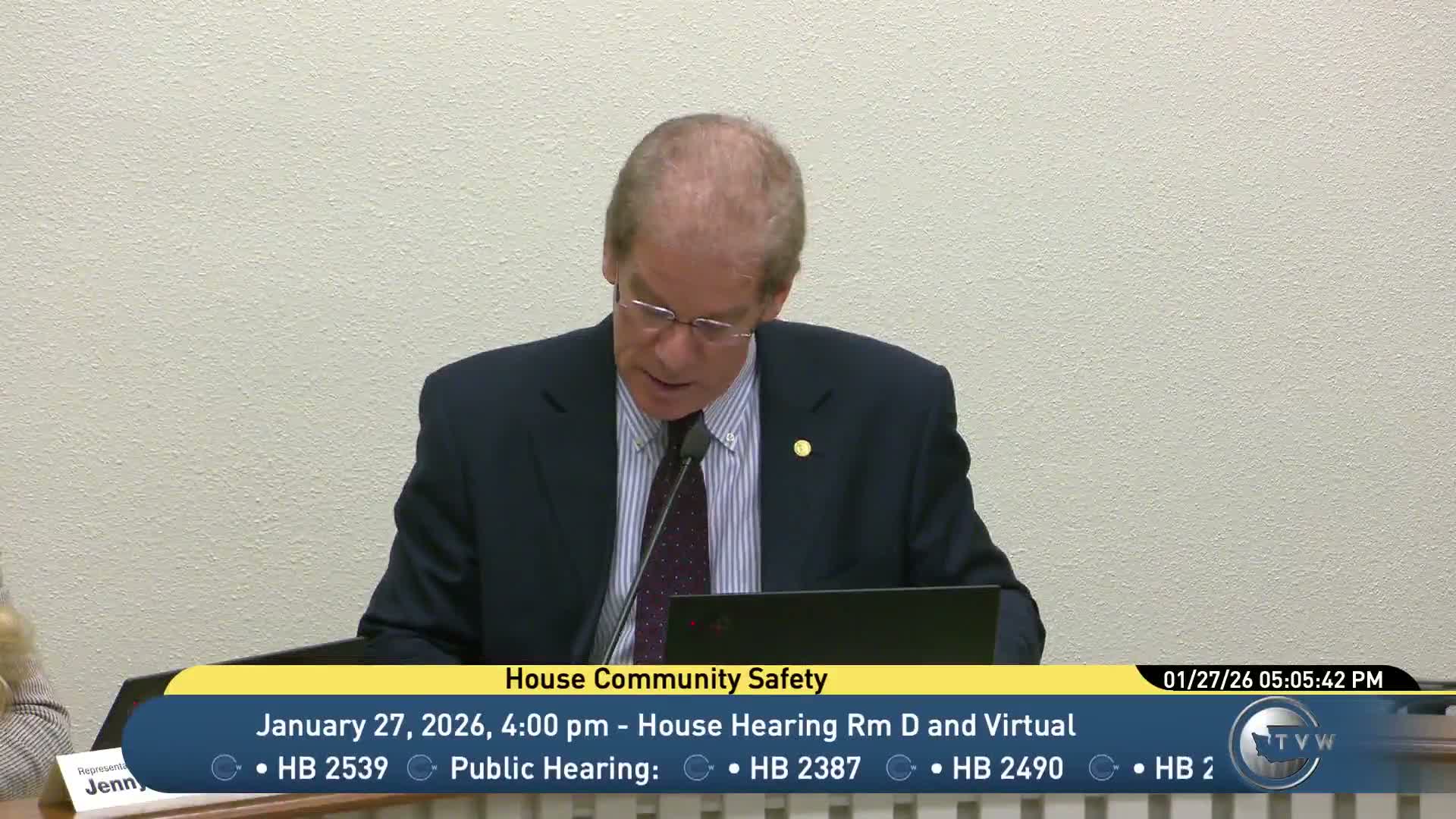
The House Community Safety Committee heard extensive and at times heated testimony Jan. 27 on House Bill 2387, a bill that would preserve elected sheriffs’ political accountability to voters while creating a statutory recall pathway tied to certain decertification outcomes.
Sponsor Representative Bridal Burnett (12th District, a former sheriff) said the bill is a ‘‘sheriff’s bill and the voters bill’’ that strengthens enforceable accountability while keeping the ultimate decision with local voters. Burnett and supporting sheriffs argued the office historically belongs to the electorate and warned that statutory schemes in other measures would improperly transfer removal power to an appointed commission or administrative body.
Supporters from the Association of Sheriffs and Police Chiefs and multiple county sheriffs told the committee that the bill holds leaders to standards without removing local control. James McMahon, the association’s policy director, suggested a technical amendment to recall signature thresholds to avoid constitutional challenges and recommended preserving voters’ primacy in removal decisions.
Opponents were numerous and vociferous. Civil-rights, immigrant-rights and survivor-advocacy organizations — including the ACLU of Washington, the League of Women Voters, Disability Rights Washington, the Northwest Immigrant Rights Project and local survivors’ legal services — urged the committee to reject HB 2387. They argued the bill would permit an elected sheriff to serve without certification, allow a decertified sheriff to remain in office absent a successful recall, and carve out sheriffs from reforms in Senate Bill 5974 intended to align leaders with the officers they supervise.
Witnesses noted constitutional and procedural concerns. Multiple speakers referenced Article I, Section 33 of the Washington Constitution, saying recall is a voter-controlled constitutional process and that statute should not substitute an administrative path with recall-like consequences. Some opponents argued that the bill treats elected sheriffs differently from other law-enforcement leaders and weakens baseline public-safety and background-check standards.
Committee members asked about practical consequences if a recall petition fails, whether mandatory vs. discretionary decertification triggers different recall mechanics and how the bill interacts with national decertification databases and background checks. Supporters said the bill respects voters and suggested narrow technical edits to survive constitutional review; opponents urged the committee to instead advance SB 5974, which they said better harmonizes certification and leadership duties.
Public testimony closed Jan. 27 and the committee adjourned.