Get Full Government Meeting Transcripts, Videos, & Alerts Forever!
Get email alerts on the Corrections Policy topic
No spam. Unsubscribe anytime.
Committee hears bill to raise inmate indigency cap from $25 to $100
Summary
Lawmakers heard testimony for a proposed substitute to House Bill 2539 that would raise the Department of Corrections' inmate indigency cap from $25 to $100, with advocates and currently incarcerated witnesses saying the change would help people afford hygiene items and reduce illicit activity; DOC fiscal questions remain about a roughly $130,000 fiscal note.
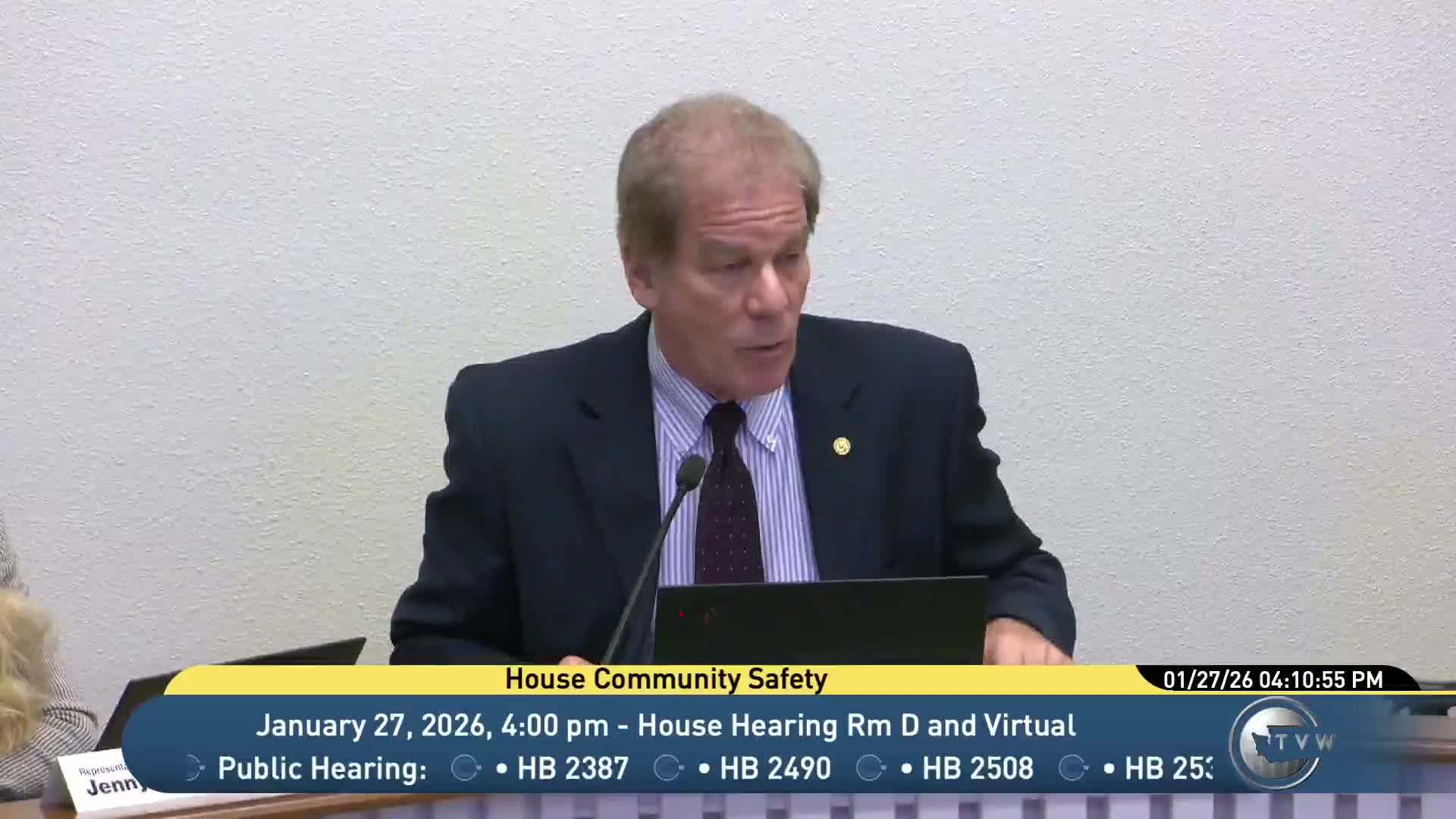
The House Community Safety Committee heard Jan. 27 from advocates, incarcerated people and the bill sponsor about a substitute for House Bill 2539 that would raise the inmate indigency cap used to determine spendable institutional-account balances.
Under current law, a person in DOC custody is considered indigent when they have less than $25 of disposable income in their institutional account on the day of a request and in the preceding 30 days. Committee staff said the proposed substitute (H-3055.1) would raise that cap to $100.
Representative Shabala Street (37th District), sponsor of the bill, said $25 is too low for basic hygiene and commissary products given prison pay rates as low as $1 an hour. She said the change is not intended to prevent long-term payment of legal financial obligations but to make essential purchases affordable and reduce the disruption that can follow from lack of basic supplies.
Multiple remote witnesses—including Tonelli Anderson and Duran Potts, who testified from corrections facilities—described DOC-provided items as low quality and said commissary purchases are often the only way to obtain usable hygiene products. Emeisha Smith, an advocate who helps families, said it can cost about $30 a week for food and $50 a month for hygiene items in custody and criticized deductions that consume much of family-contributed funds.
Sponsor Street noted a fiscal note in the file of about $130,000 and suggested the legislature could avoid new account-setup costs by applying the higher indigency cap to existing accounts rather than creating separate accounts.
The committee closed public testimony and did not act on the bill Jan. 27.