Sponsors, unions and security guards back HB 2,422 to shift licensing fees to employers
Loading...
Summary
House Bill 2,422 would eliminate licensing fees for applicants and require private security companies to pay application, renewal and endorsement fees for their guards; worker testimony emphasized affordability and retention. Committee held public testimony and clarified license portability and turnover data.
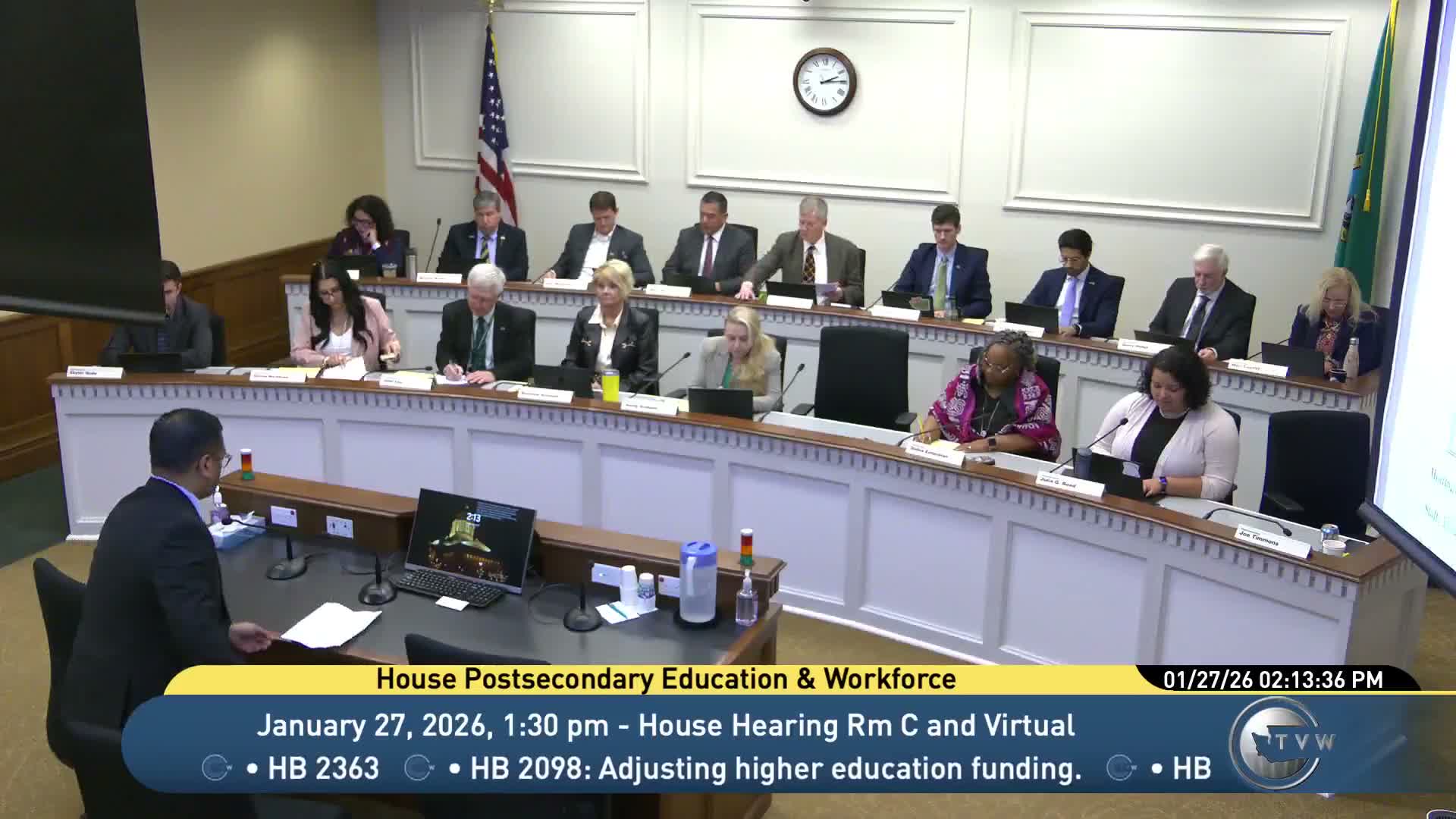
House Bill 2,422, which would remove the applicant fee and require private security companies to pay licensing, renewal and endorsement fees for guards, drew broad public testimony in favor at the committee's public hearing.
Elizabeth Wren summarized the bill's mechanics: applicants would no longer pay an application fee; instead the application must include an employer billing PIN, and companies would be prohibited from requiring guards to reimburse licensing fees. A $500 penalty would apply for violations, and repeated violations could lead to license suspension or revocation by the Department of Licensing.
Representative Edwin O'Bros, the prime sponsor, described the measure as an affordability and fairness fix for a low‑wage workforce. "Private security guards are typically lower wage... Recurring out of pocket costs create a significant barrier for workers entering and remaining in the profession," he said, urging support and connecting this bill to broader industry standards work (HB 2,524).
Testimony from guards and union representatives (SEIU Local 6) underscored the burden: Laurie Hooks, a Navy veteran and long‑time security officer, said paying nearly $100 a year "was money for groceries, bus fare, utility bills" and urged the committee to pass the bill. SEIU and other witnesses cited Department of Licensing data showing security guards paid the vast majority of licensing fees in 2024 and raised industry turnover concerns; one witness cited a 2022 annual turnover rate of 188% and clarified that figure was for that calendar year when asked by a member.
Committee members asked about portability of employer‑attached licenses when an employee changes companies; witnesses explained the license remains tied to the employer and a transfer is required for a new employer. Members also asked whether lowering or eliminating fees was considered; testifiers said elimination would be welcome but they had not previously coordinated policy on lowering the baseline fee.
The hearing closed with the committee taking the testimony for the record; no committee vote on the bill was recorded during this meeting.