Get Full Government Meeting Transcripts, Videos, & Alerts Forever!
Get email alerts on the Shelter Care Court Orders topic
No spam. Unsubscribe anytime.
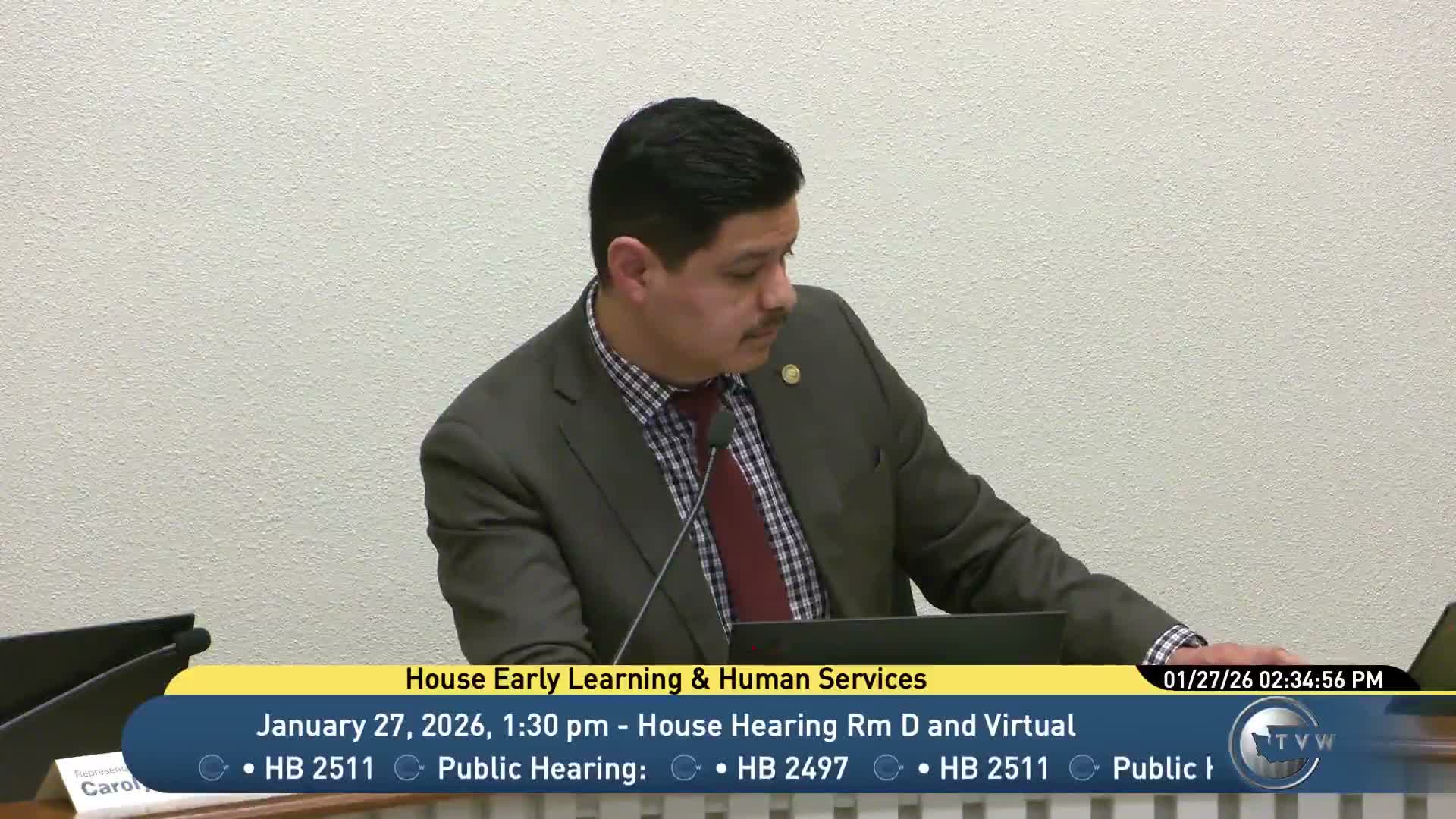
Committee weighs bill letting courts order services at shelter care hearings for young children
Summary
HB 2660 would allow courts at shelter-care hearings to mandate culturally appropriate services or evaluations for parents of children under five when reasonable cause exists and the child remains at home; supporters call it a targeted tool to reduce critical incidents, while public defenders, legal advocates, and some providers warn about due-process, funding, and operational feasibility.
House Bill 26-60, introduced by Representative Ortiz Self, would permit courts holding shelter-care hearings to order parents of children under age five to participate in services, evaluations or other conditions when the court finds reasonable cause to believe such measures are necessary to maintain a child’s safety while the child remains at home. Committee staff explained the provision would apply at the shelter-care hearing (generally held within 72 hours of custody), not at dependency disposition, and that services ordered must be culturally appropriate and reasonably available; the Department must provide referrals within seven days of a signed release of information.
Representative Ortiz Self said the bill is intended to address a rise in critical incidents involving very young children and to align certain terminology with federal law, noting the bill was designed to target the youngest and most vulnerable children and to give courts authority to require timely services when removal is not immediately warranted. The sponsor cited critical-incident data (he said 82% of children in the critical-incident dataset were ages 0–3 and referenced opioid involvement in many cases) and described provisions intended to thread a balance between parental rights and child safety.
Supporters included public-health researchers, community-based providers, network administrators, DCYF staff and some child-welfare unions who said earlier court authority to require services could keep children safe while preserving families. Elizabeth Bocan of the Office of the Family & Children’s Ombuds said the bill supports the intent to protect young children but would increase demand for referrals and urged funding for culturally appropriate services and substance use treatment programs.
Opposition or caution came from the Office of Public Defense, Legal Counsel for Youth and Children, county public defenders, some community providers and clinicians who raised constitutional and practical concerns. Amelia Watson (OPD) warned that empowering courts to order evaluations and services at shelter care—which operates under a reasonable-cause standard—could infringe parental liberty and privacy interests and move dispositional elements earlier in the process without the procedural protections of a fact-finding hearing. Multiple legal witnesses called for accompanying funding and service expansion, saying that mandated orders will not protect children if treatment and culturally responsive options are unavailable or overloaded.
Provider and union witnesses also disagreed on likely impact. Some in-home providers and family-support organizations said parents who most need services may not engage in voluntary programs and that court orders could open a pathway to earlier help; others said many families who needed services never received them because of capacity constraints and that a court order alone would not guarantee timely, meaningful help.
Tribal representatives urged consultation to ensure alignment with ICWA and the Indian Child Welfare Manual. Witnesses repeatedly recommended pairing any statutory change with new investments in treatment, in-home supports, public-health nurses, and network-admin supports to make mandated referrals effective in practice.
The committee closed the hearing after public comment; members asked for additional information about service capacity, constitutional protections, and interactions with existing statutes and guidance.