Community groups and agencies urge committee to codify and sustain Washington’s Community Reinvestment Program
Loading...
Summary
Hundreds of community‑based organizations and agency witnesses told the committee that House Bill 2,523 would sustain and strengthen the Community Reinvestment Program; staff described requirements for plan updates, Office of Equity review, biennial reporting, and a WSIPP study.
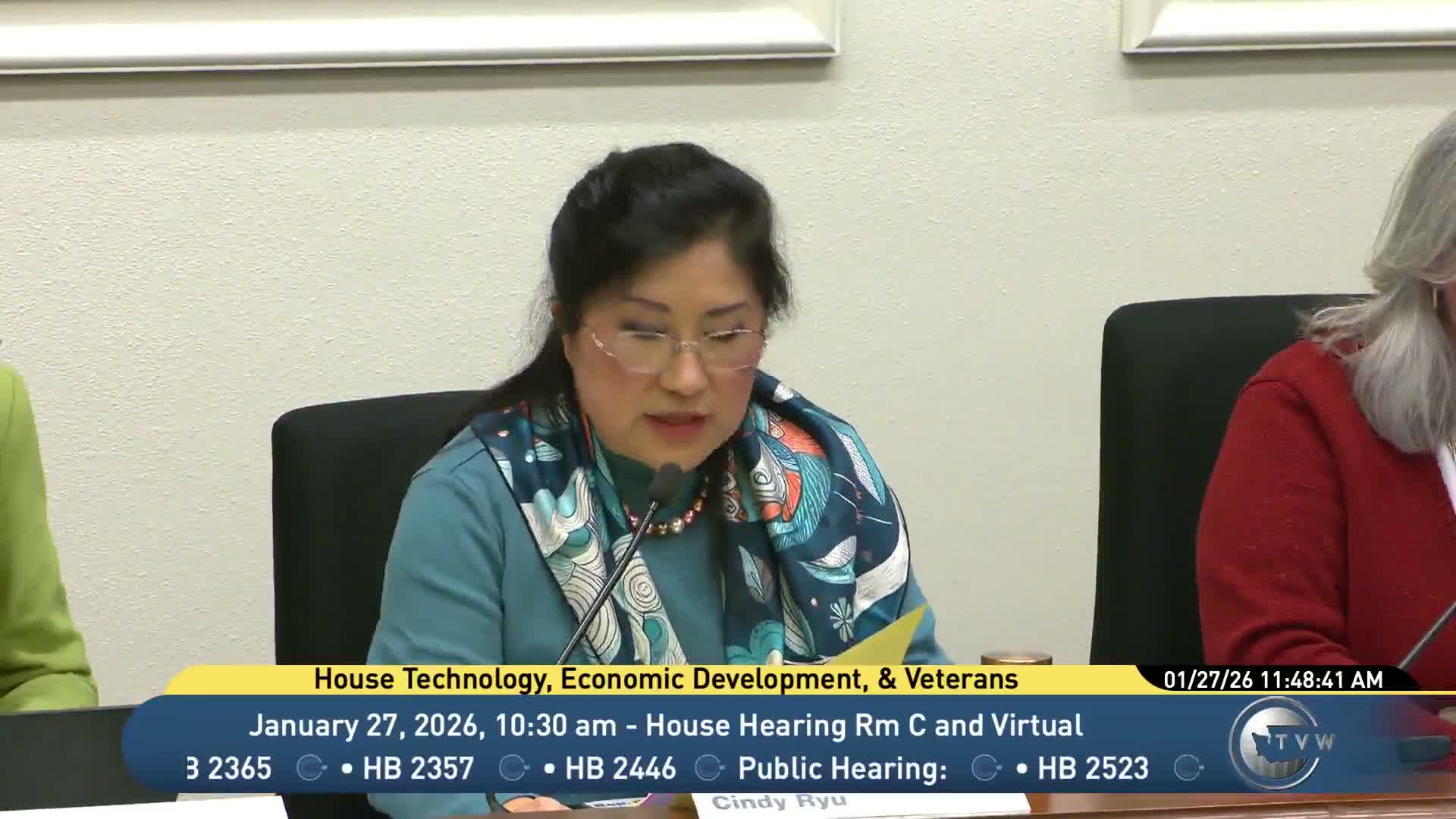
Dozens of community leaders, agency officials and program administrators testified in favor of House Bill 2,523 during a lengthy Jan. 27 public hearing, asking lawmakers to codify the Community Reinvestment Program (CRP) and secure predictable funding and accountability mechanisms.
Martha Whaling, staff to the committee, opened the hearing with a background summary: the Legislature appropriated funds in 2022 for Commerce to develop a CRP plan to address racial, economic and social disparities caused by historic drug‑law enforcement; Commerce produced several reports and the substitute bill would give direction to Commerce, require Office of Equity review, mandate biennial reporting on implementation beginning June 30, 2027, and require the Washington State Institute for Public Policy (WSIPP) to study fund distribution and use and report back by June 30, 2027.
Community witnesses detailed program effects on workforce training, small businesses and reentry supports. Lisa Romine, CEO of SkillSource, described individuals who completed training and gained jobs; John Trauget, executive director of the Washington Workforce Association, supplied program performance figures, including that local boards implemented roughly 30% of CRP funds and helped participants move from under $10,000 to near $48,000 in annual earnings in successful cases. Corbett Mosley, CRP managing director, told the committee that between July 2023 and June 2025 CRP programs served over 190,000 people, helped vacate roughly 1,000 criminal records and reinstated over 500 driver’s licenses.
Paula Filmore Sardinas, who said she helped architect CRP, traced the program’s origins to prior legislative action and argued codification is necessary to sustain investment for communities harmed by historic enforcement. Several providers gave concrete examples of how CRP funds enabled small businesses to upgrade equipment, supported reentry legal services that prevented immigration deportations, and funded training that led to higher earnings.
Committee members and staff closed the hearing with direction that Commerce staff and the bill’s project managers coordinate on amendments and fiscal notes. The committee then closed the hearing and moved on to other bills.
What happens next: The bill will continue through the legislative process; staff and sponsors asked testifiers to submit written amendment requests and for Commerce to work on a tight fiscal note to minimize administrative costs.
Sources: staff report by Martha Whaling; testimony from Lisa Romine, Sarah Hudson, Paula Filmore Sardinas, John Trauget, Corbett Mosley, and multiple community witnesses.