
Committee advances digital‑equity bill after adopting several definitional amendments, vote 8–5
Get AI-powered insights, summaries, and transcripts
Subscribe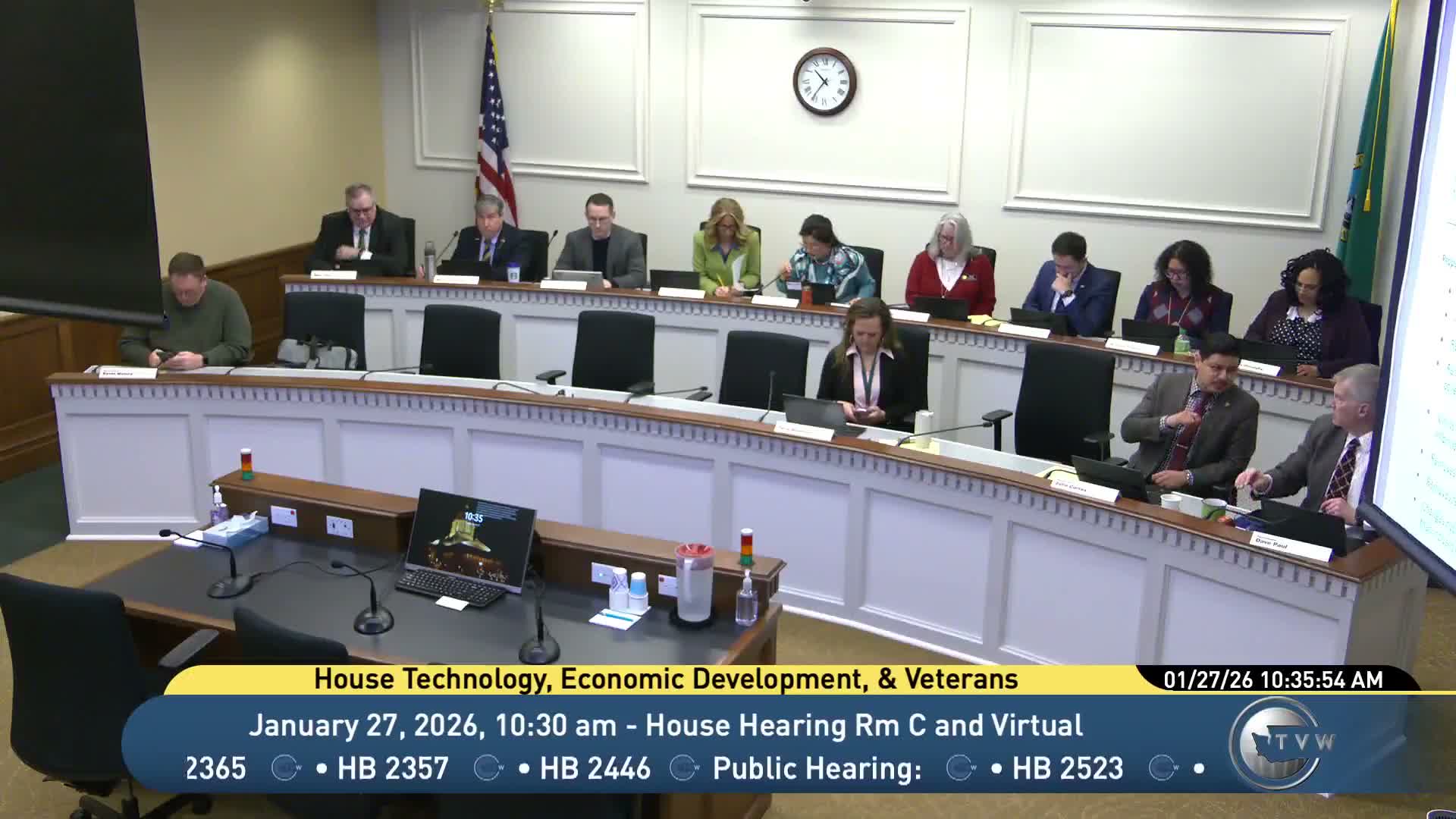
Summary
The committee voted to report House Bill 2,365 (H‑3201.1), which updates the state’s digital‑equity program and reporting requirements; members adopted multiple amendments clarifying definitions and data‑sharing but some fiscal concerns remained.
The Technology, Economic Development & Veterans Committee on Jan. 27 reported House Bill 2,365, 'Advancing Digital Opportunity for All,' out of committee with a do‑pass recommendation after debate and multiple amendments.
Staff described the substitute H‑3201.1 as adding accountable communities of health to the list of community anchor institutions, narrowing mandatory consultations to agencies relevant to implementation, modifying reporting detail to summaries of progress, and subjecting some reporting requirements to appropriation beginning July 1, 2027. The substitute also caps Digital Equity Forum membership at 25, permits stipends only when authorized by the director, and allows the Department of Commerce to prioritize program elements based on matching federal or private funds.
Representative Penner moved several amendments (Pools 174, 172, 173, 175, 170, 171, 169) largely to clarify statutory cross‑references and definitions (for foster‑care dependents, incarcerated individuals, people experiencing housing instability, individuals with disabilities, rural areas and veterans). Some of those clarifying amendments were adopted; others were rejected on fiscal‑note concerns.
Rep. Penner and others warned that the bill as amended asks the broadband office to measure outcomes that existing agency data systems cannot currently track without new statutory authority or funding. Penner said the 2025 Digital Equity Forum report found siloed, inaccessible data and urged more explicit funding or data interoperability. Representative Paul said he would vote yes despite fiscal concerns but asked for a revised fiscal note and attention from appropriators.
By roll call the committee recorded 8 ayes and 5 nays; the substitute was reported out with a do‑pass recommendation.
What happens next: The bill will proceed to further floor and appropriations consideration; proponents and critics urged additional work on funding and data‑sharing mechanisms.
Sources: staff briefing by Emily Pool; amendment debate and roll‑call vote.