
Debate over 32‑hour standard work week highlights labor‑business split in committee hearing
Get AI-powered insights, summaries, and transcripts
Sign Up Free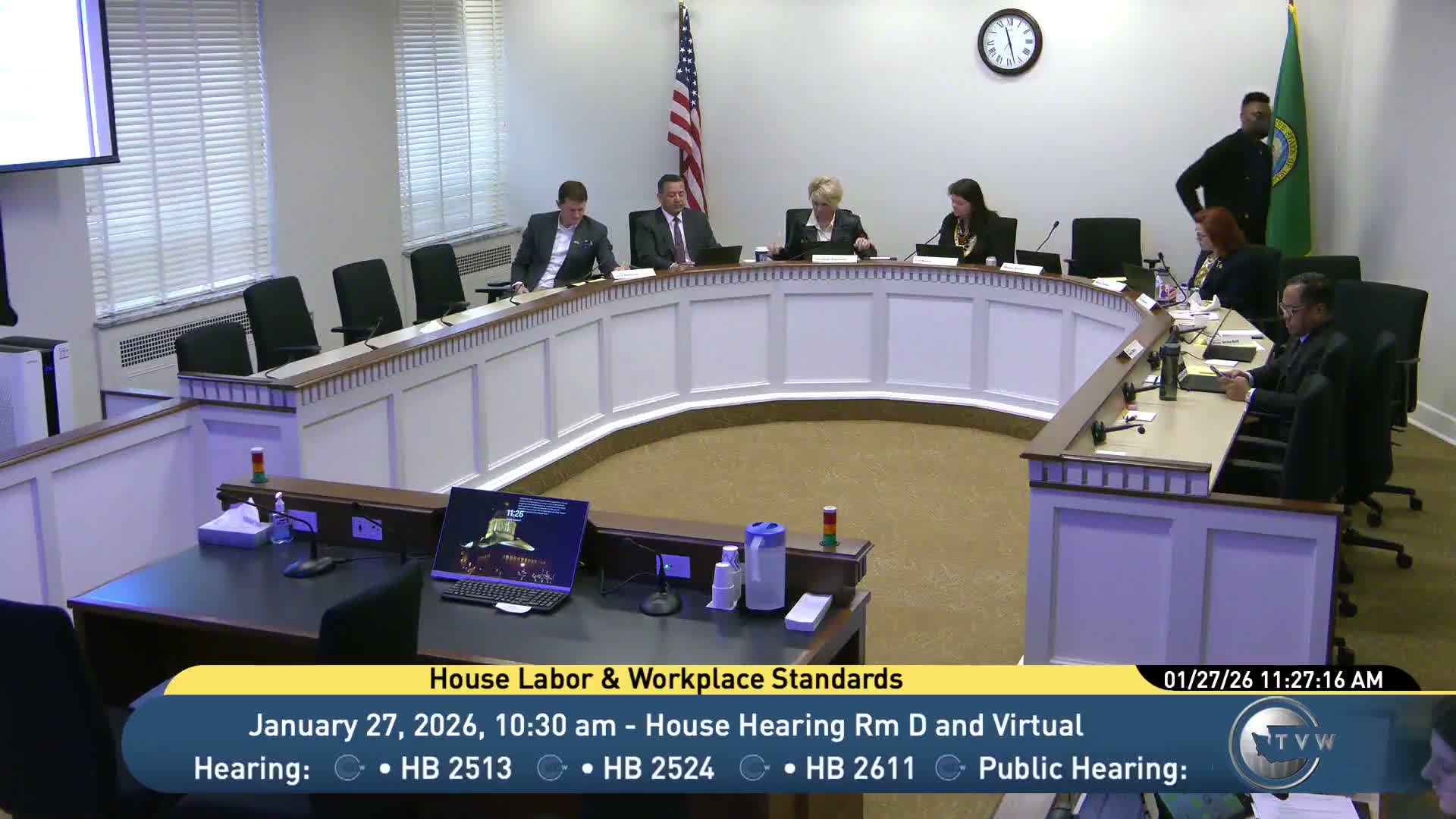
Summary
Supporters, including unions and public‑sector employees, urged HB 2611 to lower the overtime threshold from 40 to 32 hours and adjust paid sick leave accruals; hospitality, grocery, agriculture and small‑business witnesses cautioned that a universal 32‑hour threshold could raise labor costs, complicate scheduling and harm industries with seasonal or on‑site constraints.
House Bill 2611, which would reduce the overtime threshold from 40 hours to 32 hours per week effective Jan. 1, 2028, and adjust paid sick leave accrual to one hour per 32 hours worked, drew robust testimony on Jan. 27 from both labor and industry witnesses.
Sponsor Representative Scott framed the bill as a pro‑worker measure modeled on pilot programs and company examples that reported productivity and morale gains with reduced hours. "House Bill 2,611 is legislation for a happier, more productive workforce," he told the committee, citing international and local examples, including San Juan County pilots.
Union and public‑employee testimony supported the bill. Ashley Feuston (Washington Federation of State Employees) said the San Juan County experience showed cost savings and reduced turnover; Mike Berryhill and Nestor Palais Guillen (SPEA) urged the committee to consider shorter weeks to rebalance productivity gains. Witnesses argued reduced hours could improve recruitment, retention and mental health.
Business and industry witnesses cautioned against a universal threshold. Andrea Ray (Washington Hospitality Association) warned the bill would trigger overtime earlier, forcing small businesses with thin margins to cut hours, raise prices, or reduce services. Carolyn Logue (Washington Food Industry Association) emphasized scheduling and paid‑leave calculation complexities, and Scott Dilley (agriculture representative) said seasonal and biological constraints in farming make a 32‑hour threshold impractical and could push employers to cap hours or seek guest workers.
Committee members asked detailed questions about exemptions for salaried employees, collective bargaining, impacts on nursing and first responders who commonly use 12‑hour shifts, and whether a one‑size‑fits‑all change was appropriate for a diverse state economy. Staff noted a fiscal analysis was not yet available in the hearing record.
The hearing closed with no recorded committee action in the transcript. The testimony underscores a clear divide between labor advocates and business groups; implementation details, exemptions and sectoral impacts are likely to dominate further deliberations.