
Washington committee advances bill to regulate high‑risk AI systems after narrow votes on exemptions
Get AI-powered insights, summaries, and transcripts
Subscribe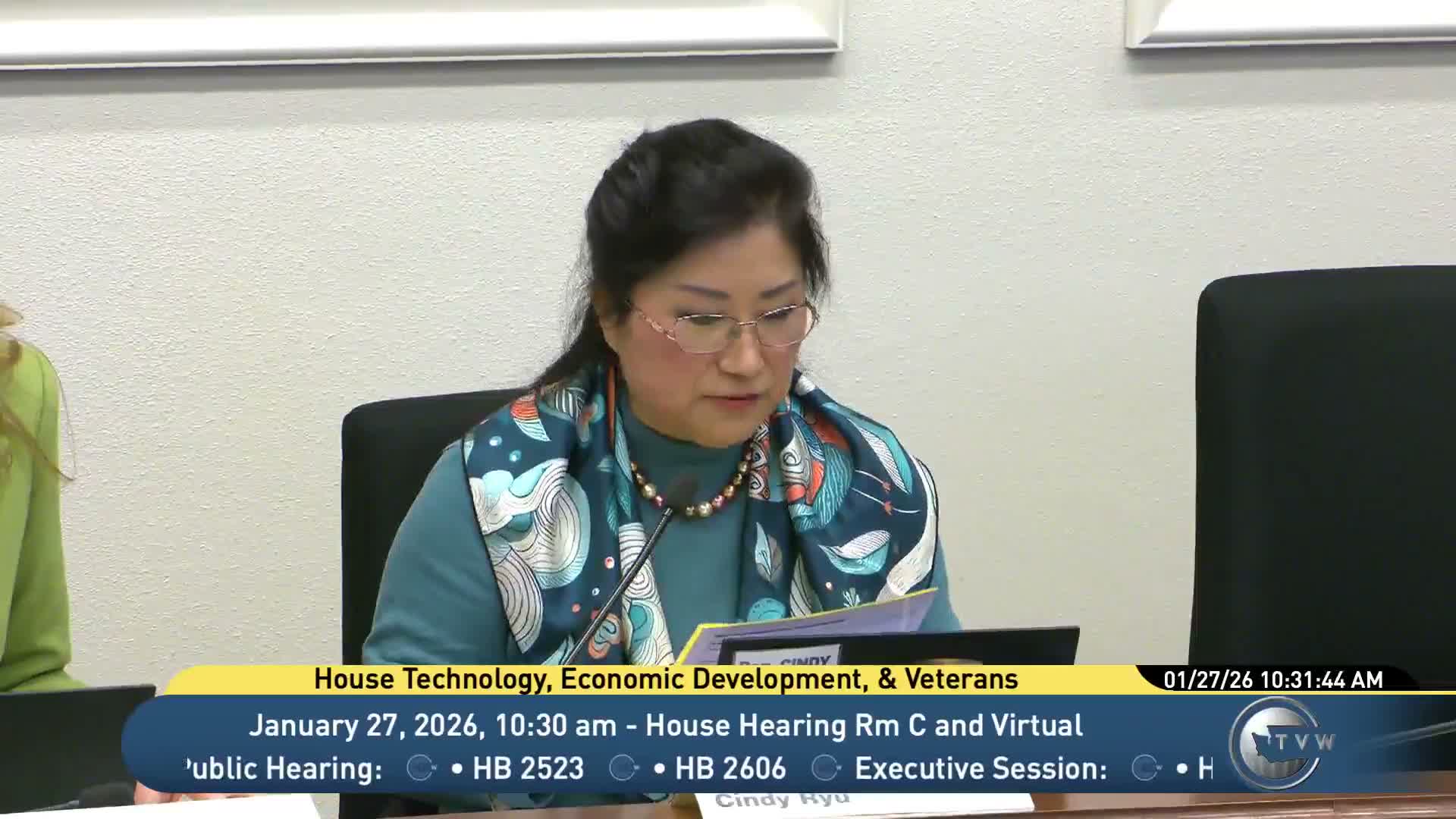
Summary
The Technology, Economic Development & Veterans Committee on Jan. 27 advanced a substitute to House Bill 2,157 to regulate high‑risk artificial intelligence systems, adopting two targeted exemptions for Fair Credit Reporting Act‑regulated activities and HIPAA‑covered entities; the motion passed 8–5.
A committee on Tuesday voted to report House Bill 2,157, a measure to regulate so‑called high‑risk artificial‑intelligence systems, out of the Technology, Economic Development & Veterans Committee with a do‑pass recommendation.
Representative Ryu, sponsor of the substitute (H‑3136.1), said the bill adds new definitions — including “personal information,” “pre‑deployment impact assessment,” and “system card” — and narrows exemptions for insurers and financial institutions while aligning certain terms with existing law. Emily Pool, staff to the committee, told members the substitute also modifies insurer and financial‑institution exemptions and aligns definitions with other state privacy statutes.
The committee adopted two amendments before the final vote. Amendment Pool 178, moved by Representative Barnard, exempts activities regulated by the federal Fair Credit Reporting Act; supporters said the change preserves compatibility with existing consumer‑reporting rules. Amendment Pool 160 exempts entities covered by the federal Health Insurance Portability and Accountability Act (HIPAA) and limits application to telemedicine facilitation unless otherwise exempted, a change staff said preserves the status quo for providers using AI for administrative tasks that do not affect patient care.
Representative Barnard and other members praised the work done on the bill but said it is not yet complete; Barnard’s caucus said they were not ready to support the bill as a whole. Representative Glowbaugh urged a yes vote on Pool 178, calling it an appropriate activity‑level exemption.
After roll call, staff announced the result as 8 ayes and 5 nays. By that margin, the substitute was reported out of committee with a do‑pass recommendation.
What happens next: The bill will move from committee for further consideration by the full House. Staff and several committee members urged stakeholders to continue collaborating on refinements in future sessions.
Sources: staff briefing by Emily Pool; committee debate and roll‑call vote recorded during the Jan. 27 committee meeting.