Get Full Government Meeting Transcripts, Videos, & Alerts Forever!
Get email alerts on the Tax Increment Financing topic
No spam. Unsubscribe anytime.
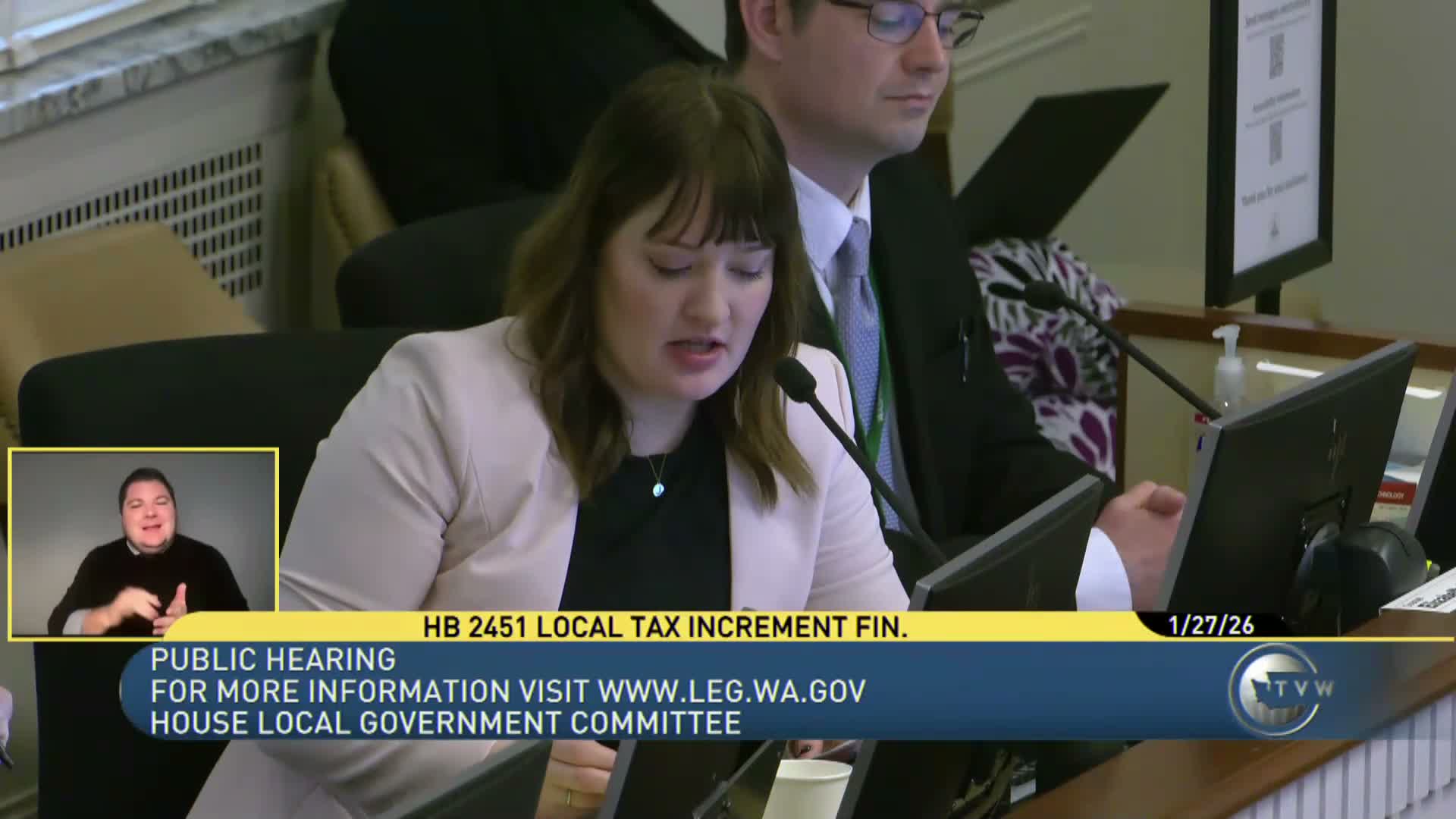
Committee hears compromise on tax-increment financing, taxing districts push for safeguards
Summary
House Bill 24-51 would tighten notice, analysis, sunset and mitigation requirements for local tax increment financing (TIF); fire chiefs, ports, counties and library districts generally supported the negotiated changes while some cities warned constraints could reduce TIF’s usefulness for long-term redevelopment.
The committee considered House Bill 24-51, a set of reforms to Washington’s tax increment financing law intended to improve transparency, require earlier notice to impacted taxing districts, codify mitigation and arbitration paths, and strengthen the 'but-for' showing required for an increment area.
Staff briefed the bill’s primary elements: expanded project-analysis requirements, stricter notice timelines (including 180 days prior to project analysis submission for some items), sunset and start-date rules, and arbitration or mediation when impacted taxing districts and sponsors cannot agree on mitigation. The analysis would require an assessment of impacts to schools, fire, EMS and hospital districts and propose mitigation where appropriate.
Supporters including the Association of Washington Cities, the Washington Fire Chiefs Association, the Washington State Association of Counties and port representatives described HB 24-51 as the product of broad stakeholder negotiation. "Tax increment financing is incredibly complicated and over the interim we brought together all of the stakeholders," Candace Bach said, calling the bill a "significant compromise."
Fire-service representatives emphasized negotiated participation with sponsors to assess EMS impacts and lauded a strengthened 'but-for' test as critical to preventing inappropriate TIF uses. Ports and counties sought technical amendments to assure prospective application and to protect existing TIFs.
Opponents or cautious witnesses included Patrick Quintin of Vancouver, who argued that the proposed constraints could make TIF infeasible as a practical tool for large redevelopment projects in some jurisdictions; Vancouver officials worried the changes would reduce long-term tax-base growth opportunities.
Several testifiers asked for clarifying amendments to protect existing TIAs, refine the 'but-for' language, and to ensure hold-harmless features for taxing districts like ports and hospitals. The hearing featured a mix of supportive and cautionary local-government perspectives but did not record a committee vote.