
House committee hears debate over municipal grocery stores after closures in Seattle-area neighborhoods
Get AI-powered insights, summaries, and transcripts
Subscribe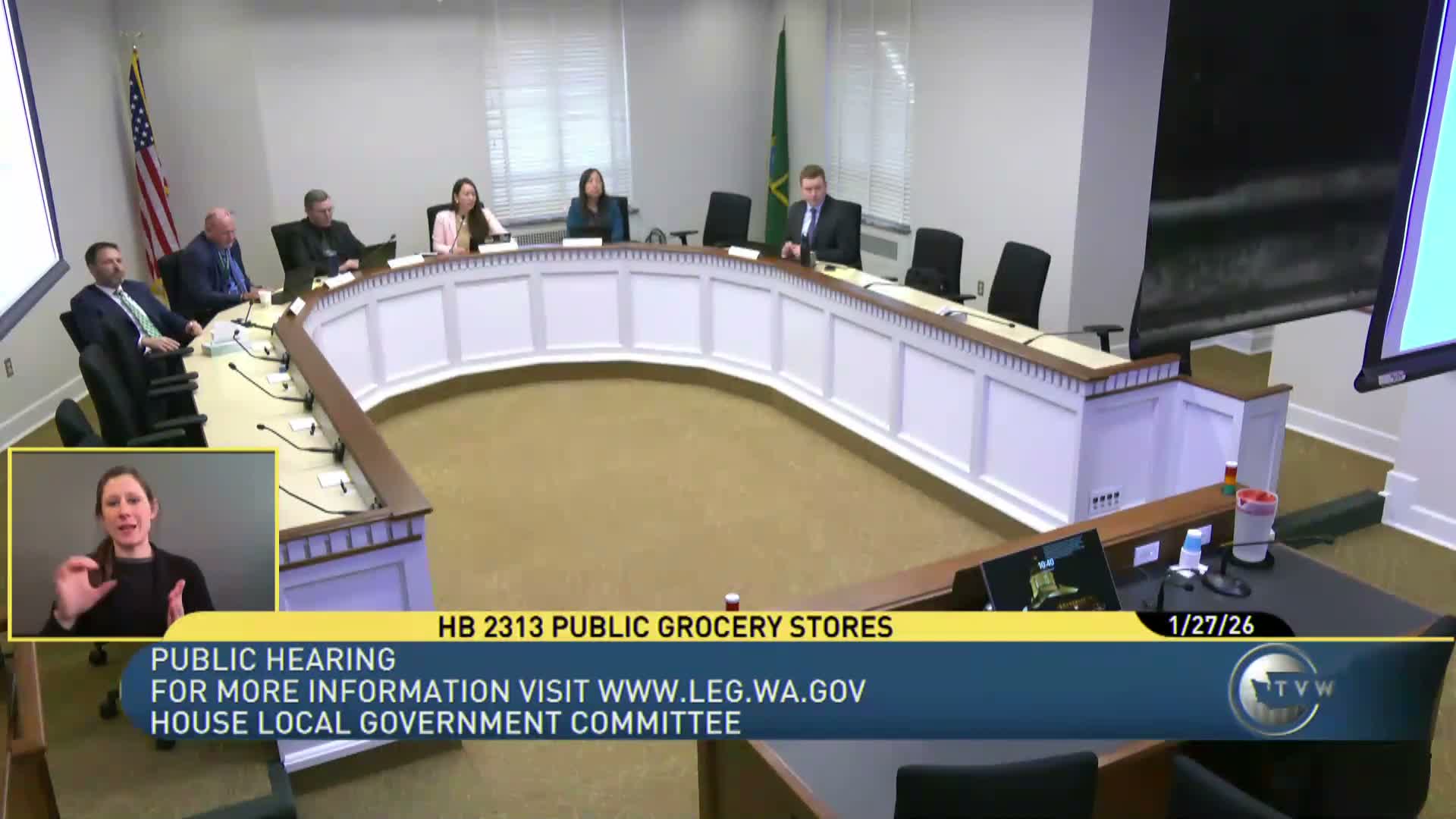
Summary
Lawmakers and witnesses debated House Bill 23-13, which would allow cities to establish publicly owned grocery stores and use capital grants to acquire or rehabilitate property; the sponsor said the bill is an optional tool for underserved areas, while grocers and students warned it could undercut small independent stores.
Madam Chair opened the public hearing on House Bill 23-13, which would authorize cities to establish publicly owned grocery stores and make capital grants available for site acquisition, rehabilitation and operating costs.
Committee staff Elizabeth Ren summarized the bill and a proposed substitute that removes eminent domain and narrows tax-increment financing eligibility while requiring stores seeking capital grants to be located in designated underserved areas. "A city may apply for a capital grant when establishing a publicly owned grocery store," Ren told members.
Sponsor Representative Daria Farvar (46th Legislative District) said the measure is intended as an "option" for local governments where private businesses have withdrawn. Farvar described the bill as ‘‘short-term, medium and long-term solutions’’ and highlighted that cities could buy and lease land to reduce overhead for prospective grocers, citing the recent closure of a Fred Meyer in her district.
Supporters framed municipal stores as a response to market failures. Aaron Chazewski of Food Lifeline said consolidation and a shift to e-commerce have left some neighborhoods without brick-and-mortar access to fresh food, and called the bill a flexible tool to "step in where the market has failed." Anna Nepomisseno of Northwest Harvest, testifying remotely, said public investment in grocery infrastructure can address health and equity harms tied to food deserts.
Opponents included industry groups and students from Lake Washington High School. Brandon Huskeeper of the Northwest Grocery Retail Association and Molly Pfaffenroth of the Washington Food Industry Association warned that public stores could undercut private retailers, noting grocery margins are thin and that public operations could create an uneven playing field. Student witnesses argued municipal stores risk displacing family-run markets that provide local jobs and cultural variety.
Committee members pressed the sponsor on technical details. Representative Griffey asked whether the bill sets a distance standard for how close a store must be; Farvar said the measure intentionally avoids a fixed mileage threshold because community needs vary by urban and rural context. Bothell Councilmember Amanda Dodd (who testified later on a different bill) and other local officials raised concerns about property-owner notice in related permitting conversations in the hearing record.
Farvar told the committee the proposed substitute narrows some authorities and that all the same state laws and regulations that apply to private businesses would apply to municipal models. She also said other bills in her package would offer tax incentives for grocers and that stakeholder conversations are ongoing.
The committee heard detailed examples from witnesses on both sides but took no vote on HB 23-13 during the hearing. The hearing record shows the sponsor and staff plan further amendments and stakeholder work before the bill advances.