
Panel, judge urge updated garnishment form to prevent calculation errors for fluctuating wages
Get AI-powered insights, summaries, and transcripts
Subscribe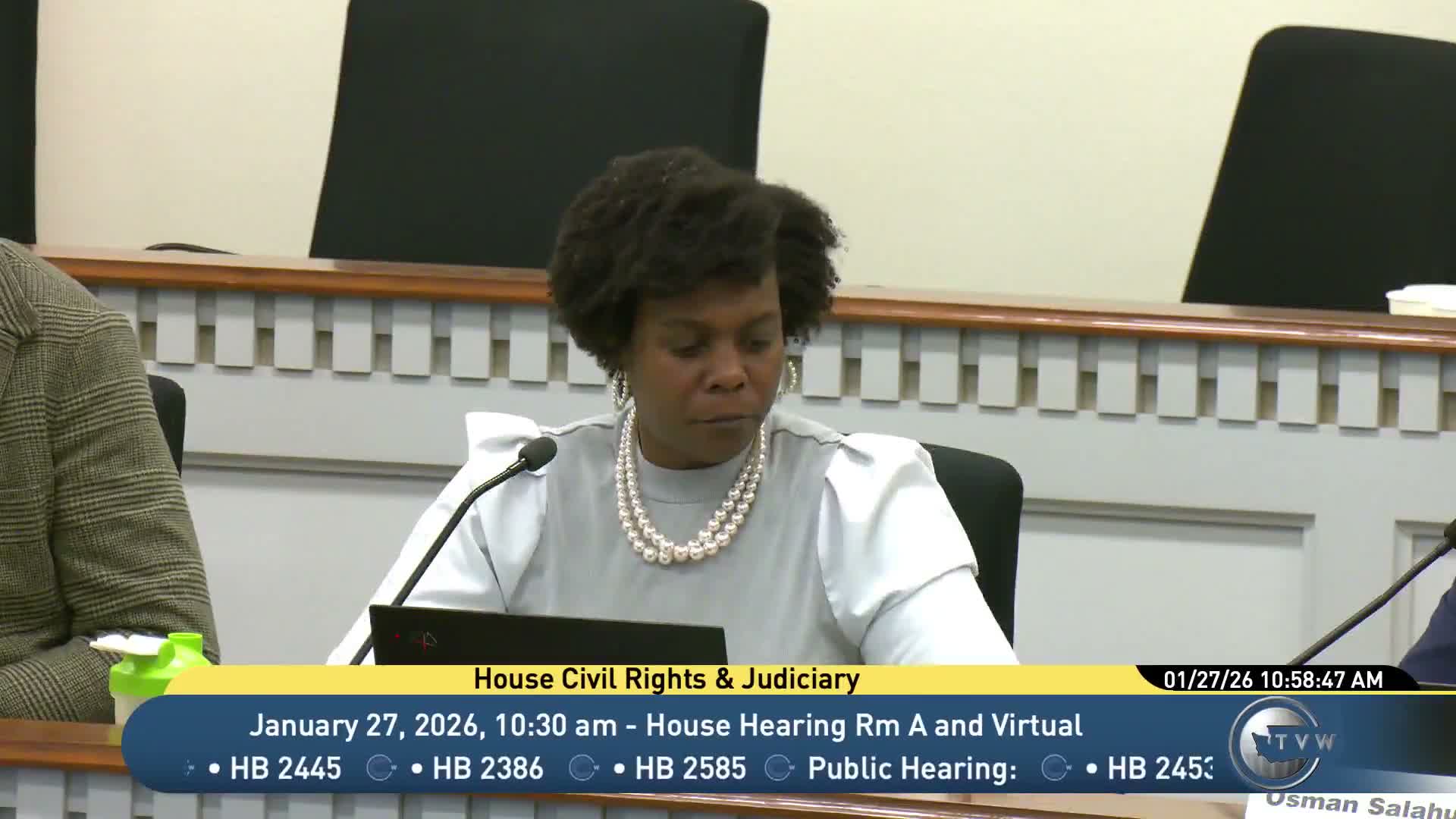
Summary
Witnesses and a Spokane district court judge told the committee HB 2386 would improve accuracy and transparency in wage garnishments by replacing an outdated statutory answer form with a pattern form better suited to employers whose payrolls fluctuate; industry groups asked for realistic rollout timelines.
House Bill 2386 returned to the committee Jan. 27 after testimony on other bills. Committee staff said the measure would eliminate statutory garnishment answer forms for writs of continuing lien on earnings and instead require use of forms developed by the Washington Pattern Forms Committee or a substantially similar form.
Judge Andrew Viviano (Spokane County District Court) described repeatedly rejecting garnishments because statutory forms produce inaccurate calculations for employees with fluctuating weekly wages. He said larger employers already use improved forms, but smaller employers and software vendors cannot adapt quickly without a reasonable implementation timeline. Mindy Chumbley of the Northwest Collectors Association and other panelists echoed the need for a new form but cautioned about publishing and effective dates that allow software and employer systems time to adapt.
Witnesses asked for a rollout period (120 days was suggested) and for clarification that employers who use their own correct forms not be punished solely because their form layout differs from the draft pattern form. The sponsor framed HB 2386 as a simple equitable fix to avoid hardship for workers and to standardize practice.
The committee heard the judge's account that the statutory form requires employers to combine wages over a 60‑day garnishment window rather than calculating exemptions weekly, producing errors for fluctuating pay. No committee vote was recorded; sponsors and stakeholders indicated they would work on implementation timelines and technical language.