House committee hears bill to block 'probate for‑profit' schemes and tighten venue, oversight
Loading...
Summary
House Bill 2445 would extend waiting periods before third parties may take control of estates, limit non‑intervention authority, cap petitions by nonfinancial appointees, and require probate venue tied to the decedent's residence or estate property to curb alleged profiteering in Washington probates.
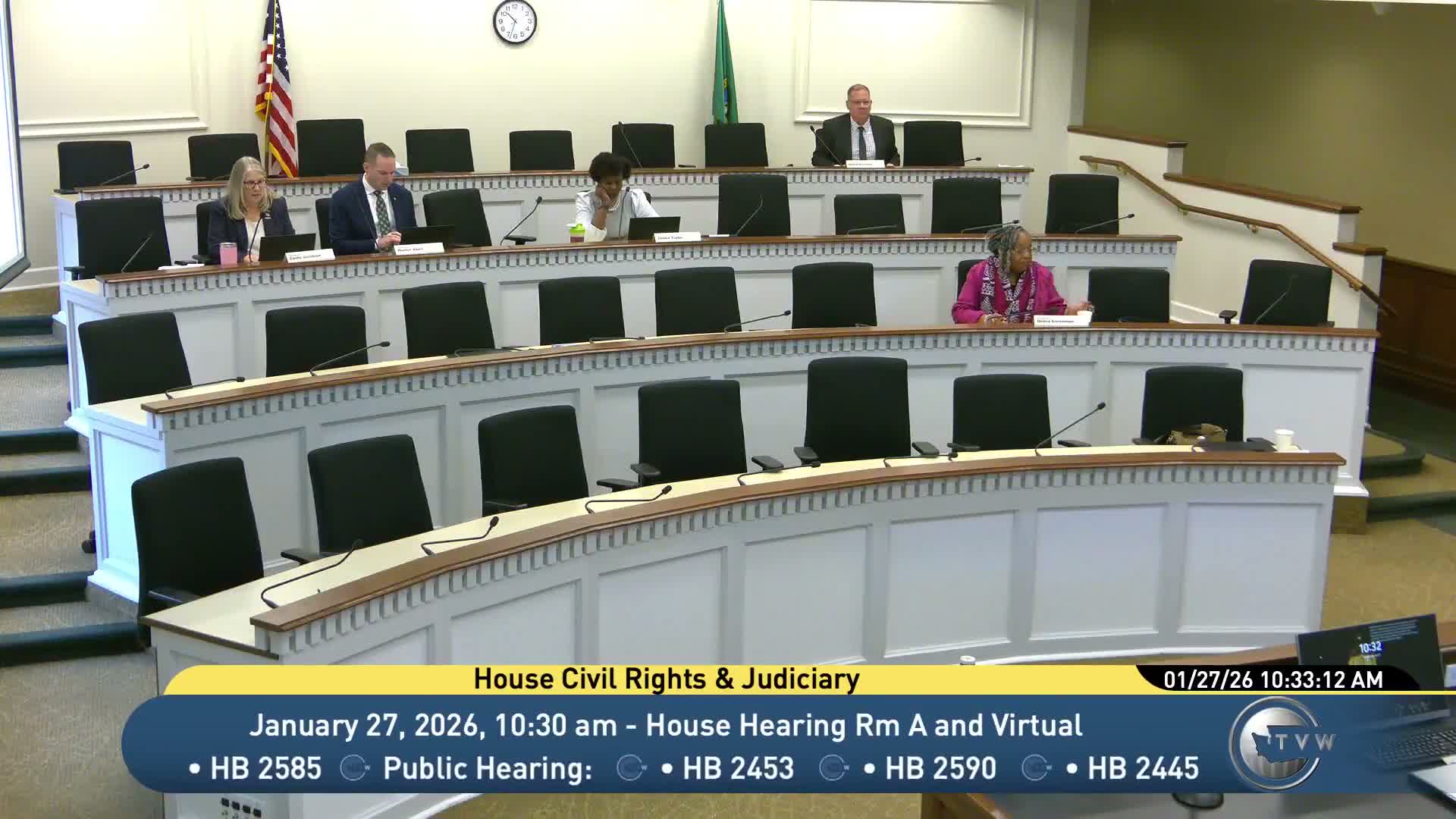
House Bill 2445, introduced at the Jan. 27 House Civil Rights & Judiciary Committee hearing, would revise Washington probate law to limit opportunities for outside parties to take control of estates when a person dies without a will. The sponsor and Attorney General's staff said the changes respond to investigations in which third parties allegedly siphoned assets from estates and sold properties without heirs' notice.
Yelena Baker, staff to the committee, told members HB 2445 lengthens the initial priority period (from 40 days to at least 90 days) before a court may appoint a so‑called “suitable person” to administer an estate and bars most such appointees from seeking non‑intervention powers. The bill would permit non‑intervention powers only for trust companies, national banks or professional services corporations formed by attorneys and would limit non‑institutional appointees to two petitions for appointment per year, Baker said.
Sponsor Rep. Addison Richards (26th Legislative District) said the bill is intended to “provide guardrails” and more transparency for heirs and courts. “This is a bill about protecting people, particularly vulnerable groups — the surviving heirs,” Richards said. He and Assistant Attorney General Ben Carr described cases they say involved third‑party administrators who opened high volumes of probates, sold properties and kept proceeds without properly notifying heirs.
Ben Carr, who said he was the bill's primary drafter for the Attorney General's Office, cited litigation against a man identified in testimony as John Bretzke Elliott, and said investigators found alleged misconduct involving estates of more than 200 decedents. "They sold the properties. They pocketed large sums. They stole items from the home," Carr said.
Key changes the staff highlighted include: extending the period for priority heirs to petition from 40 to at least 90 days before appointment under the suitable‑person catchall; expanding categories of people ineligible to serve as estate administrators; requiring venue for probate proceedings to be the county where the decedent resided (or where estate property is located, if the decedent was not a Washington resident); and prohibiting suitable‑person appointees from acquiring estate assets or receiving sale proceeds without court approval.
Committee members asked how profiteers find vulnerable estates and whether the bill might make the probate process harder for lay heirs. Carr and other witnesses described schemes that identified apparently vacant or dilapidated homes, used online searches to confirm deaths and then filed probates. Rep. Walsh and others urged sponsors to consider amendments to avoid adding confusion for family members who lack legal expertise; Richards said he expected an amendment and offered to work with colleagues.
The committee concluded the hearing on HB 2445 after several public testifiers, including the Northwest Justice Project, supported the bill and urged added notice, bonding and reporting requirements to prevent exploitation. The committee did not take a vote during the Jan. 27 session; no formal action was recorded.