
Committee weighs two‑year moratorium on some rodenticides amid competing public‑health and wildlife concerns
Get AI-powered insights, summaries, and transcripts
Sign Up Free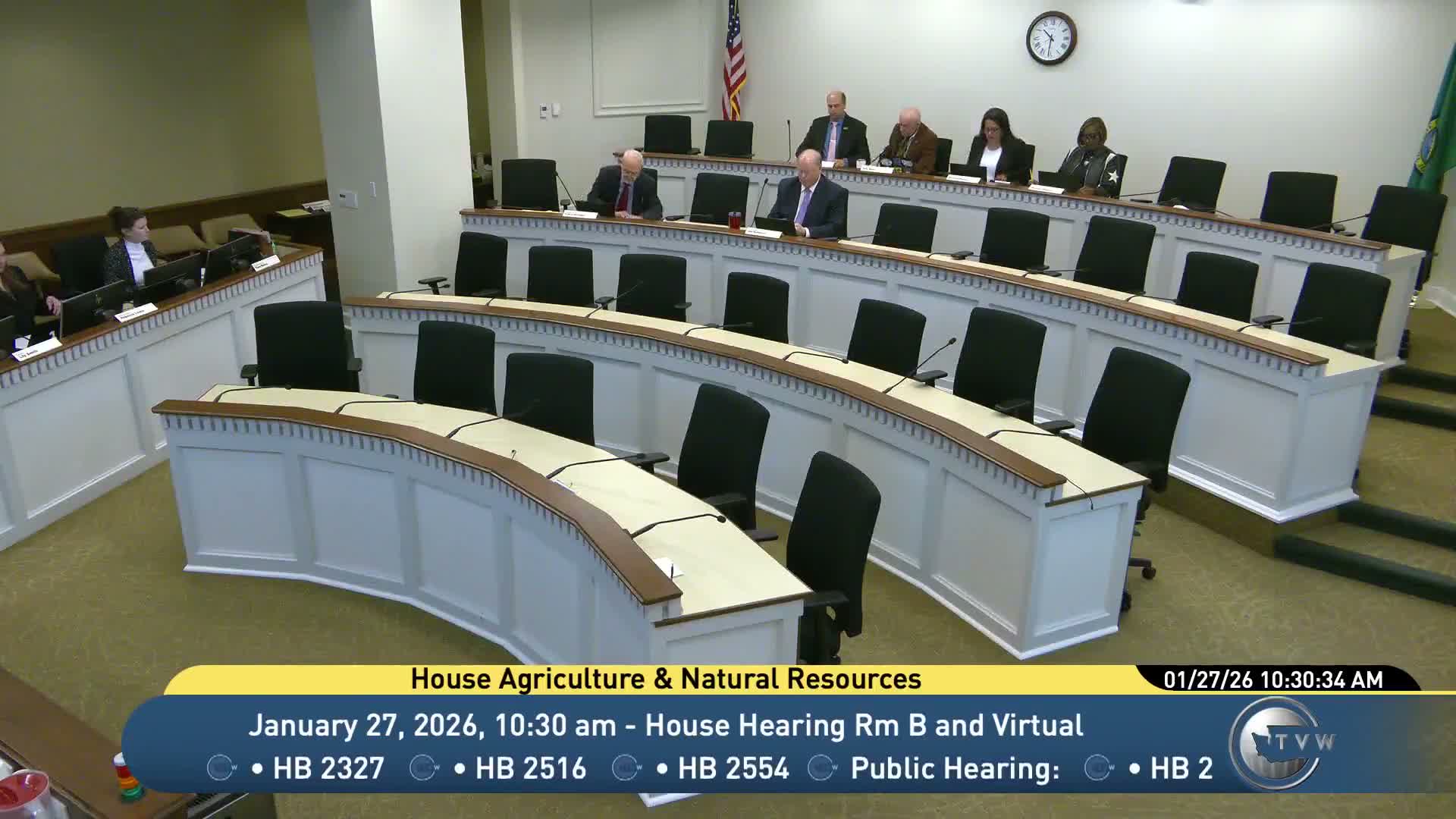
Summary
House bill 25‑16 would impose a two‑year moratorium (starting 2027) on certain anticoagulant rodenticides and direct a statewide inventory and a Washington State Academy of Sciences study; public testimony split between wildlife rehabilitators and conservation groups supporting the bill and pest‑management and agricultural representatives opposed.
The House Agriculture and Natural Resources Committee heard extensive testimony on House Bill 25‑16, which would place a two‑year moratorium beginning in 2027 on certain anticoagulant rodenticides and require state studies and inventories of registered products.
"Most of the raptors we treat have been exposed to rodenticides even if they're asymptomatic," Dr. Nicole Rosenhagen, lead wildlife veterinarian at PAWS, told the committee, describing organ‑confirmed anticoagulant detections in dozens of raptors and costly, prolonged treatment regimens.
The bill would require the Department of Agriculture to provide an inventory to the legislature of anticoagulant rodenticides and bromethalin registered for use in Washington by Dec. 31, 2026; it would also direct a Washington State Academy of Sciences study with a report due Dec. 31, 2028. Rebecca Lewis, committee staff, explained the bill includes a director‑authorized emergency‑use exception for specified public‑health or drinking‑water protection scenarios.
Pest‑management industry witnesses including Dawn Thompson, Steve Wittig and others warned that the moratorium would remove affordable, effective tools needed by low‑income households, seniors, and manufactured‑home communities and said integrated pest management and timing of EPA action should be considered. "Removing the most effective and cost‑efficient tools leaves low‑income communities disproportionately impacted," Dawn Thompson said.
Representatives of wildlife rehabilitation, conservation groups, and tribal natural‑resource staff described field and hospital data documenting wildlife exposure and urged precaution. Dr. Laurel Sarrias (Ohio State University) cited studies showing broad detections of anticoagulant compounds in predatory birds and mammals and urged steps to reduce risk to families and wildlife.
The committee read sign‑in tallies into the record (754 pro, 176 con, 5 other). No vote was taken; members asked for follow‑up data, encouraged stakeholder engagement, and indicated possible interim work to refine exemptions and gather additional evidence before further action.