Panel Weighs Reinstating Parole; Supporters Cite Rehabilitation, Critics Seek Retroactivity and Implementation Details
Loading...
Summary
SB 6,074 would allow certain people sentenced for felony offenses on or after July 1, 2027, who have served 60% of their terms, to petition the Indeterminate Sentence Review Board for parole. Advocates called it an important step for rehabilitation and public safety; defenders and reentry groups urged retroactivity or phased approaches and cautioned about racial disparities and resource needs.
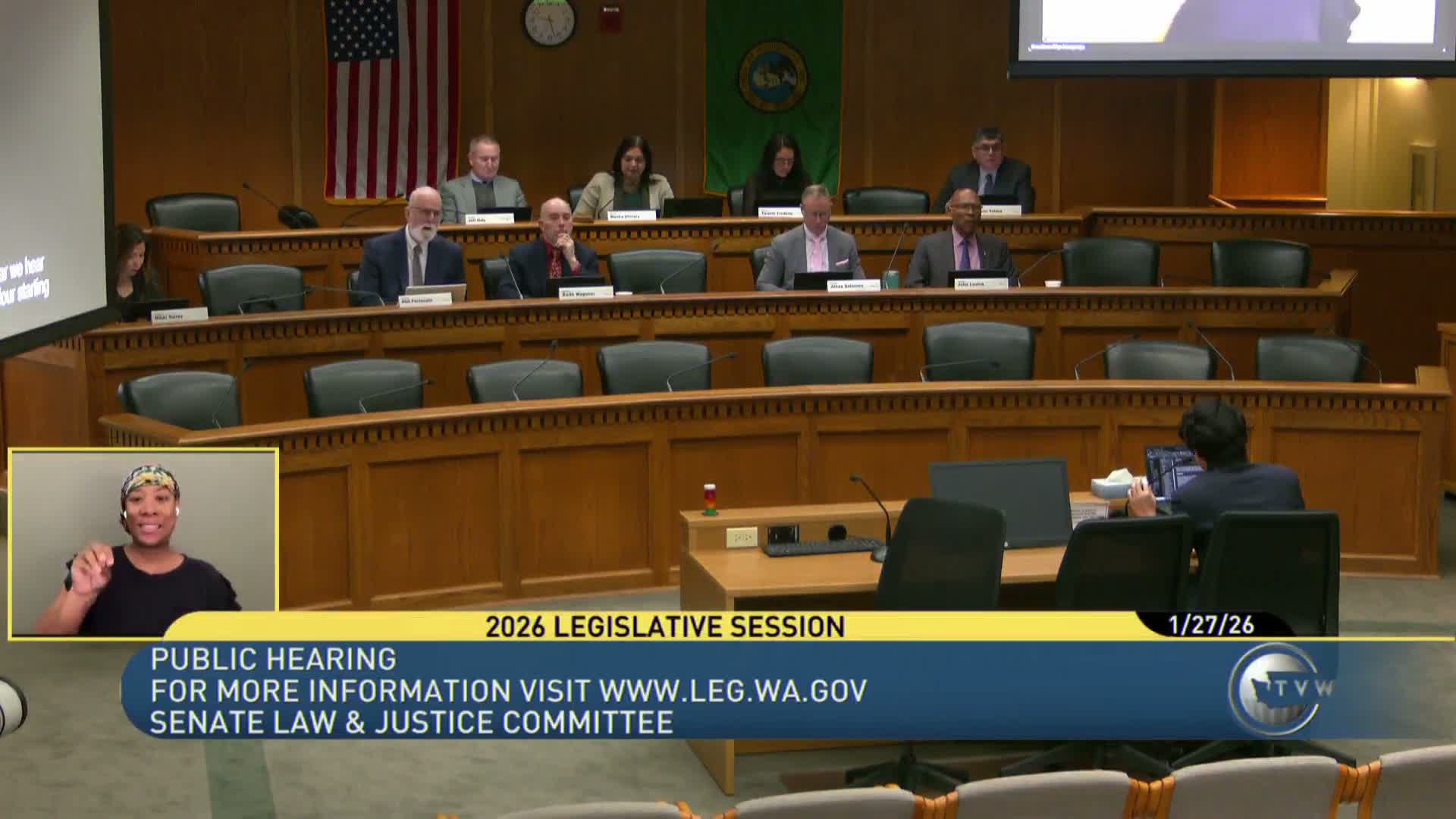
The Senate Law and Justice Committee heard testimony on Jan. 27 for SB 6,074, a proposal to reintroduce parole in Washington for persons sentenced for felony offenses committed on or after July 1, 2027.
Ryan Giannini, staff counsel, said the bill would permit incarcerated individuals to petition the Indeterminate Sentence Review Board (ISRB) for parole after serving at least 60% of their total confinement, with statutory exclusions for offenders sentenced for certain violent crimes and for those who committed crimes as adults before a specified date. ‘‘So this bill would allow any incarcerated individual in the custody of the Department of Corrections for a felony offense committed on or after 07/01/2027 to petition the Indeterminate Sentence Review Board, ISRB, for parole if the incarcerated individual has served at least 60% of all terms of total confinement,’’ he said.
Supporters and people with lived experience described parole as a tool for rehabilitation and community safety. Ginny Burton, who runs a reentry program and has lived experience, said she was ‘‘extremely excited about this bill’’ and described programs that helped participants remain in the community with low recidivism.
But several witnesses, including the Washington State Reentry Council and criminal-justice stakeholders, raised concerns about the bill's retroactivity and the 60% threshold. Jim Chambers said the bill's retroactivity was limited because it applies only to offenses committed after mid-2027, and he urged the committee to consider fairness for people already serving long sentences. Public defenders and defense organizations urged a phased or broader approach and highlighted racial disparities in parole decisions and the need for implementation resources.
Law enforcement and prosecutorial groups said they were open to parole in principle but asked for clearer guidelines on eligibility, how parole would interact with early-release programs and graduated reentry, and what investments would be required to operate a parole system fairly and consistently. The Department of Corrections representatives noted implementation costs and suggested the workgroup be facilitated by an independent neutral entity to avoid perceived conflicts.
The testimony reflected broad support for a parole mechanism balanced by concern about how it is constructed and applied. The committee concluded the public hearing without taking a vote; stakeholders asked for follow-up on retroactivity, the 60% threshold and how parole would intersect with other sentencing laws and release mechanisms.
No formal committee action occurred at the hearing; the implementation workgroup and fiscal considerations remain outstanding issues for committee deliberations.