Get Full Government Meeting Transcripts, Videos, & Alerts Forever!
Get email alerts on the Hb 2292 topic
No spam. Unsubscribe anytime.
Proposal to tax QSBS capital gains draws sharp pro‑con testimony from tax experts and tech sector
Summary
House Bill 2292 would subject capital gains from Qualified Small Business Stock (QSBS) to Washington’s capital gains tax for sales after Jan. 1, 2026; budget and equity advocates supported the move to close a regressive loophole, while tech founders, startup groups and trade associations warned it could chill venture financing and founder retention.
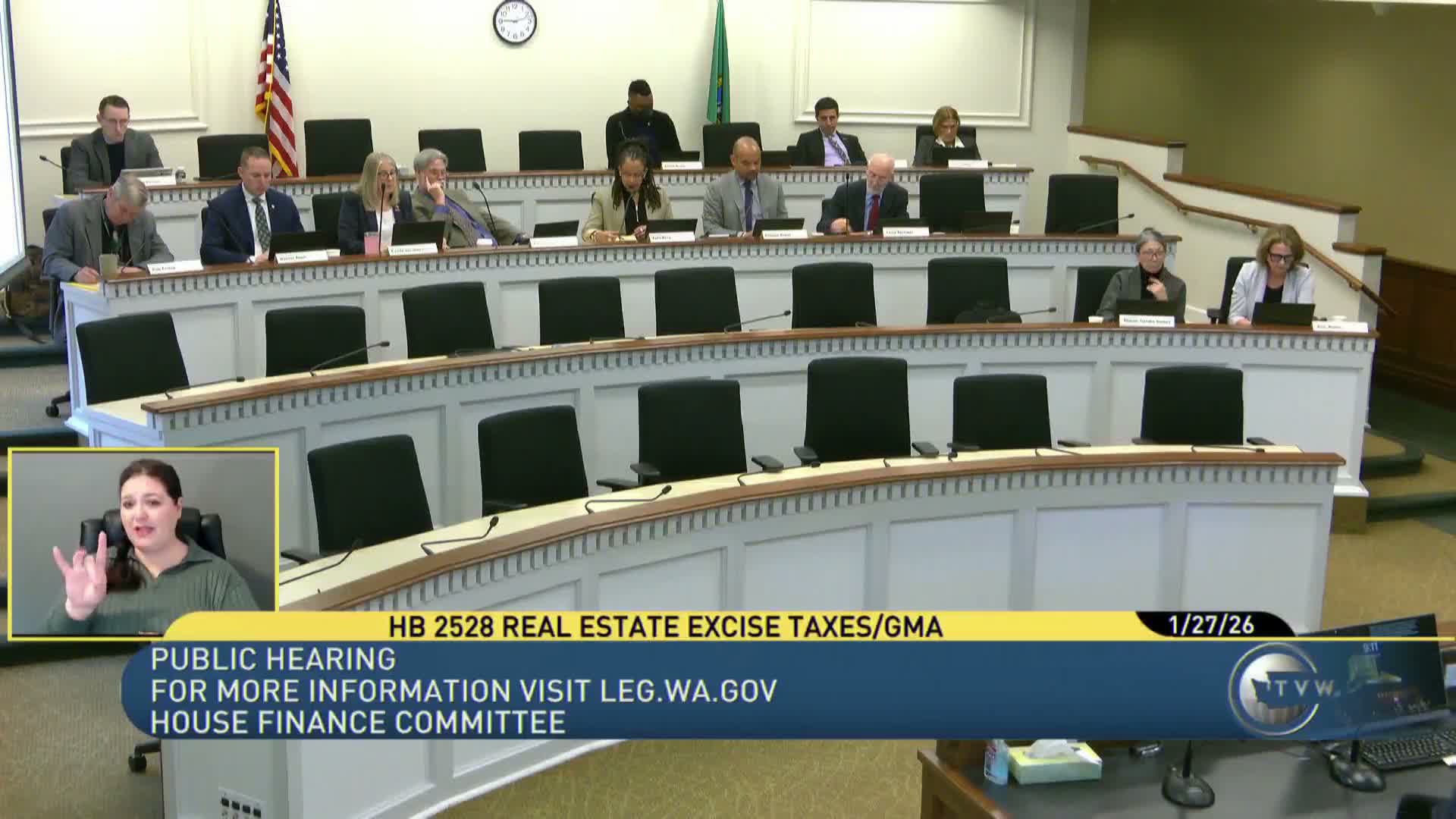
House Finance Committee members heard Jan. 27 on House Bill 2292, which would bring capital gains from Qualified Small Business Stock (QSBS) — a federal tax exclusion that can shelter gains from some C‑corporation stock sales — under Washington’s capital gains tax for sales occurring on or after Jan. 1, 2026.
Tracy Taylor, committee staff, outlined the QSBS background and the Department of Revenue’s preliminary fiscal estimates: staff said the measure would affect a small number of taxpayers and could increase state revenues modestly (the fiscal note projected roughly $1.2 million for fiscal year 2027 and about $1.1 million for fiscal year 2028). Taylor described relevant QSBS timing and holding‑period rules under federal law.
Sponsor Rep. April Burt said the bill is intended to close a carve‑out that she said predominantly benefits high‑income households and venture capital interests, while preserving the capital gains tax’s standard deduction and protections for family businesses, retirement accounts and other enumerated items. “This bill is prospective only… it is only going to apply to gains earned starting on 01/01/2026,” Burt said.
Analysts from the Washington State Budget and Policy Center and ITEP testified in support, saying QSBS largely benefits the wealthiest taxpayers and that closing the exemption would make Washington’s tax code less regressive. Mia Shigemura (Budget and Policy Center) and Sarah Austin (ITEP) urged passage.
Opposition testimony came from small‑business and tech groups: NFIB’s Patrick Connor cautioned about the bill’s implications for the innovation economy, and multiple founders, startup advocates and the Washington Technology Industry Association argued QSBS incentives support early‑stage investment, job creation and founder retention. Aviel Ginsberg (founder community leader), Dave Parker (startup founder), and representatives of WTIA and other founder networks said changing the state treatment of QSBS risks shifting entrepreneurial activity to other states and reducing funding for startups.
Committee members raised questions about retroactivity and effective date; sponsors and staff explained the bill’s effect would be prospective for tax year 2026 and later, though members debated whether that timing could feel retroactive to transactions that occur earlier in the calendar year but are taxed in the same filing year.
No formal vote or amendment was recorded during the hearing; the committee heard multiple written and oral statements both supporting and opposing the proposal.