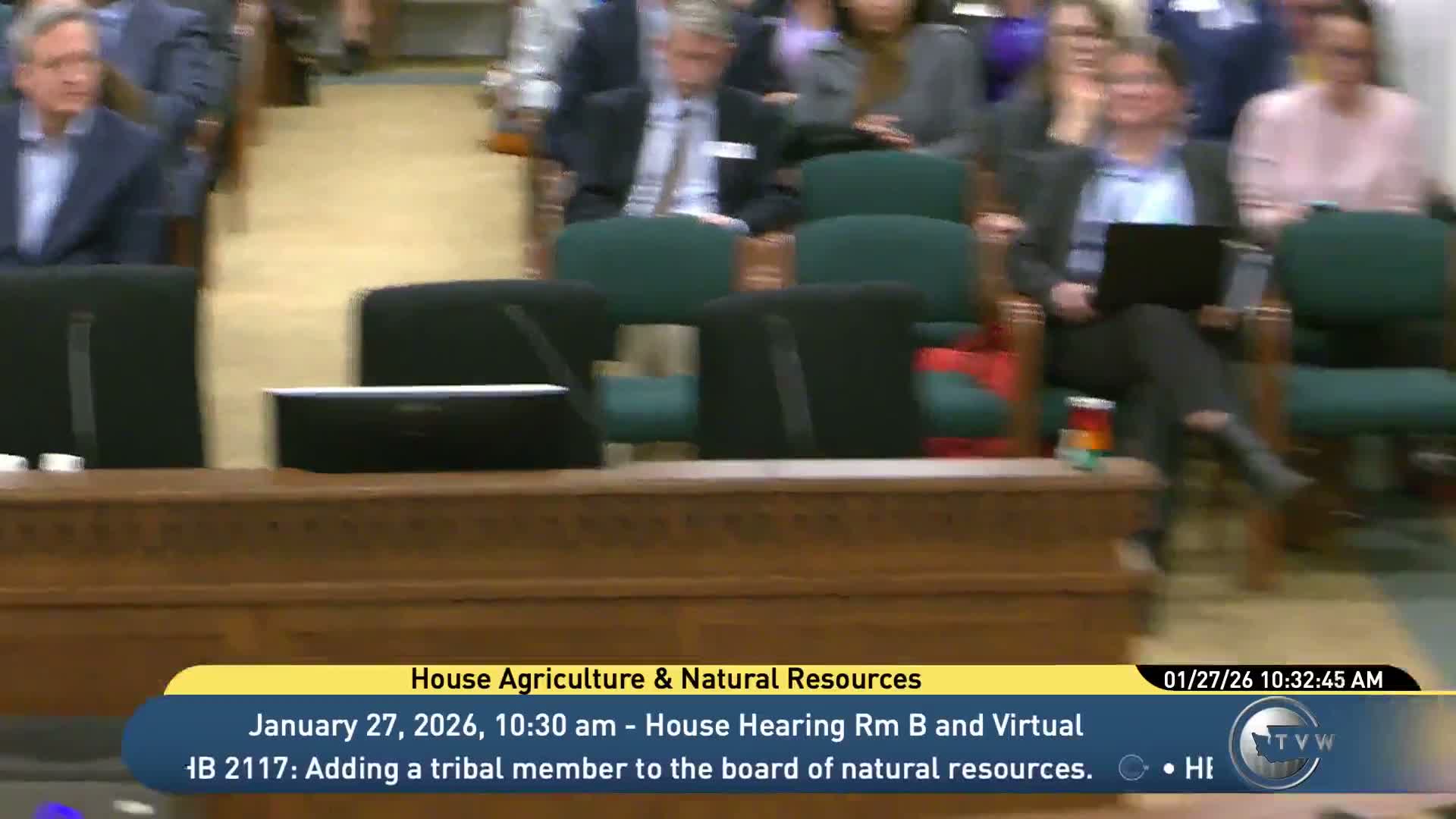
House committee hears bipartisan support for adding tribal seat to Board of Natural Resources
Loading...
Summary
The House Agriculture and Natural Resources Committee heard testimony supporting House Bill 21‑17 to add a tribal representative to the Board of Natural Resources; proponents said the change would strengthen stewardship and honor treaty relationships while some counties urged protection of trust fiduciary duties.
Supporters of House Bill 21‑17 told the House Agriculture and Natural Resources Committee that adding a tribal representative to the Board of Natural Resources would improve decision making and better reflect stewardship responsibilities.
"Adding a seat will help to improve the decision making at the DNR level," Jeremy JJ Wilbur, a Swinomish senator, said in remote testimony, urging the committee to back the bill. Representative Chris Stearns, the bill’s prime sponsor, told members the change is straightforward and backed by the Department of Natural Resources and tribal governments.
Commissioner of Public Lands Dave Upthegrove testified the proposal would allow a tribal representative to participate in discussions, join executive session, and vote, while not changing the board’s legal responsibilities. "This is in addition," Upthegrove said, characterizing the seat as complementary to existing government‑to‑government consultation.
County officials and timber‑region representatives said they are not broadly opposed but pressed the committee to protect trust beneficiaries’ interests. Paul Jewell of the Washington State Association of Counties emphasized the state’s fiduciary duty over conveyed county trust lands: "As the fiduciary of state forest lands, DNR is obligated to act in the county's best interests and no one else's." Several witnesses asked that any appointment process or amendments consider tribes that actively manage commercial forests.
Committee staff briefed members that the board currently has six members and that HB 21‑17 would add a seventh tribal seat appointed by the governor after solicitation of nominees from federally recognized tribes, with a four‑year term. Members asked how the governor would be directed to choose a representative; Upthegrove said the bill requires consultation with federally recognized tribes but leaves the selection method to the governor’s discretion.
The committee read into the record a sign‑in tally showing 192 pro and 124 con entries. The committee did not take a vote in the hearing; the next steps are amendment drafting and executive action scheduling.