Bill would let cities impose REIT 2 without voter approval if they opt into GMA planning
Loading...
Summary
House Bill 2528 would allow counties that choose to fully plan under the Growth Management Act (GMA) — and their cities — to impose the second REIT rate without voter approval, giving local governments more discretion to fund infrastructure; city officials and the Association of Washington Cities backed the measure while realtors and taxpayers raised affordability and democratic‑accountability concerns.
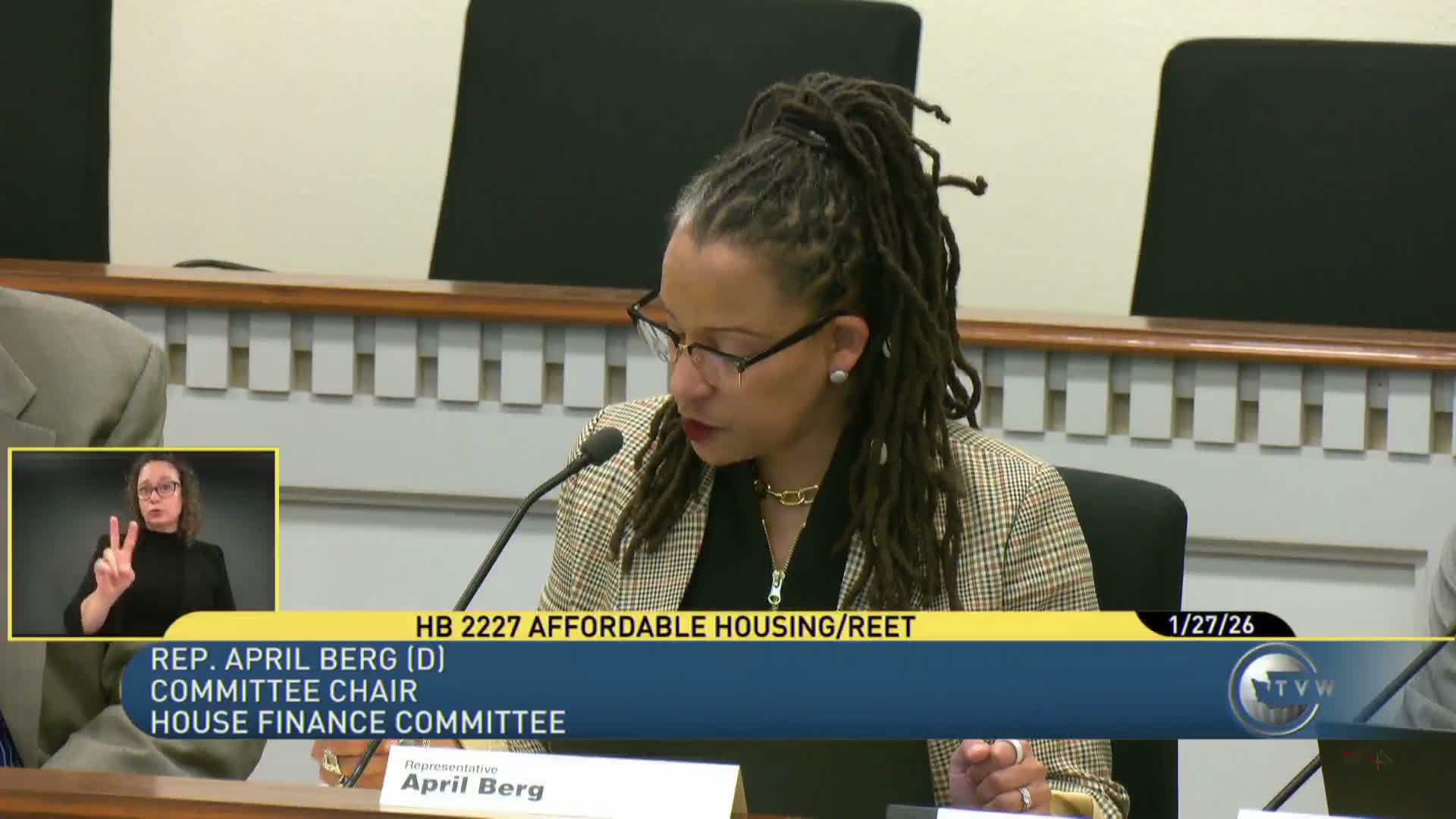
House Finance Committee members heard Jan. 27 from staff and a cross‑section of city and county officials on House Bill 2528, which proposes to permit any county that chooses full GMA planning and the cities within it to impose the second real‑estate excise tax rate (REIT 2) by councilmanic action rather than requiring voter approval.
Representative Larry Springer, the prime sponsor, said the measure levels the playing field for cities that have opted into GMA planning and allows local elected officials to decide whether councilmanic imposition is appropriate. "It basically leaves it up to the city to determine if they want to impose the REIT," Springer said, noting that cities can still take the measure to voters if they prefer.
Supporters included council members and city managers from Walla Walla, which said it would use REIT 2 funds for sidewalk and ADA improvements and other local infrastructure. The Association of Washington Cities testified in support, arguing that about 42 cities could benefit and that council action still leaves elected officials accountable to residents.
Opponents — including Washington Citizens Against Unfair Taxes and the Washington Realtors — warned that an added REIT rate increases the cost of home sales and removes a voter check on local tax increases; Realtors estimated a potential increase of about $1,600 on a median‑priced home if REIT 2 were added at 0.25 percent.
County officials (Washington State Association of Counties) also testified in favor, saying counties that plan under GMA should not be disadvantaged relative to those that are required to plan.
The hearing concluded with questions from members of the committee and no formal vote recorded at the Jan. 27 session.