
Cities and prosecutors back allowing accredited private labs to reduce toxicology backlog; counties and WSP flag costs and equity concerns
Get AI-powered insights, summaries, and transcripts
Sign Up Free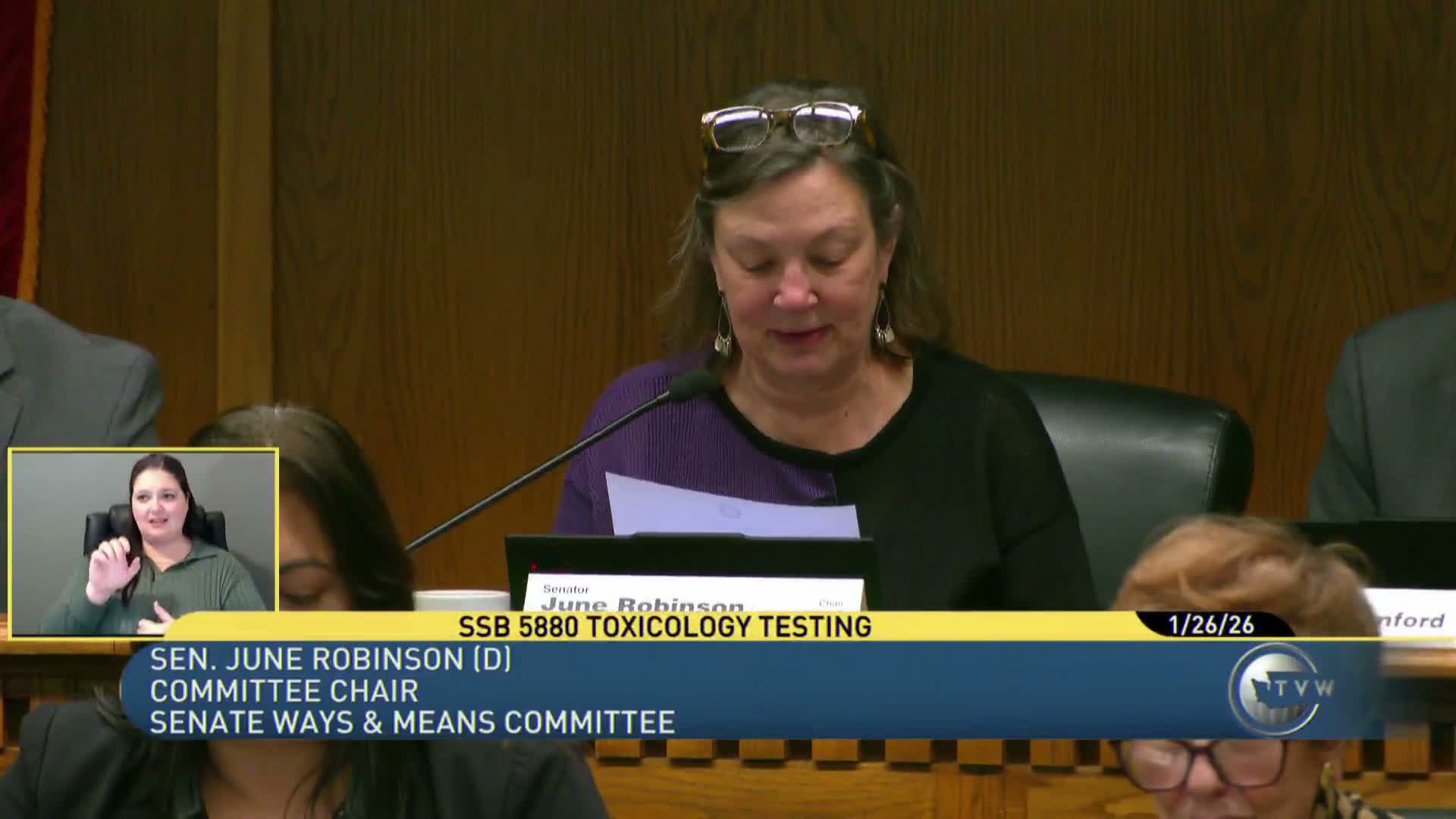
Summary
Seattle's city attorney and prosecuting attorneys supported SB 5,880 to permit ISO/IEC 17025–accredited private labs to process toxicology tests to reduce a backlog that delays prosecutions; counties and Washington State Patrol said the measure could shift costs to local governments and pose chain-of-custody and litigation issues unless carefully limited.
SEATTLE — The Senate Ways and Means Committee heard testimony on substitute SB 5,880 on Jan. 26, which would allow toxicology test results from ISO/IEC 17025–certified or accredited labs to be admissible in criminal cases if chain of custody and certification requirements are met.
Seattle City Attorney Erica Evans urged the committee to pass the bill, saying Seattle faces lengthy toxicology backlogs — she said the city currently faces wait times as long as 22 months for reports — and that delays hinder prosecutors’ ability to file timely charges and request court‑ordered conditions such as driving restrictions. Evans said Seattle will seek city funds to pay for alternate lab analyses if the bill is enacted.
Prosecutors and the Association of Counties supported using accredited alternatives to reduce the backlog but raised equity concerns about a patchwork system where only jurisdictions with resources can pay for expedited testing. The Washington Association of Prosecuting Attorneys said it would like flexibility to send some tests out of state or to alternative labs, but counties asked for pilots that limit exposure and equitable arrangements.
The Washington State Patrol, which runs the state toxicology lab, described a large backlog (the lab has 16 staff handling approximately 19,000 cases per year, the patrol said) and outlined fiscal and operational impacts the bill could create because repackaging and returning samples to local jurisdictions would require staff time or new hires. WSP said it has discussed possible amendments with proponents, and that targeted changes could reduce the lab’s fiscal exposure to zero for some classes of cases.
Committee members asked staff and witnesses about litigation risk and chain-of-custody protections. WSP and staff cited recent cases (federal and state decisions relating to forensic expert testimony) as legal context that can complicate cases with multiple testing parties; witnesses noted that similar outsourcing has been done for sexual assault evidence kits in other jurisdictions.
The committee took testimony; no vote was recorded.