Get Full Government Meeting Transcripts, Videos, & Alerts Forever!
Get email alerts on the B&O Tax Prescription Wholesalers topic
No spam. Unsubscribe anytime.
Pharmacy groups warn bill raising wholesalers' B&O tax risks pharmacy closures
Summary
A bill to repeal a preferential B&O rate for prescription drug wholesalers drew opposition from independent pharmacies and wholesalers who said increased costs will be passed down to pharmacies and could cause closures, while OFM and counties said the preference is outdated.
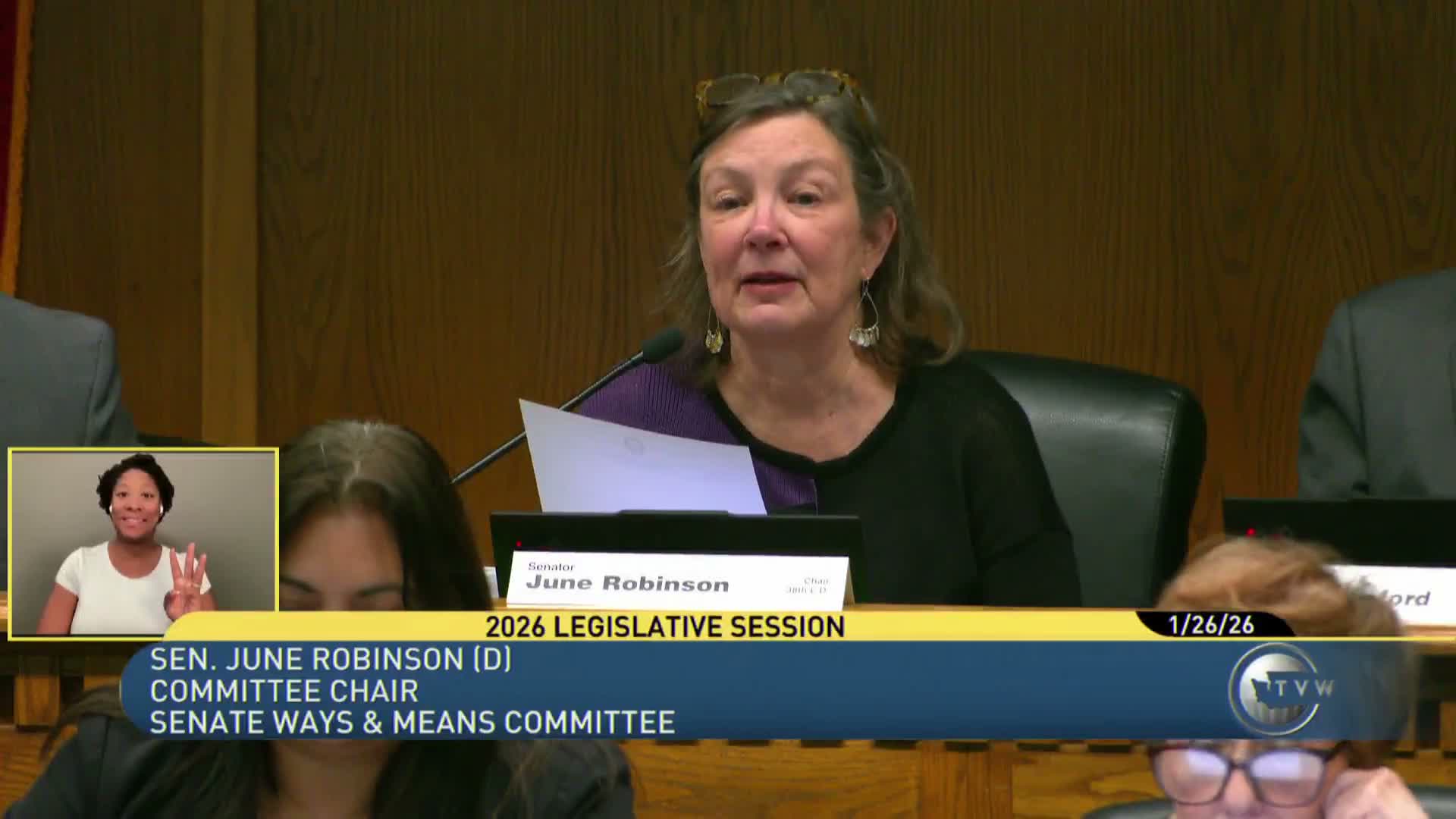
OLYMPIA — The Senate Ways and Means Committee took public testimony on Jan. 26 on SB 6,228, a proposal to repeal a reduced business-and-occupation (B&O) tax rate for wholesalers who warehouse and resell prescription drugs.
Committee staff said the bill would repeal the preferential B&O rate and subject prescription-drug warehousing and reselling businesses to the standard wholesaling rate of 0.5% starting Jan. 1, 2027. The fiscal note cited by staff estimated $26.5 million in increased revenue in the current biennium and $154.6 million in the 2027–29 biennium.
Supporters of the repeal — including the Office of Financial Management and county associations — said the special rate primarily benefits a few large national distributors and that the policy is outdated.
Retail pharmacy groups, independent owners and trade associations urged the committee to reject the change. Testimony from Carolyn Logue (Washington Food Industry Association), Jenny Arnold (Washington State Pharmacy Association), and small‑town pharmacy owners said wholesalers operate on thin margins and pharmacies cannot pass increased drug acquisition costs to patients because reimbursement contracts with pharmacy benefit managers cap reimbursements. Pharmacy speakers said the B&O preference has helped blunt cost pressures and that ending it would threaten rural and independent pharmacies.
The committee did not take a vote; several senators asked staff to provide additional analysis on pass-through effects and potential impacts on hospitals and critical-access pharmacies.