
Counties back bill to require shared stewardship with federal land managers; revenue-sharing provision draws questions
Get AI-powered insights, summaries, and transcripts
Subscribe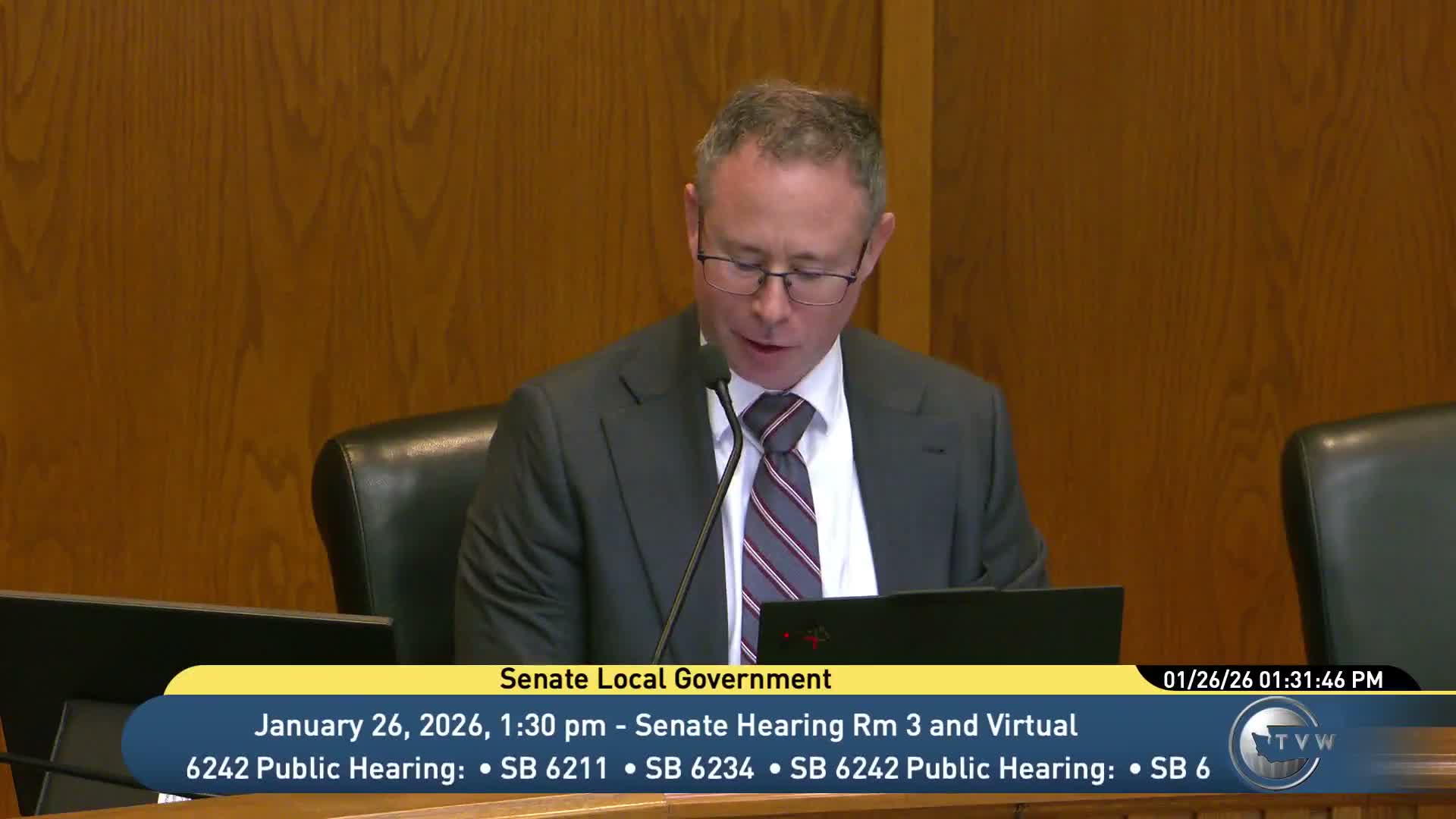
Summary
SB 6,242 would require counties to enter shared stewardship agreements with federal land managers to maintain fuel breaks near roads and include a revenue-sharing provision to let counties retain timber-sale proceeds. County groups supported the bill but asked clarifying language on enforceability of keeping proceeds.
The Senate Committee on Local Government heard testimony supporting SB 6,242, a bill that would require county commissioners to enter shared stewardship agreements with federal land-management agencies to maintain and manage fuel breaks up to one mile on either side of roads, and include revenue-sharing provisions allowing counties to retain proceeds from timber sales.
Committee staff described counties' existing road-and-bridge authorities and said the bill would make explicit a county role in shared stewardship agreements with federal agencies, including the U.S. Forest Service.
Sponsor Senator John Braun (20th District) framed the bill as a response to wildfire risk affecting transportation infrastructure and county finances. "About 40% of our forest fires are on federal land," Braun said, arguing that counties could help form and maintain fuel breaks adjacent to roads to reduce fire spread and carbon emissions from large fires. He emphasized that federal cooperation and additional federal action would be necessary to implement revenue-sharing provisions.
Paul Julian (Washington State Association of Counties) testified in support, noting that the federal government owns roughly 12,000,000 acres in the state and that some counties have a majority of their land owned by federal agencies. Julian said the bill "makes it clear that protecting county owned infrastructure adjacent to federal lands is a significant public interest." He cautioned that the portion of the bill requiring counties to retain proceeds from timber sales could be difficult to enforce if a federal agency refuses to agree to revenue-sharing terms.
A public commenter argued federal grants and authorities exist and urged more active forest management, including emergency declarations under cited state rules; committee members did not resolve those legal or enforcement questions during the hearing.
The committee closed testimony without taking a vote. Supporters asked to work with the sponsor on clarifying language about timber-proceeds provisions and enforcement; the bill would proceed through legislative review and potential technical amendments.