
Senate committee hears bill to presume PTSD is work-related for local jail workers
Get AI-powered insights, summaries, and transcripts
Subscribe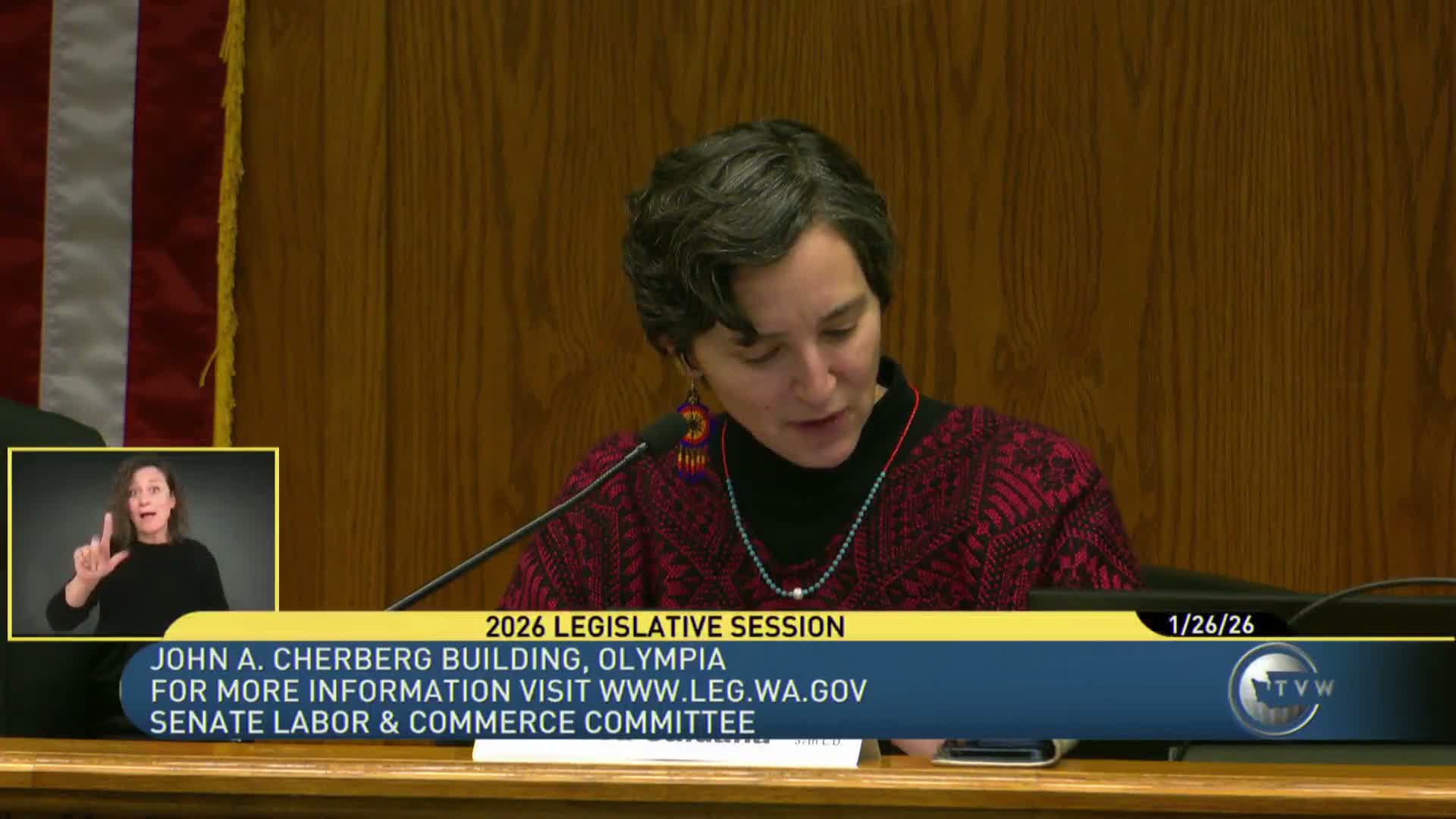
Summary
Senate Labor & Commerce heard testimony on SB 5882, which would create a rebuttable presumption that PTSD experienced by local correctional facility workers is an occupational disease after 90 days' employment; proponents cited officer suicide risk, opponents warned of significant fiscal and insurance impacts and urged further study.
The Senate Labor & Commerce Committee on Monday heard testimony on Senate Bill 5 8 8 2, a proposal to treat post‑traumatic stress disorder among local correctional facility workers as a presumptive occupational disease eligible for industrial insurance benefits.
Susan Jones, committee staff, told members the bill would exclude local correctional facility workers from an existing Labor & Industries rule that limits repetitive‑exposure PTSD claims and would create a rebuttable presumption of work relatedness for employees who worked full time for at least 90 consecutive days. Jones said the fiscal-note range for five‑year state fund claims is $6.7 million to $15.3 million, and that local governments’ costs are indeterminate because some are state‑funded while others self‑insure.
Supporters framed the bill as a needed response to documented trauma in jails. Michael Rainey, president and executive director of AFSCME Council 2, said, “Senate Bill 5,882 is a turning point,” arguing a presumption would let officers access care earlier by lifting the burden of proving a specific triggering incident. James McMahon, policy director with the Association of Sheriffs and Police Chiefs, recounted the suicide of a jail liaison who suffered from PTSD and urged the committee to adopt a presumption. Workers’ compensation attorney Doug Palmer testified that the department’s prior policy to exclude PTSD claims has left the cost and care burden on officers and their families and that an occupational‑disease approach better fits repeated exposure to trauma.
Opponents including Rose Gunderson of the Washington Retail Association and Candace Bach of the Association of Washington Cities acknowledged the workplace risks but warned the bill’s eligibility threshold (90 days) and presumptive status differ substantially from existing presumptions for police and firefighters. Gunderson noted rising workers’ comp costs and reserve pressures; Bach urged an expert panel review before expanding presumptions. Chris Tefft of the Washington Self Insurers Association told the committee to “pump the brakes,” citing the department’s ongoing difficulty managing first‑responder presumption claims.
Tammy Fallon of Labor & Industries explained the fiscal methodology: earlier presumptions produced multiyear claims experience L&I used to build the $6.7M–$15.3M estimate for state‑fund exposure and noted fund reserves in the 25–28% range. She said the fiscal note did not model self‑insured entities’ potential costs.
The committee closed the public hearing without taking a vote. Next steps were not announced during the session.