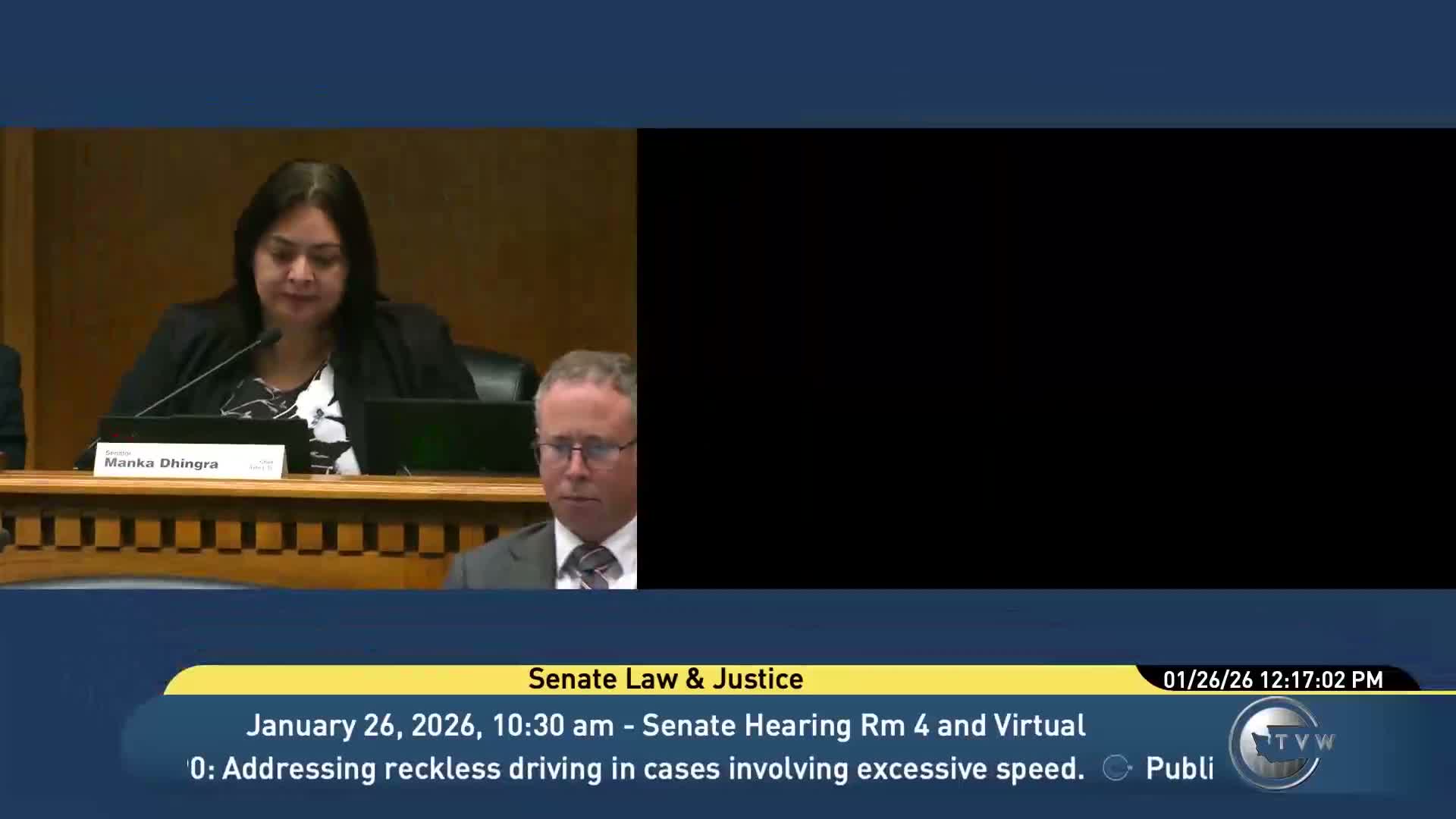
Bill would make going 30+ mph over limit an alternative reckless-driving offense
Loading...
Summary
SB 5,890 would add driving more than 30 mph above the posted speed limit as an alternative way to commit reckless driving (a gross misdemeanor). Traffic-safety groups and law-enforcement associations supported the bill, citing speed’s role in fatalities; lawmakers asked about officer discretion and unintended consequences.
Senate Bill 5,890 would create an alternative statutory basis for reckless driving by making driving more than 30 miles per hour over the posted speed limit a strict-liability basis for a gross misdemeanor.
Maya Aita, committee staff, explained the bill would add an alternative means of committing reckless driving and noted that reckless driving is currently a gross misdemeanor punishable by up to 364 days in jail and a $5,000 fine. The new provision would make going more than 30 mph over the posted speed limit qualify as reckless driving as a strict-liability offense, regardless of intent.
Sen. Ron Mazzall, the bill’s sponsor, said the change is intended to increase accountability for extreme speeding and cited his background in the fire service and experience with fatal crashes. "This bill creates accountability for those who are engaged in this reckless behavior on our highways," he told the committee.
Supporters at the hearing included the Washington Traffic Safety Commission and the Association of Sheriffs and Police Chiefs, which recommended technical language to preserve prosecution discretion to address cases below the 30-mph threshold and to avoid unintended consequences. Mark McKechnie of the Traffic Safety Commission highlighted research tying excessive speed to a large share of traffic fatalities.
Committee members asked about preserving officer discretion (for example, in medical emergencies) and ensuring the statutory change would not prevent prosecution of other reckless-driving conduct at lower speeds. No vote was taken in the hearing; staff said a preliminary fiscal note is available in the electronic bill book.