
Advocates urge restoration of Washington College Grant access to students in certain private and nondegree credential programs
Get AI-powered insights, summaries, and transcripts
Subscribe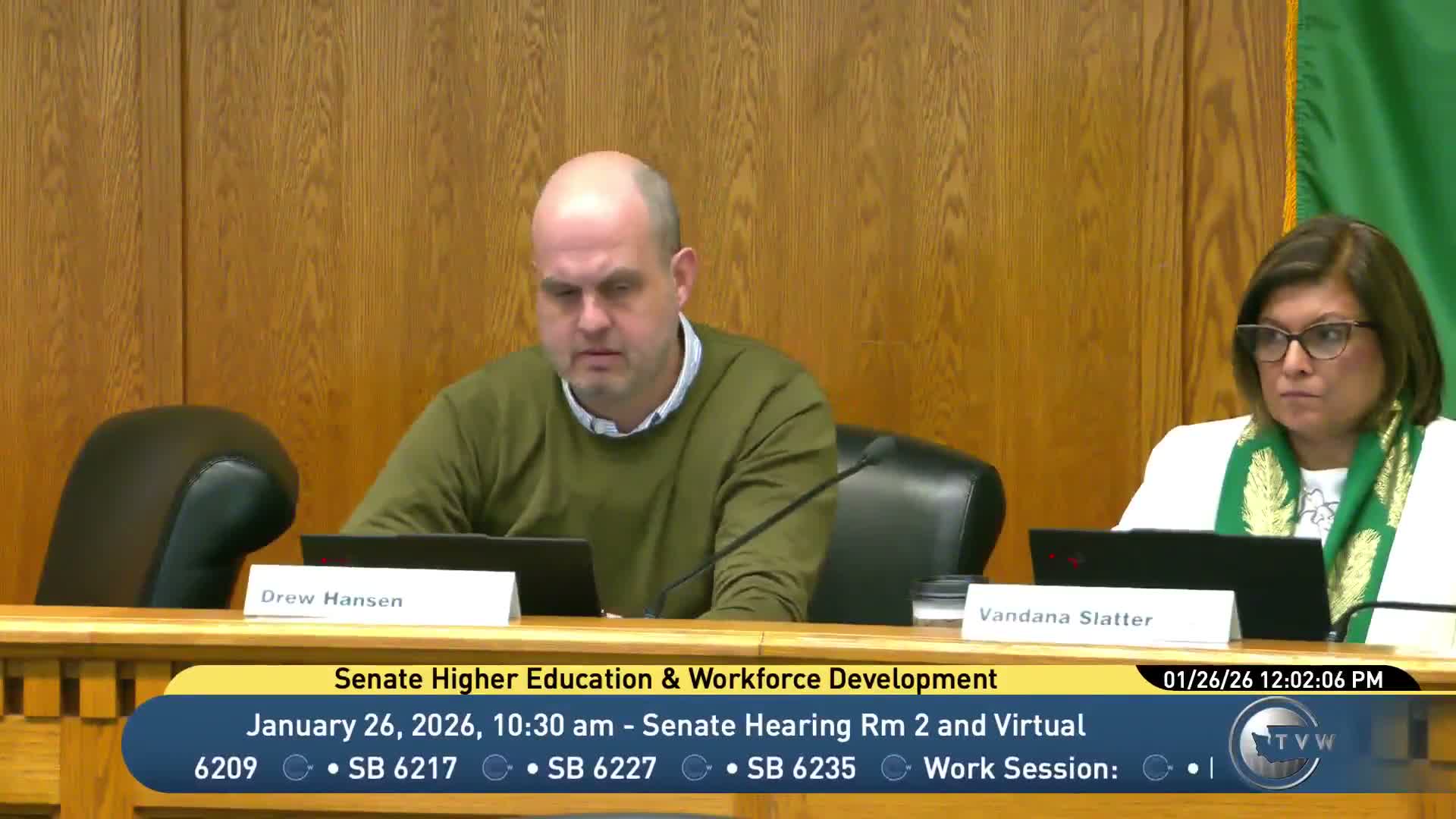
Summary
SB 6,209 would allow students in eligible postsecondary nondegree credential programs to receive the Washington College Grant beginning in the 2027–28 academic year if programs meet a gainful‑employment standard. Private vocational schools, students, and some colleges testified in support, while committee members discussed eligibility criteria and proposed amendments to include certificate programs.
The committee heard staff briefing and extensive public testimony on Senate Bill 6,209, which seeks to expand eligibility for the Washington College Grant (WCG) and College Bound Scholarship to eligible postsecondary nondegree credential programs beginning in the 2027–28 academic year, provided institutions meet a gainful employment standard established by the student achievement council.
Kelly Gunn briefed the bill: under the proposal, private nondegree credential programs determined eligible by the State Board for Community and Technical Colleges in consultation with the Student Achievement Council would be included for WCG eligibility. The bill would require program completion and meet a gainful‑employment standard (e.g., limits on expected loan payments as a share of earnings); Gunn said a fiscal note had been requested but was not available in time for the hearing.
Representatives and students from DigiPen, Seattle Film Institute, Northwest College of Art & Design (NCAD) and multiple private vocational programs urged support, saying the grant is essential for access and equity. DigiPen administrators told the committee that many of their students rely on WCG funding and that loss of eligibility would jeopardize enrollment for students from low‑income backgrounds; student witnesses described how aid made attendance possible. Several witnesses requested amendments to ensure 2‑year certificate programs (for example, cosmetology) are included and asked the committee to consider carve‑ins for workforce‑aligned programs.
Other witnesses described the need for accountability and proposed gainful‑employment standards tied to reasonable loan repayment metrics. Committee discussion touched on fiscal tradeoffs and the potential effect on public institutions; one faculty representative urged restoration of funding to state institutions if private eligibility is expanded.
No vote was taken during the hearing; committee staff said they would collect testimony and fiscal information for future consideration.