Get AI Briefings, Transcripts & Alerts on Local & National Government Meetings — Forever.
Bill aims to ease compensation process for people wrongly convicted in Washington
Loading...
Summary
SB 5,520 would clarify definitions and filing requirements for state compensation to people wrongly convicted, extend filing deadlines, eliminate a waiver requirement, and allow monetary advances; advocates and exonerees said it fixes barriers that currently delay access to compensation.
Senate Bill 5,520 would modify Washington’s wrongful-conviction compensation statute to clarify definitions, ease procedural barriers and extend filing deadlines for people who have been proved innocent.
Committee staff summarized key changes: an updated definition of "actually innocent" based on a preponderance of the evidence, a new definition of "significant new exculpatory information" that references information regardless of admissibility, expansion of the filing window from three to six years (with an additional three years where a claimant did not receive notice), repeal of the waiver requirement, and authorization for monetary advances.
Sen. Tina Orwall, the bill’s prime sponsor, said the measure is aimed at removing obstacles that have forced people who proved their innocence to re-litigate their cases just to get compensation. "These are individuals that have been found innocent in a court of law... The bill before you is really about trying to remove some of the barriers that make it difficult for them to be compensated," she said.
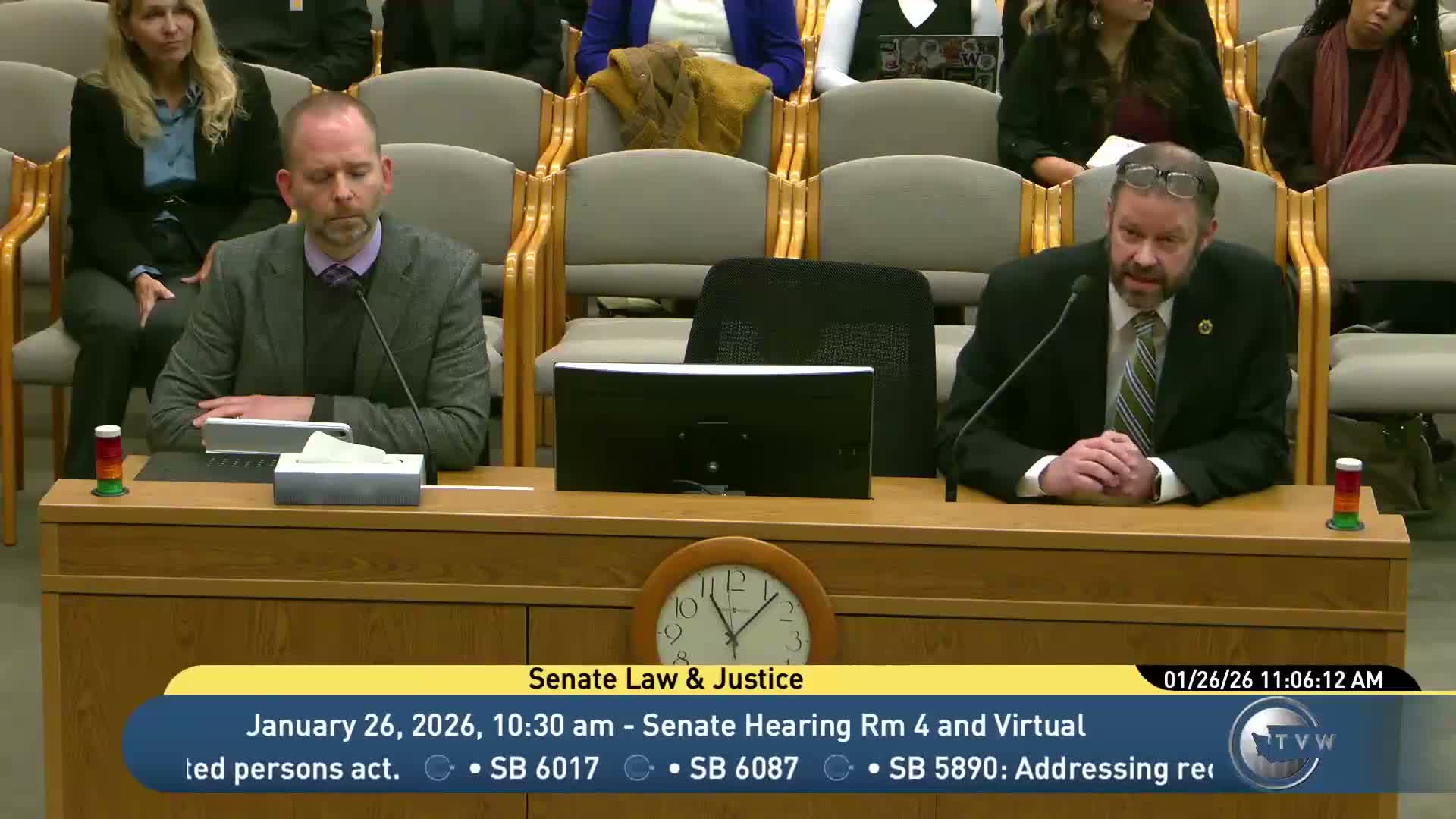
Advocates including Laura Zaretsky of the Washington Innocence Project and exoneree Ted Bradford testified that the law as written has produced unnecessary litigation and that SB 5,520 preserves the clear-and-convincing standard for proving innocence while restoring practical access to compensation and educational benefits for exonerees and their families.
The committee heard no opposing panel testimony during the public hearing; staff said a fiscal note was requested and that prior work sessions had helped shape the language.