Get AI Briefings, Transcripts & Alerts on Local & National Government Meetings — Forever.
Witnesses and agency clash over giving attending physicians more authority in workers' comp care
Summary
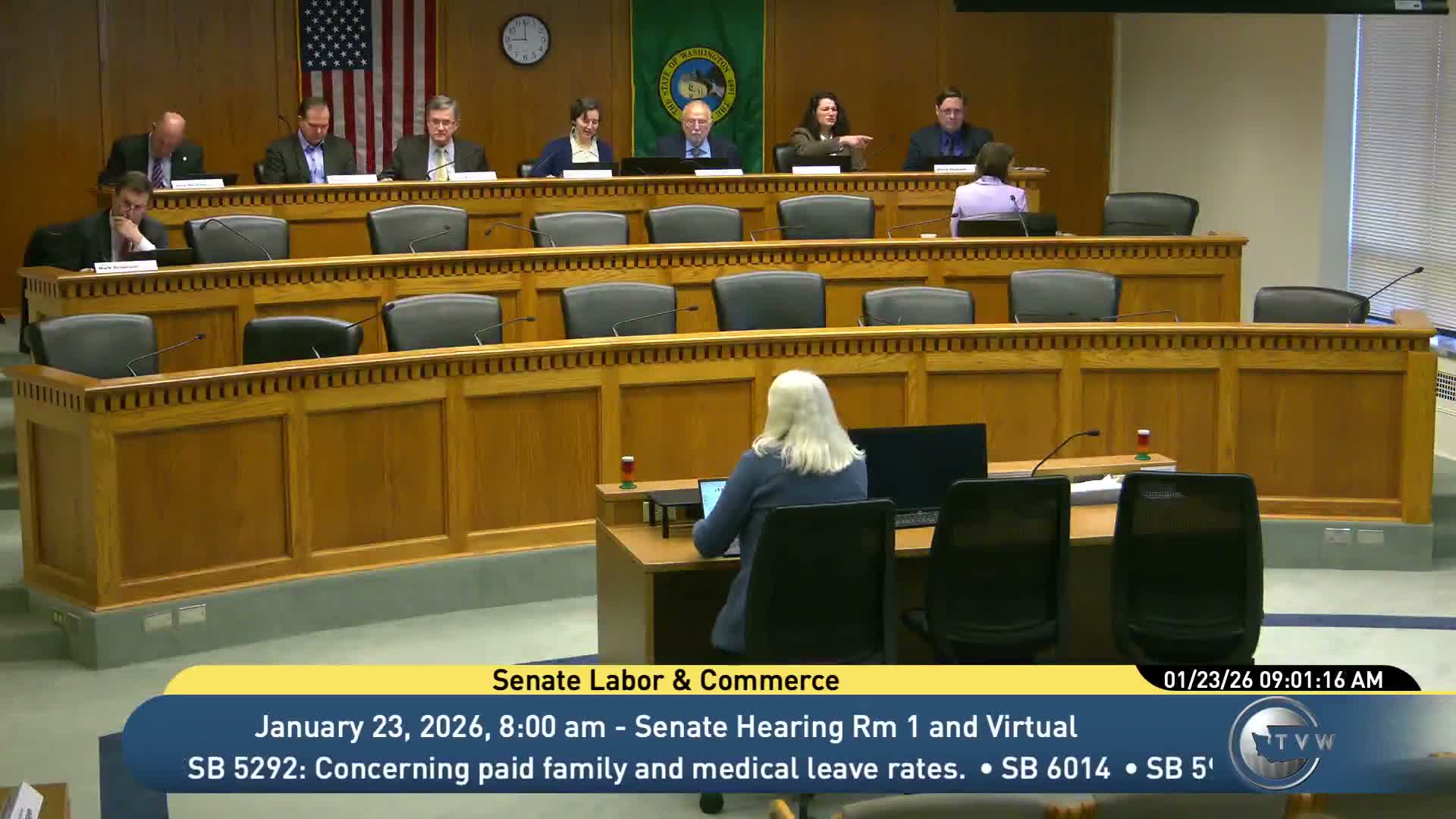
Senate Bill 5,847 would let attending physicians deviate from L&I treatment guidelines when medically appropriate, expand access when network care is unavailable, and set timelines for utilization review. Supporters said it codifies the Murray decision; the agency and business groups warned it could undermine evidence-based standards and raise costs without testing.
Senate Bill 5,847, sponsored by Senator Saldana, would change several workers' compensation medical provisions, including allowing injured workers to seek treatment from a provider of their choice when a network provider is not available within 15 miles, permitting attending providers to deviate from L&I treatment guidelines when they determine it is medically appropriate, shortening utilization-review timelines, and extending certain coverage such as ongoing cancer monitoring.
Proponents — labor councils, injured-worker attorneys, trial lawyers and medical witnesses — framed the bill as restoring attending-physician decision-making in line with the Washington Supreme Court’s Murray decision and as a practical fix for delays that can harm recovery. Carissa Larson of the Washington State Labor Council said the bill would ‘‘support the medical decision making of the attending physician.’’ Attorney David Laumann and trial lawyers said guidelines have in some cases created barriers to timely care, citing jury verdicts and cases where guidelines delayed necessary treatment.
Medical experts and witnesses described clinical examples. Andrew Friedman, chair of the Industrial Insurance Medical Advisory Committee, explained the evidence-based process used to create L&I treatment guidelines and cited past guideline-driven changes (such as opioid prescribing and lumbar fusion guidance) that improved outcomes. Other clinicians described cases where rigid guidelines produced poor real-world results or inadequate care for complex conditions.
The Department of Labor and Industries (Tammy Phelan and Brenda Heilman) said it supports reducing delays and improving access but cautioned that SB 5,847 ‘‘represents a fundamental shift’’ in how medical necessity is determined and that the proposed changes are untested at scale. L&I emphasized its role in ensuring medical quality, noted the department handles more than 80,000 claims a year, and urged pilot testing, clearer exception processes and safeguards to protect patient safety and program integrity.
Business groups and insurer representatives opposed the bill or urged caution, arguing the legislation could weaken the medical provider network, increase costs and claim durations, and leave vague terms such as ‘‘induce’’ without definition. Opponents asked for definitions, safe harbors, stronger standards for provider deviation and clearer guardrails to preserve the program’s evidence-based protections.
Sponsor Senator Saldana closed public testimony by thanking witnesses and pledging ongoing conversations with stakeholders. No committee vote on SB 5,847 was recorded during this hearing; members asked for additional information and signaled a willingness to work on refinements.
Next steps: SB 5,847 will remain in committee with stakeholders and agency staff expected to continue negotiations on definitions, timelines, and exception processes.