Committee weighs multi‑provider rule for dental deep sedation after several deaths
Loading...
Summary
Senators heard sponsor testimony citing multiple recent deaths tied to dental anesthesia and supporters from anesthesiology groups urged requiring a distinct anesthesia monitor during deep sedation; oral surgeons and dental academics cautioned the bill could duplicate existing WAC requirements and limit access.
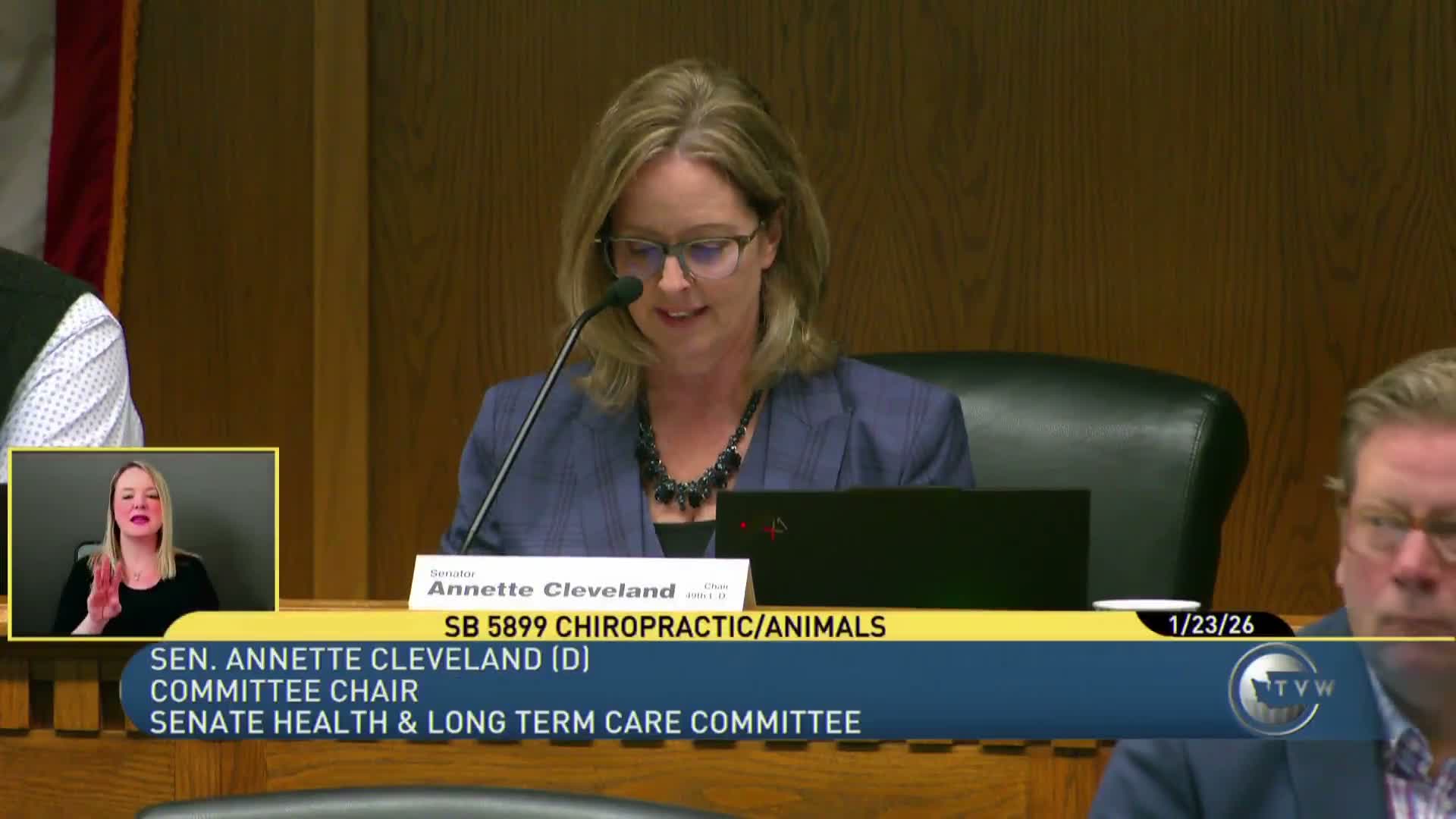
Senators on Jan. 23 considered Senate Bill 6,138, which would require dental procedures performed under deep sedation to use a multi‑provider system in which the person sedating/monitoring the patient is a separate licensed provider from the treating dentist.
Jacob Ewing, staff, told the committee that current general anesthesia permits require dentists to meet advanced training and monitor vital signs, but SB 6,138 would make the multi‑provider model a statutory requirement: the person administering deep sedation must be a licensed healthcare provider distinct from the operating dentist, with separate monitoring responsibilities.
Prime sponsor Sen. Holy said he introduced the bill after reviewing recent disciplinary actions and three patient deaths in the last ~2½ years connected to dental sedation. "We had a tragic accident in Cheney ... He never woke from sedation and died," Holy said, urging clearer statutory requirements to ensure a second clinician is dedicated to monitoring and recovery.
Anesthesiology groups backed the bill as a patient‑safety measure. Amy Brackenberry of the Washington State Society of Anesthesiologists and Kevin Vandeweg of the Washington Association of Nurse Anesthetists said a second, dedicated monitor improves early recognition of adverse events. "This is legislation about patient safety and will ensure there are two providers present during deep sedation," Vandeweg said.
Oral and maxillofacial surgeons, dental school faculty and some dentists warned that existing administrative rules (WACs) already require multi‑provider teams and trained dental anesthesia assistants in many settings. Dr. Ross Byrne (UW) and OMS representatives said the bill as drafted could duplicate rules, raise costs, and reduce access—particularly in rural and Medicaid clinics that rely on current models to deliver care.
The committee heard personal testimony from Sarah Edge, whose son died after routine wisdom‑tooth sedation; Edge urged swift statutory change requiring distinct anesthesia monitoring. Other providers urged collaboration to clarify competency requirements for monitors rather than an across‑the‑board staffing mandate.
No committee vote was taken; sponsors and opponents signaled willingness to work on language clarifying training and scope for anesthesia monitors and to reconcile statutory and administrative standards.