
Lawmakers hear plans to expand dental workforce with career ladders and new assistant roles
Get AI-powered insights, summaries, and transcripts
Subscribe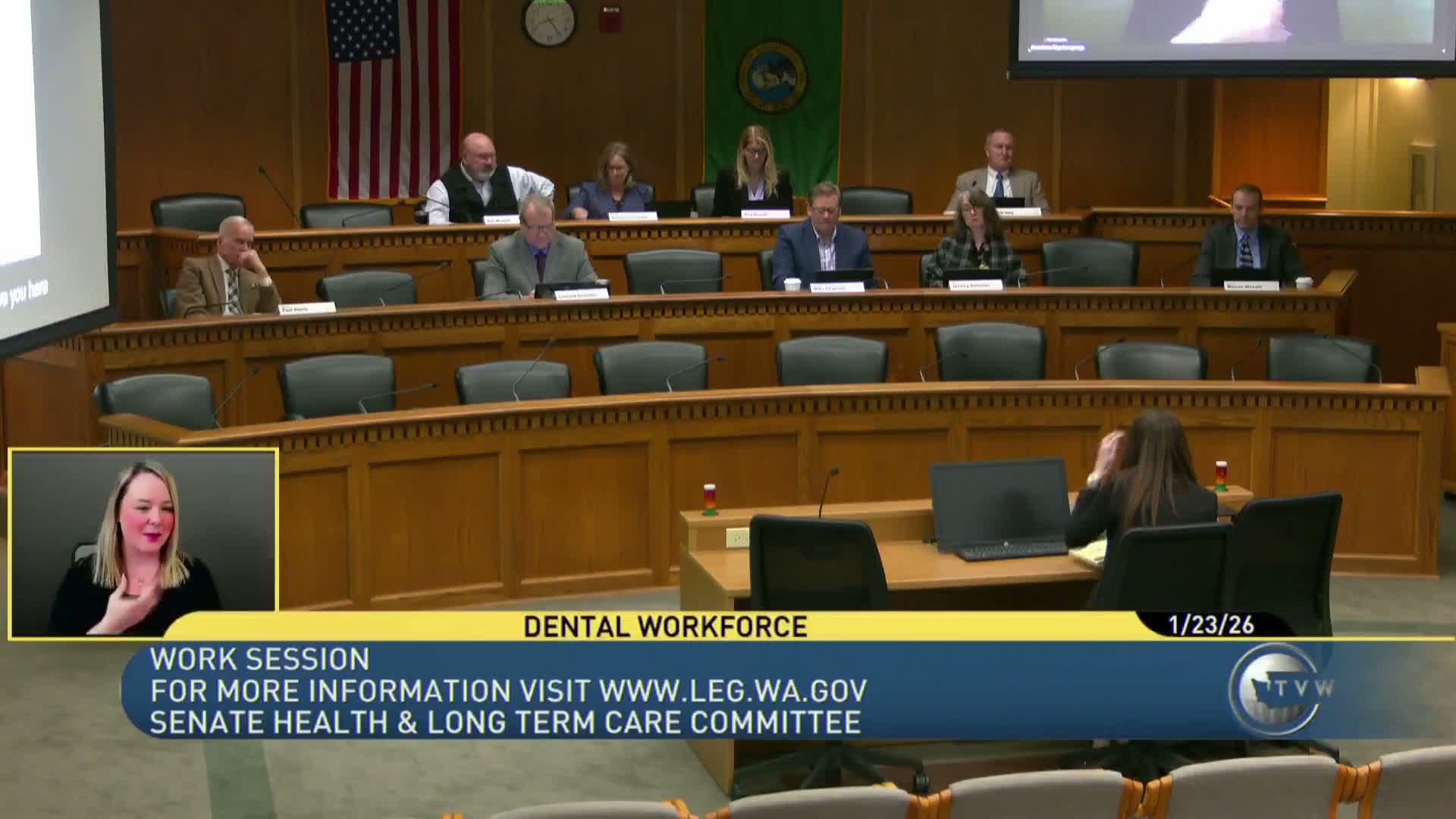
Summary
Experts told the Senate committee that low Medicaid reimbursement and training barriers contribute to dental workforce shortages; witnesses described career ladders, tribal community health aide models and pilot results for oral preventive assistants as ways to expand preventive care and reduce disparities.
The Senate Health and Long Term Care Committee on Jan. 23 held a work session on dental workforce challenges and potential solutions including career ladders, community health‑aide models in tribal settings and a proposed oral preventive assistant (OPA) role.
Allison Mundy, policy director at the Cora Foundation, presented Apple Health utilization data showing that adults on Medicaid receive dental care at much lower rates than children, and that two‑thirds of third graders have experienced tooth decay. Mundy warned of disparities by income and race and said recent state reimbursement cuts could worsen access by discouraging provider participation.
Grace Gunther of the University of Washington Center for Health Workforce Studies described long vacancies for dental assistants and hygienists and urged policies that create clear promotion pathways to retain staff. Dr. Miranda Davis, who has worked on tribal dental health aide programs, described the stepwise dental career ladder used in tribal community health aide programs (primary dental health aide through dental therapist), noting federal certification and IHS oversight.
Dr. Brittney Dean, president‑elect of the Washington State Dental Association, discussed evidence from pilot programs (including Missouri and Kansas) showing that expanded‑function preventive assistants can increase appointment availability for healthy‑and‑gingivitis patients without reported adverse effects. "Employing perio EFTAs helped increase patient access to routine preventive services," she said, summarizing UW review findings.
A dental assistant testifier described financial and time barriers to pursuing hygiene education and called for scholarships and on‑the‑job progression paths. Witnesses urged workforce investments, training expansions and careful oversight and licensure steps if the state adopts new assistant categories.
The committee did not take immediate statutory action during the work session, but members said they will carry these policy options into interim work and potential bill language.