
Committee hears support for removing 'passenger-only' limit on county ferry districts
Get AI-powered insights, summaries, and transcripts
Subscribe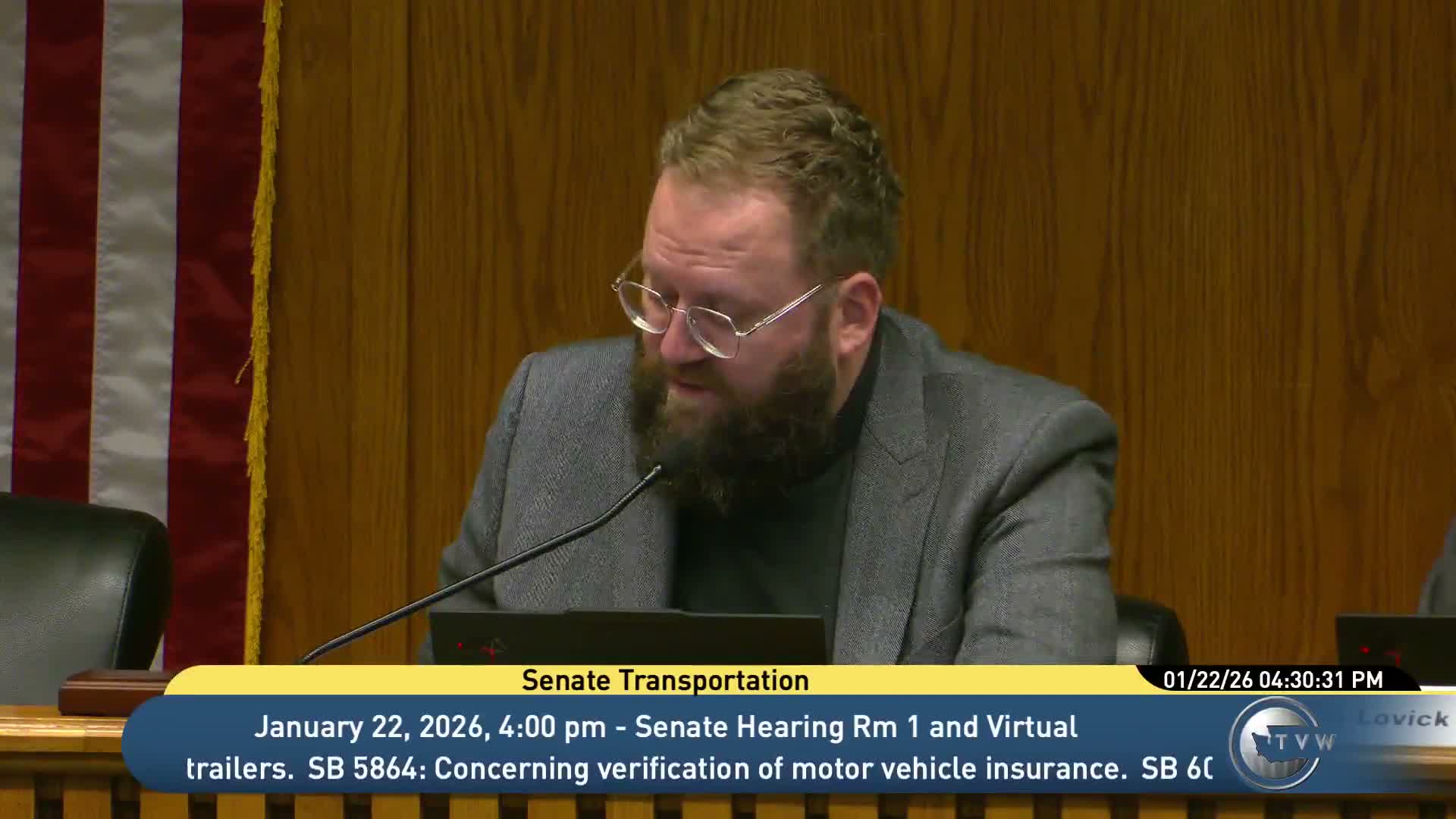
Summary
Supporters told the Senate Transportation Committee that SB 5839’s substitute would allow county ferry districts to carry vehicles — giving counties an additional financing option to replace aging vessels such as Whatcom County’s vessel — and improve transparency in ferry accounting.
Supporters of a substitute to Senate Bill 5839 told the Senate Transportation Committee on Jan. 22 that removing statutory 'passenger-only' limits on county ferry districts would give counties an additional local-option financing tool to operate and modernize vehicle ferries.
Clint McCarthy, committee staff, summarized the substitute: current statute authorizes county-owned ferries and county ferry districts, but districts are limited by statute to passenger-only service; the substitute would align ferry-district authority with county authority by allowing auto-carrying capacity in districts.
Senator Shoemake, the prime sponsor, said the change is aimed at preserving island communities that rely on car ferries and cited Lummi Island as an example. ‘‘One of the concerns is that vacation homes have been bidding up the price of housing…without affordable fares, they just don't,’’ Shoemake said.
Local officials testified in favor. Axel Swanson of the Association of Counties said the bill provides needed local flexibility. Kaylee Galloway, chair of the Whatcom County Council, described the county’s ferry as ‘‘almost 65 years old’’ and said county road funds and fares currently shoulder much of the cost; Elizabeth Cosa, Whatcom County public works director, estimated terminal and vessel replacement capital at roughly $50,000,000 and said a county-wide ferry district would create a dedicated funding source and better transparency around ferry revenues and expenses.
Why it matters: Four Washington counties operate vehicle ferries and several witnesses said the passenger-only restriction limits tools local governments can use to finance aging vessels and terminals. Testimony emphasized community access, school and medical transport, and fiscal stress on county road funds.
What’s next: The committee took testimony from local elected officials and public works staff; no vote was recorded at the hearing.