Bill would let some counties put incorporation proposals on the ballot without petition signatures
Loading...
Summary
Senate Bill 6181 would allow certain large counties west of the Cascades to file city incorporation petitions by county ordinance — avoiding the current 10% voter signature requirement for stand‑alone urban growth areas — while preserving the final public vote.
Senate Bill 6181, sponsored in part by State Sen. Steve Conway, would give county legislative authorities in certain large counties an alternate path to place city incorporation proposals before voters without first collecting the statutory 10% of registered‑voter signatures for a proposed area.
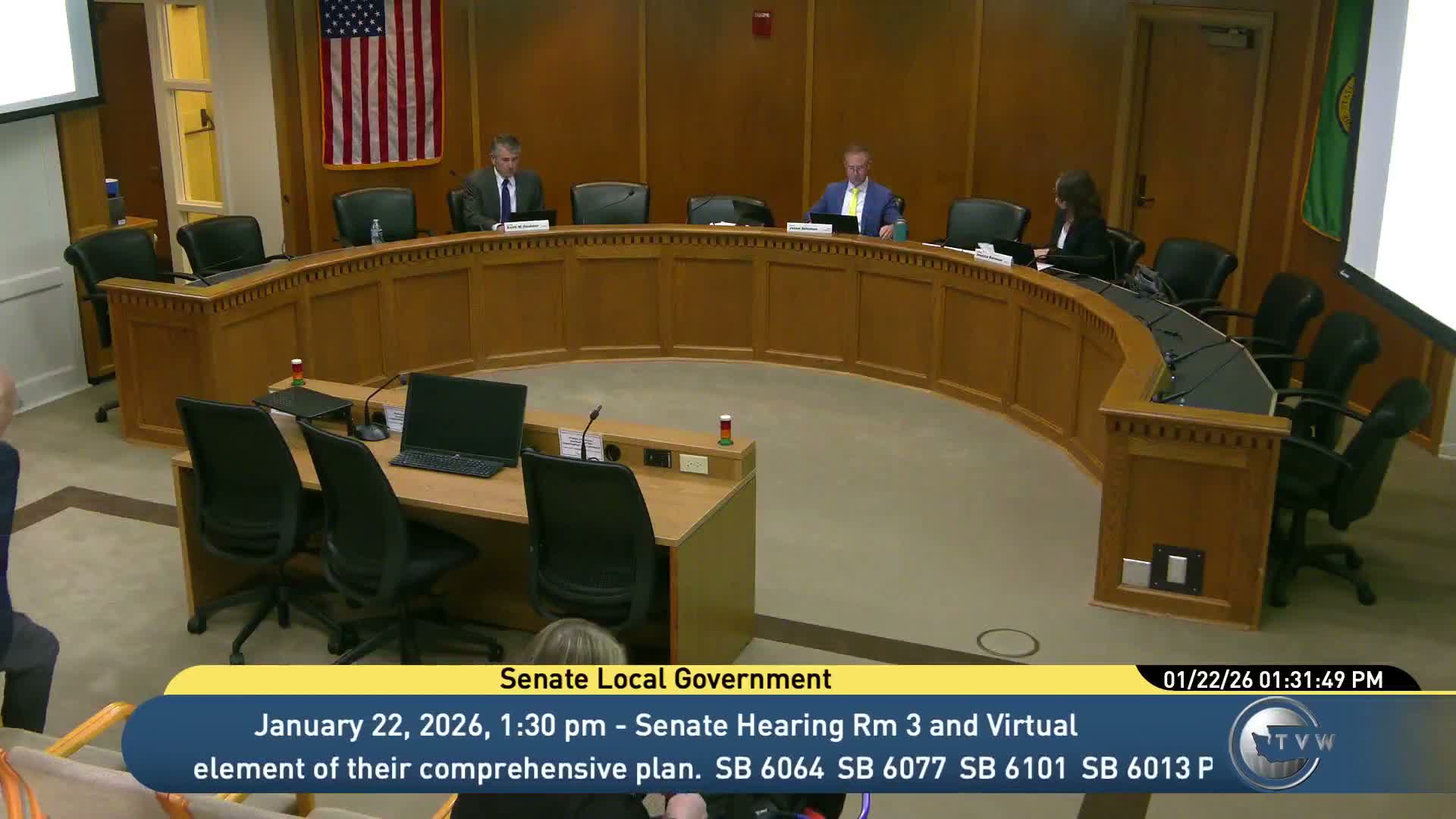
Conway told the committee the measure responds to «dense» unincorporated communities that seek city‑type services but lack the tax base under county government to pay for parks, sidewalks and other amenities. He said the bill does not remove the public vote: "people will still have the vote on whether they want to be a city or not." The staff summary says the change applies only when an area is fully inside an urban growth area (UGA) and exceeds 25,000 residents and when the county is west of the Cascade crest with population between 900,000 and 2,000,000.
Why it matters: proponents argued the current signature threshold imposes a heavy organizational burden on communities such as South Hill (often cited in testimony as roughly 70,000 residents), where organizers estimate they would need thousands of validated signatures. Pierce County Council member Dave Morrell told the committee the county would exercise the option only after fiscal analysis and community outreach, saying the council "will not take this kind of decision lightly." County planners said signature validation rates and limited volunteer capacity make the 10% test difficult for very large UGAs.
Opponents and cautions: Mary Ann Lincoln, a recent petitioner in Pierce County, urged more specificity in the bill, saying it lacks provisions governing how proposed city boundaries would be determined and how startup funding would be assured. She said the bill is "missing many of those details and not ready to become law as it is currently written." South Hill resident Jeff Pack testified he opposed incorporation and said the bill text appears to "circumvent" voters by providing an alternative route to the signature requirement.
What the bill does not change: the bill preserves required state and county reviews and still requires a final public vote on incorporation. Supporters say the change only creates a second avenue for placing a question on the ballot, not a unilateral change in legal status by county action.
What comes next: the committee heard testimony from county officials, planners and multiple residents and advocates; no formal vote on SB 6181 was recorded on the hearing record. The bill will next proceed through committee consideration, where sponsors and opponents can propose amendments to address boundary‑setting, viability tests and startup financing details.