Bill would prompt Department of Health to include dementia risk-reduction information in public materials; advocates praise preventive focus
Summary
SB 6161 would ask the Department of Health to consider including dementia risk-reduction information in public and provider materials when research supports a correlation; sponsor and advocates said prevention and awareness can delay cognitive decline and reduce long-term care costs.
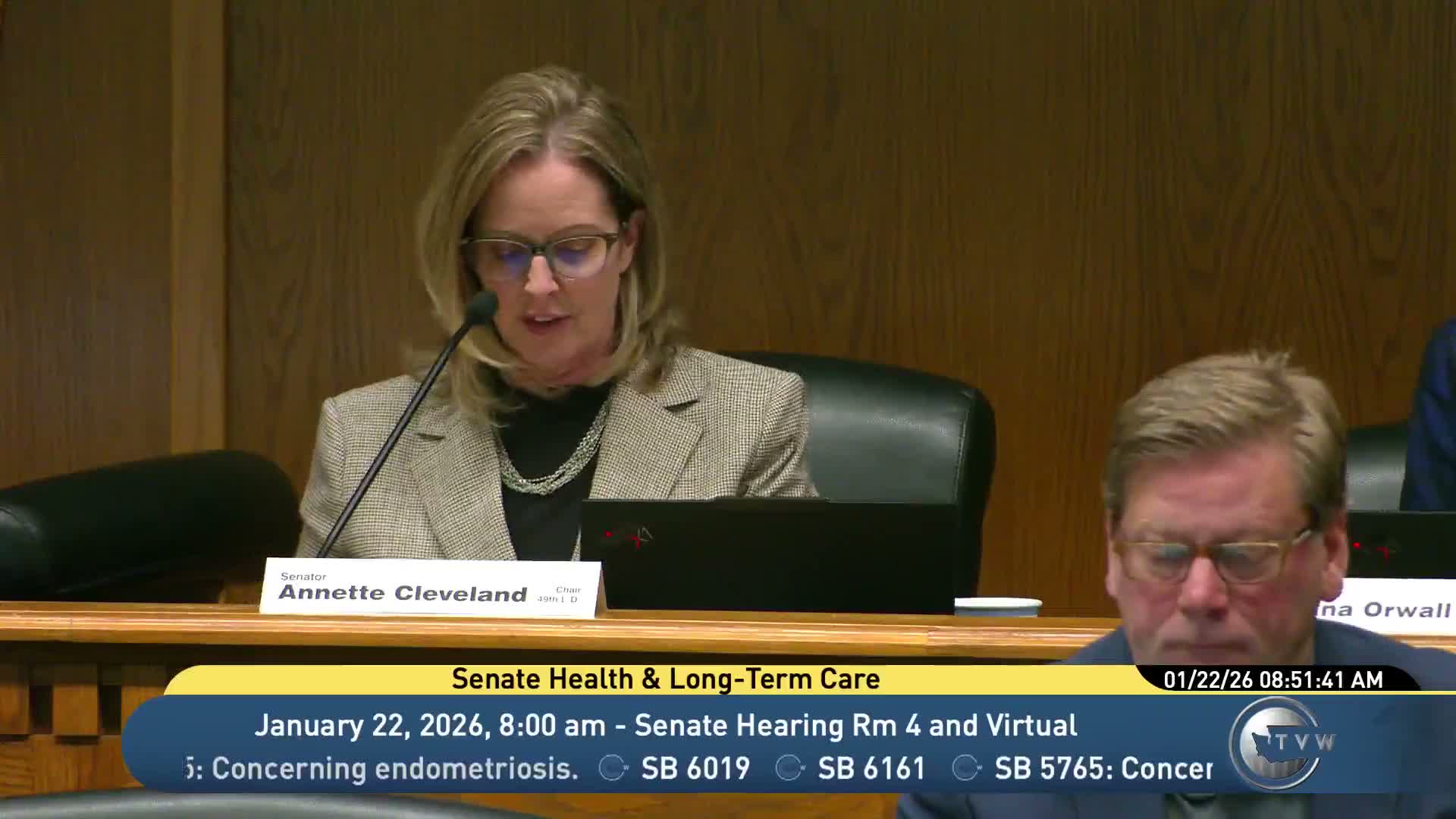
Senate Bill 6161 was presented to the committee on Jan. 22 to require the Department of Health to consider including dementia risk-reduction information when updating public health campaign materials and provider resources.
Jacob Ewing, staff, told the committee that the bill requires DOH to consult subject-matter experts when compiling dementia risk-reduction or diagnosis information and to provide materials in all languages the department currently uses. Senator Vandana Slatter, the prime sponsor, said approximately 127,000 Washingtonians live with dementia and argued that diet, exercise and social connection are proven behaviors that can reduce cognitive-decline risk.
Supporters including the Alzheimer’s Association, neurologists from the University of Washington, caregivers and advocates testified that public-health education can empower people to act early and may reduce costly long-term care. Several witnesses cited the US POINTER study as evidence that behavioral changes can delay cognitive decline.
The committee closed testimony after a mix of pro and informational testimony and will consider the bill in committee proceedings.