
Tribes Back Limited In‑State College Betting as Universities Urge Protections for Athletes
Get AI-powered insights, summaries, and transcripts
Sign Up Free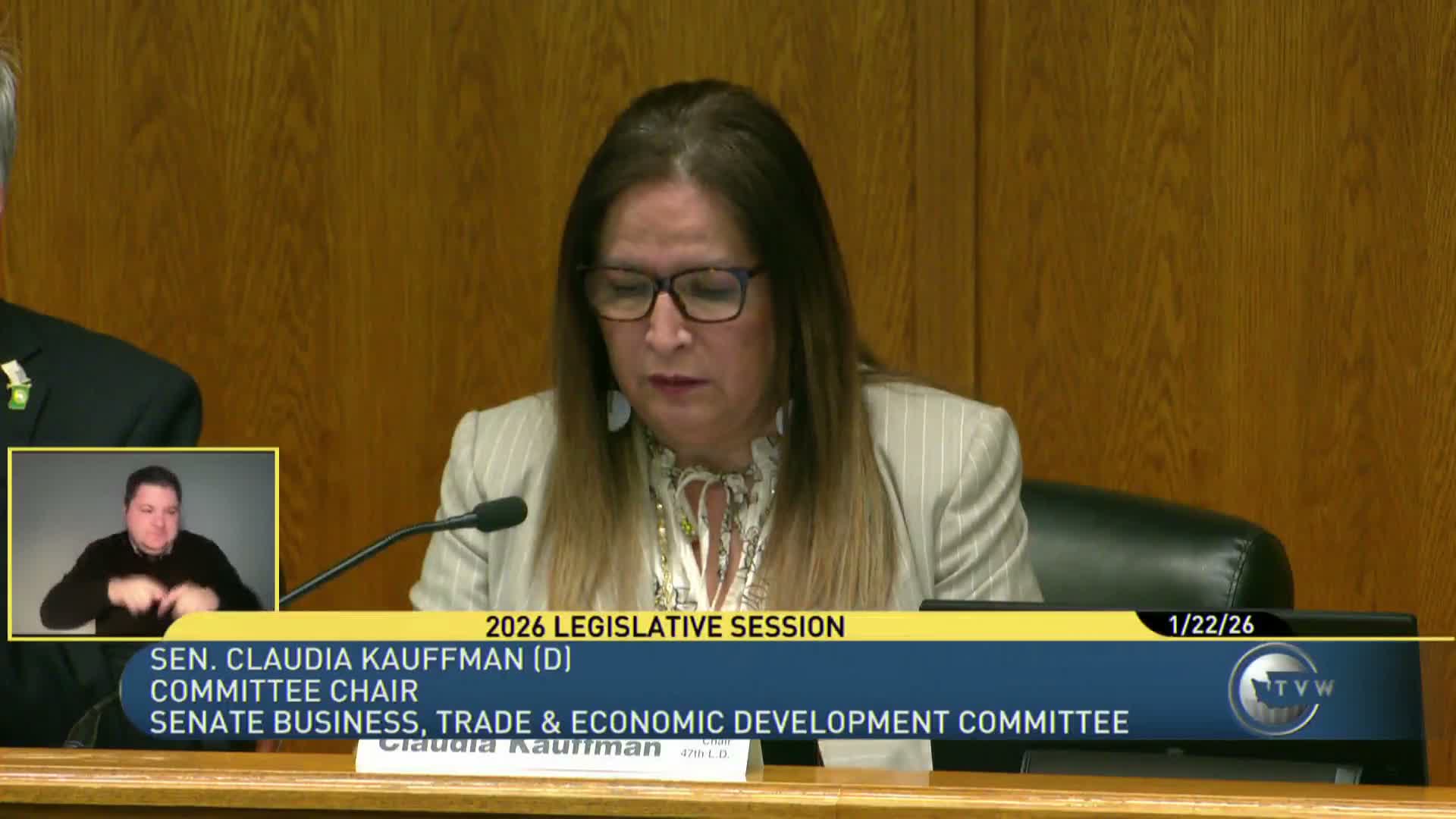
Summary
Senate Bill 6,137 would allow regulated wagers on collegiate events involving Washington schools while prohibiting bets on the performance of individual in‑state athletes. Tribal operators testified in favor citing monitoring and a hub‑and‑spoke option for small casinos; university representatives urged retaining the ban on individual prop bets to protect student athletes.
Senate Bill 6,137, introduced for public hearing Jan. 22, would permit wagering on collegiate events that involve Washington colleges while explicitly banning bets on the performance or nonperformance of an individual athlete enrolled at an in‑state college. Committee staff described the bill’s limits and invited public testimony.
Ron Allen, chair and CEO of the Jamestown S'Klallam Tribe, testified that the tribes support bringing college-event wagering into the regulated tribal market and urged the committee to adopt a ‘hub‑and‑spoke’ option used in Nevada to let smaller tribal casinos participate without large capital investments. "We are very much in support," Allen said, adding that monitored, regulated markets are preferable to unregulated alternatives.
Bill Stroud, chairman of the Puyallup Tribe of Indians, told the committee the bill "strengthens" regulation by keeping wagering within the tribal, state and federal oversight framework and by drawing an enforceable line that protects student athletes. "That distinction protects student athletes, reinforces integrity, and ensures public confidence," Stroud said.
University officials pressed for protections for student athletes. Morgan Hickle of the University of Washington said UW requires sports‑wagering training for athletes and urged the committee to "prioritize student safety and well‑being," including maintaining the ban on individual prop bets. Chris Mulick of Washington State University argued the expansion would make WSU student athletes more accessible to bettors—on campus and online—and said expanding wagering "is not the solution" to illegal markets. Mulick cited an NCAA survey documenting on‑campus contact and online harassment of student athletes.
Committee staff confirmed the statutory text prohibits betting on individual players at in‑state schools. Kevin Zenashek, executive director of casino operations for Northern Quest Resort and Casino, said allowing in‑state wagers in regulated, on‑premises environments would enable integrity monitoring—such as line movement and betting‑pattern analysis—that illegal markets lack.
The public hearing concluded without a committee vote. The discussion highlighted areas of relative agreement (desire for monitoring and integrity protocols) and disagreement about the risks posed to student athletes and the timing of expanding wagering availability. The committee closed the hearing and moved on to other items on the agenda.