
Austin ISD superintendent outlines enrollment plan; most turnaround plans accepted by TEA
Get AI-powered insights, summaries, and transcripts
Subscribe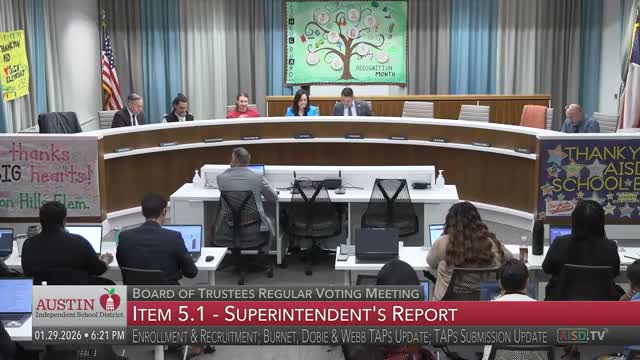
Summary
Superintendent presented a draft enrollment plan prioritizing family recruitment, retention and re-enrollment; the district reported 22 of 24 turnaround (TAP) submissions accepted by the Texas Education Agency and said two remain pending pending additional budget detail. Trustees pressed for clearer data, dual‑language placement metrics and minimum expectations for campus tours and enrollment events.
Superintendent Segre presented a districtwide enrollment plan during the Austin ISD Board of Trustees meeting on Jan. 29, emphasizing a coordinated effort to recruit and retain families and to invite families back to AISD.
The plan, led by Victoria O'Neil, executive director of campus and family engagement, centers on three priorities: recruiting new families, retaining those already enrolled and inviting back families who have left. Segre characterized the effort as continuous and tied closely to budgeting. "We want to ensure that every family should have access to an excellent neighborhood school," he said, outlining a steering committee and project leads to implement the work.
Administrators released dates and operational expectations: magnet admissions opened Jan. 12; general enrollment begins Feb. 16; Pre‑K eligibility assessment begins April 1 (a TEA limit). Victoria O'Neil said campuses were given a minimum schedule for outreach: four in‑person enrollment events in the most appropriate window and a set of campus tours (two in January, two in February, one in March and one in May) as baseline expectations.
Trustees asked for more detailed data and clarity on several operational points. Trustee Kaufman and others pressed administration to reconcile discrepancies between BoardDocs slides and frontline/SIS figures for specific campuses and to provide concrete numbers for dual‑language placements for families displaced by consolidations. Segre and staff said they would deliver corrections and additional written follow‑up where needed.
On turnaround plans, Segre reported that of 24 TAP submissions the district filed, 22 were accepted by the Texas Education Agency; two (noted in board materials as pending) require additional detail tying specific dollar allocations to proposed turnaround expenditures. Segre and trustees described ongoing conversations with TEA and expected both pending plans to be approved once the requested financial clarifications are submitted.
The administration said next steps include refining the draft enrollment plan, building focus committees that include community and campus stakeholders, and incorporating the plan into budget projections. Segre asked trustees to treat enrollment as an organizational priority and to help engage community partners and elected officials in recruitment efforts.
The board did not take a formal vote on the enrollment plan; trustees requested follow‑up data and additional written questions.