Committee hears bill to require 1,000 prefiling signatures and ban per‑signature pay
Loading...
Summary
Lawmakers heard House Bill 22‑59, the Initiative Integrity Act, which would require sponsors to submit 1,000 valid voter signatures before ballot‑title drafting and ban paying circulators per signature; supporters said it limits misleading practices, while secretaries of state and many witnesses warned it could chill participation and raise administrative costs.
The State Government Bridal Relations Committee heard House Bill 22‑59, the Initiative Integrity Act, which would require sponsors to include at least 1,000 registered‑voter signatures with an initial filing and prohibit paying petition circulators on a per‑signature basis.
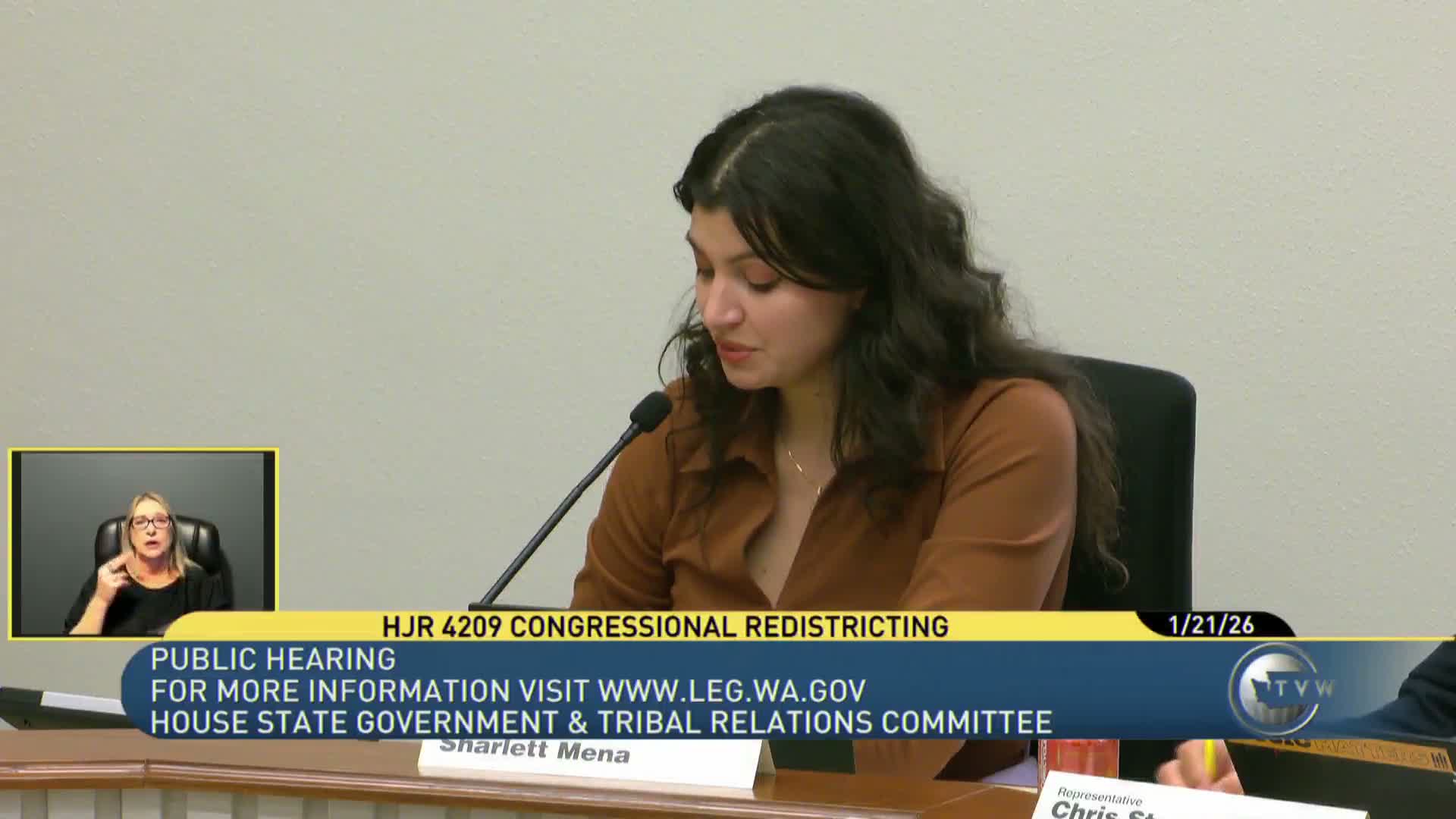
Chair Charlotte Mena, the bill’s prime sponsor, told the committee the measure is designed to balance access with integrity. “This bill preserves access to the initiative process while strengthening its integrity,” she said, describing the 1,000‑signature threshold as a modest, early demonstration of public support and saying bans on per‑signature pay would reduce incentives for duplicate or misleading collection practices.
Supporters included labor and civic groups. Simone Bowe of the Washington Education Association said the proposal would maintain the ability to use paid gatherers while encouraging hourly, salaried or contract pay rather than per‑signature incentives. Adam Glickman of SCA 775 and other witnesses said per‑signature pay creates incentives that can lead to misrepresentation and aggressive tactics.
Secretaries of state opposed the bill. Secretary of State Steve Hobbs said his office must facilitate the initiative and referendum process and that the 1,000‑signature prefiling would add front‑end work and slow processing. Hobbs noted his office raised the filing fee from $5 to $156 to reduce frivolous filings and said the change significantly reduced the volume of filings, arguing alternatives such as improved verification technology or targeted penalties might address concerns without adding a prefiling requirement.
Former Secretary Sam Reid told the committee the measure would create additional barriers. “This bill sets up barriers,” Reid said, characterizing the private right of action and civil penalties as likely to chill grassroots activity.
Committee counsel and staff did not confirm in the hearing whether the initial 1,000 signatures provided at filing would count toward the eventual qualification threshold; staff later said the bill text does not specify that point and agreed to follow up with the committee. A fiscal note was requested.
Opponents—rural residents, activists and several legal observers—warned that the private right of action and civil penalties up to $10,000 could be abused in litigation or deter volunteers and small campaigns. Witnesses also cited timeframes for referenda and the geographic challenges facing rural and sparsely populated counties.
The committee took testimony from a large public panel representing unions, advocacy organizations and individual citizens on both sides of the issue. No vote was taken; the bill remains under consideration and the committee requested additional information from staff on historical evidence of fraud and procedural impacts.