
Committee Hears Bill Allowing Supervised Path to Social Worker Licensure
Get AI-powered insights, summaries, and transcripts
Subscribe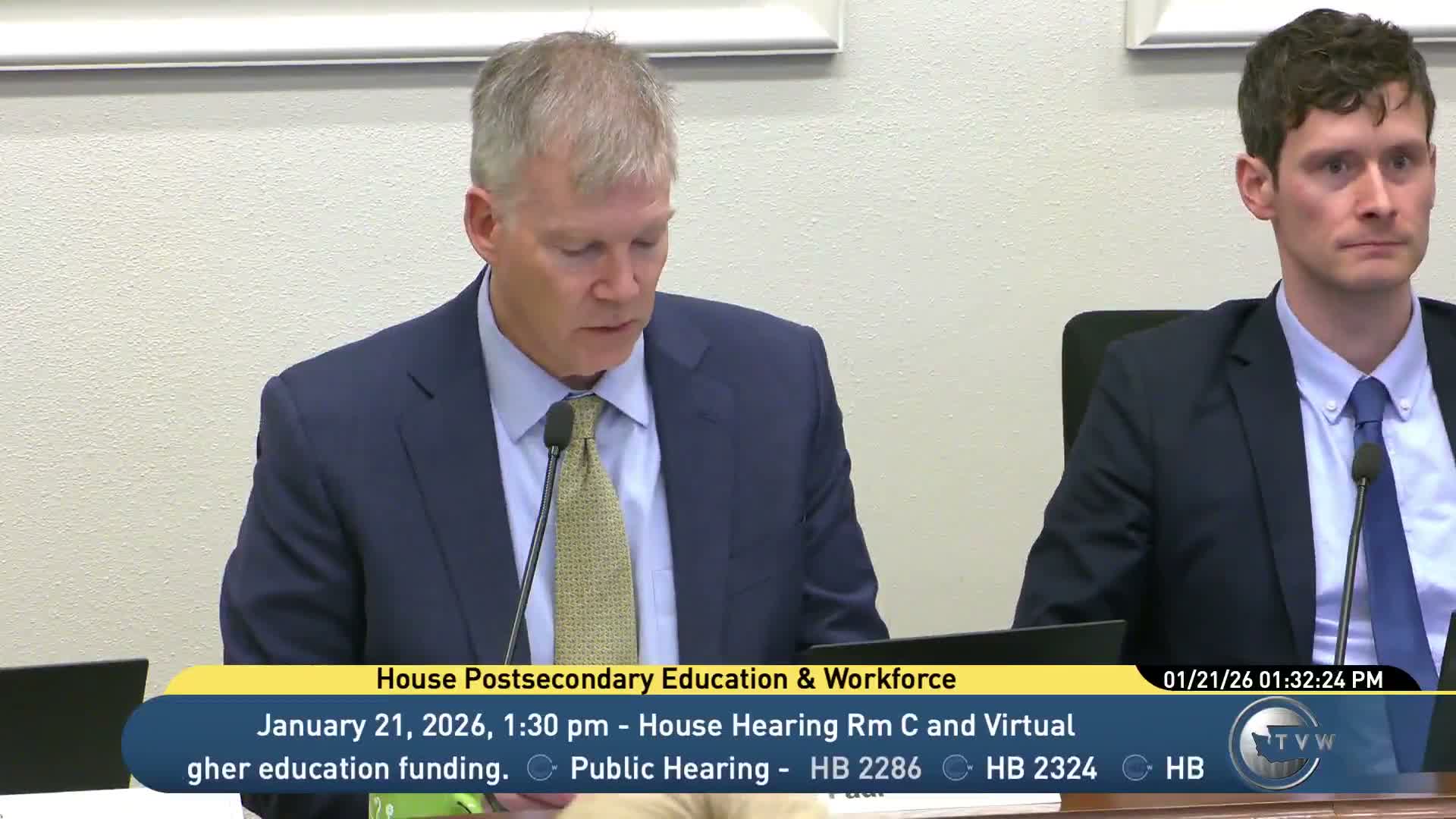
Summary
A House committee heard testimony on HB 2286, which would let advanced social workers substitute enhanced supervised experience and supervisor attestation for the ASWB exam and count that supervision toward experience requirements; supporters cited equity and workforce access, while the Association of Social Work Boards warned of compact and public‑protection concerns.
The Postsecondary Education & Workforce Committee heard House Bill 2286 on an alternative pathway to social worker licensure. Representative Alicia Ruhl (42nd District), the bill’s prime sponsor, told the committee the measure preserves education, supervision and oversight while offering a new route for applicants who demonstrate competence through enhanced supervision rather than a written exam.
"This bill is about maintaining strong professional standards in this work but offering another pathway," Ruhl said, adding that some applicants perform better under relational supervision than on tests. Committee staff Elizabeth Wren summarized the bill, saying it removes the requirement that an advanced social worker complete an approved examination and allows enhanced supervision and a supervisor’s attestation to substitute for the exam and to fulfill part of the 3,000‑hour experience requirement.
Proponents including the Washington State Society for Clinical Social Workers, the Workforce Board and clinical instructors said the existing ASWB multiple‑choice exam can disproportionately block qualified practitioners and recommended the alternative pathway to increase access. Rebecca Fullerton of the workforce board told members that employer surveys showed associate‑level employees sometimes failed the exam despite delivering quality services; Ben Packard, a University of Washington clinical instructor, said, "no multiple choice test can accurately assess someone's clinical competence." Anna Simberec, a licensed social worker, described paying $260 per exam attempt and several failed attempts, urging accommodation for test‑takers with disabilities.
Opponents focused on standards, uniformity and interstate practice. Stacy Hardy Chandler, CEO of the Association of Social Work Boards (ASWB), said removing the exam requirement "would have drastic implications for both the public and the profession," warning that Washington’s membership in the social work licensure compact requires passage of a qualifying national exam for multistate licenses. Committee staff said that, as written, applicants who do not take the exam would not be eligible for a multistate license under the compact.
Committee members asked staff to follow up with details on other states’ approaches, the national exam’s format and the compact’s requirements. The committee closed the public hearing on HB 2286 after hearing multiple in‑person and remote witnesses.
The hearing record includes supporters citing equity and workforce capacity and the ASWB urging collaborative, data‑driven decisions. The committee did not take a formal vote during the hearing; staff indicated follow‑up would be provided on compact implications and exam mechanics.